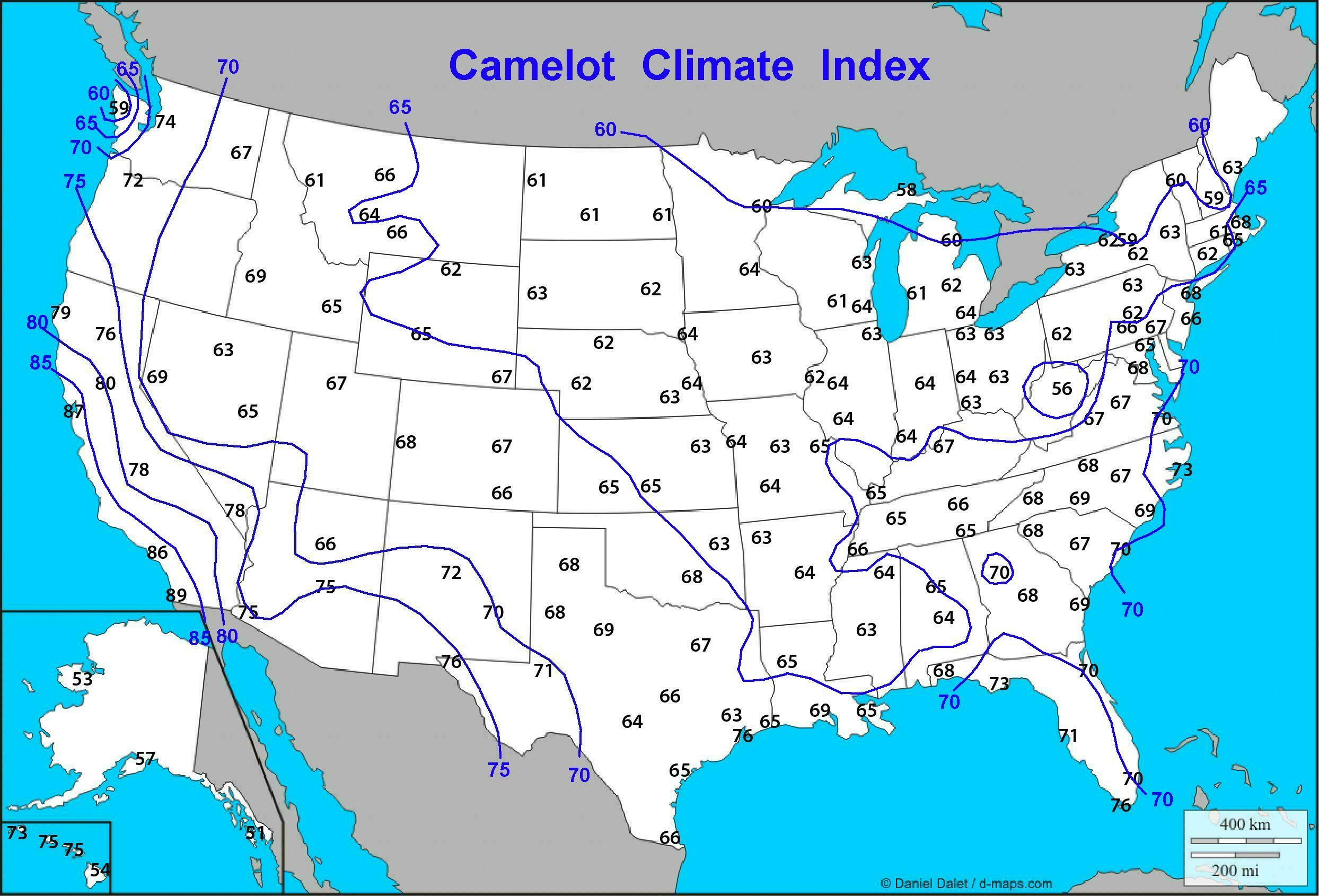
Several weeks ago, I found an interesting post about meteorologist Jan Null’s Camelot Climate Index. The name comes from the 1960 musical Camelot, where King Arthur declares his kingdom’s weather ideal by royal law. Summers stay mild. Winter cannot begin before December and must end by the second of March, with summer allowed to stretch into September. Any rain falls only after dark, and morning fog clears by eight. Null scores American cities on temperature extremes, rainfall, snowfall, sunshine, and humidity, and he says outright that “an ‘ideal’ climate is extremely subjective,” his own version being sunny and mild with few real extremes.
One comparison in that post stuck with me. Null’s own results score Eureka, California and Las Vegas, Nevada within a point of each other, fifth and sixth in the country, yet his own numbers show Eureka’s annual rainfall at 38 inches (97 centimeters) against 4 inches (10 centimeters) for Las Vegas.
That collision is not a fluke. Null weighs four categories equally at 25 percent each, maximum temperature, minimum temperature, precipitation, and sunshine, then scores each place by how close it comes to the best value recorded anywhere in the country. Eureka earns nearly a perfect score in the temperature category by almost never seeing a day above 90 degrees. Las Vegas earns nearly as much in the precipitation and sunshine categories by almost never seeing rain. The formula treats avoiding heat and avoiding rain as equally valuable, so two climates with almost nothing in common end up a single point apart.
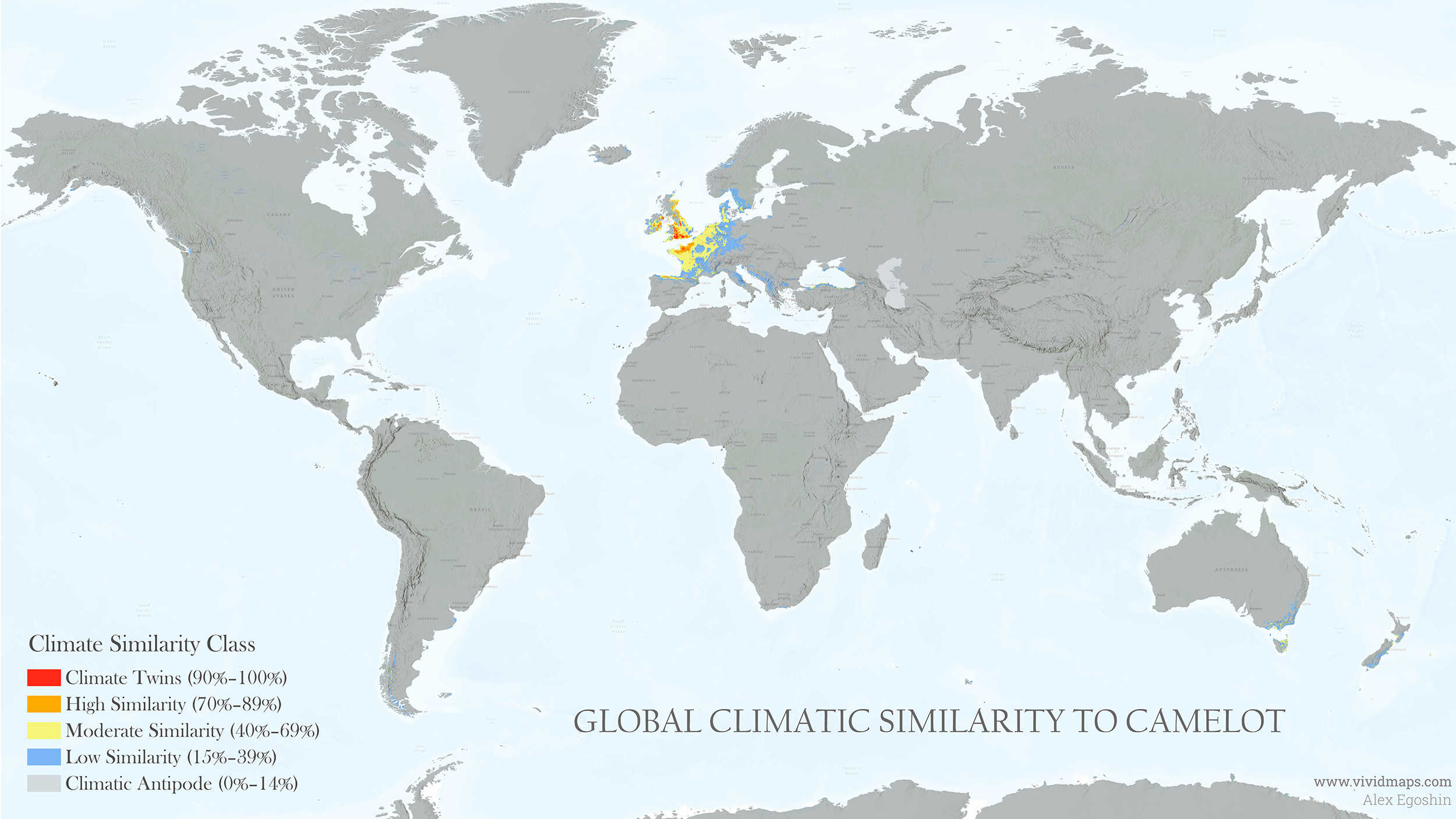
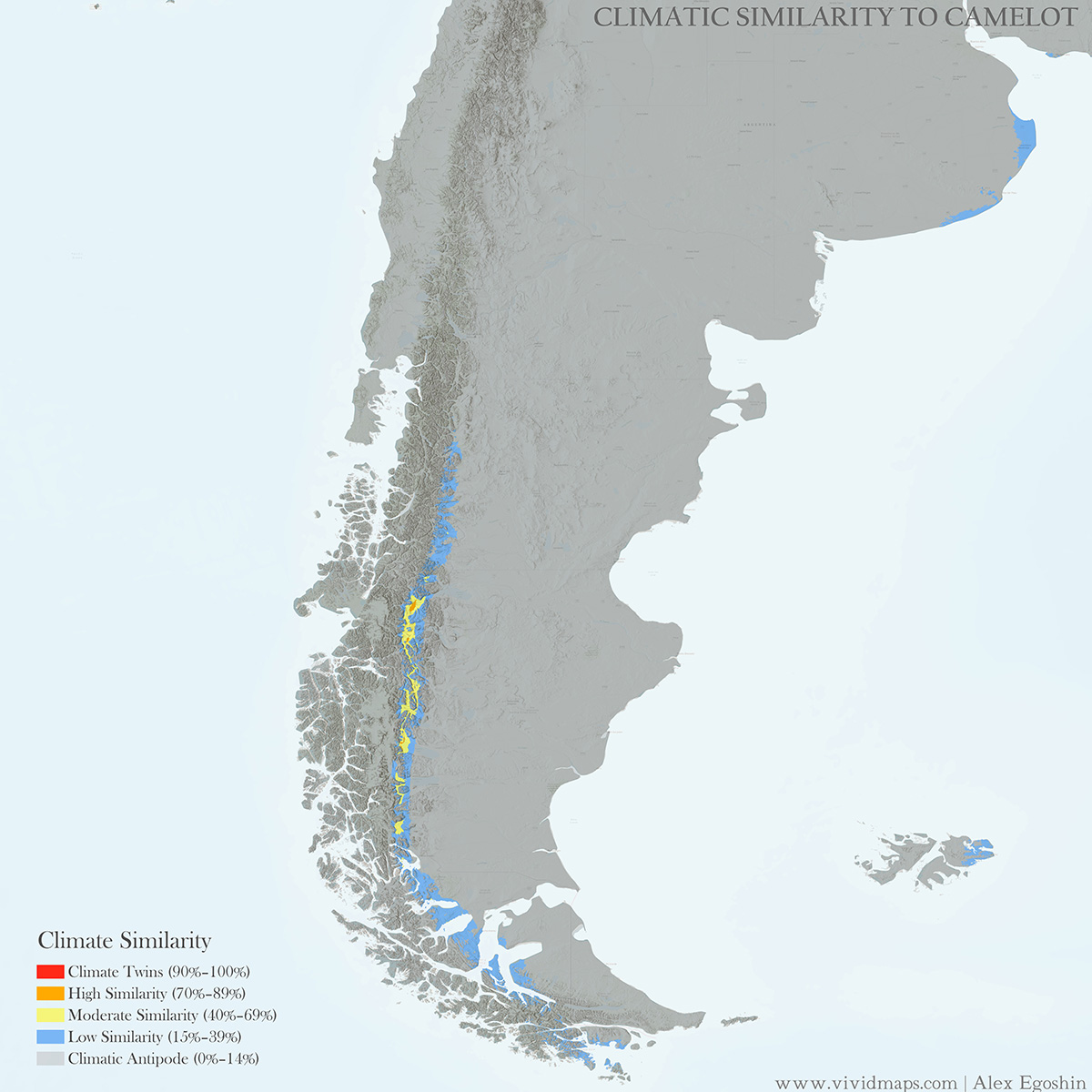
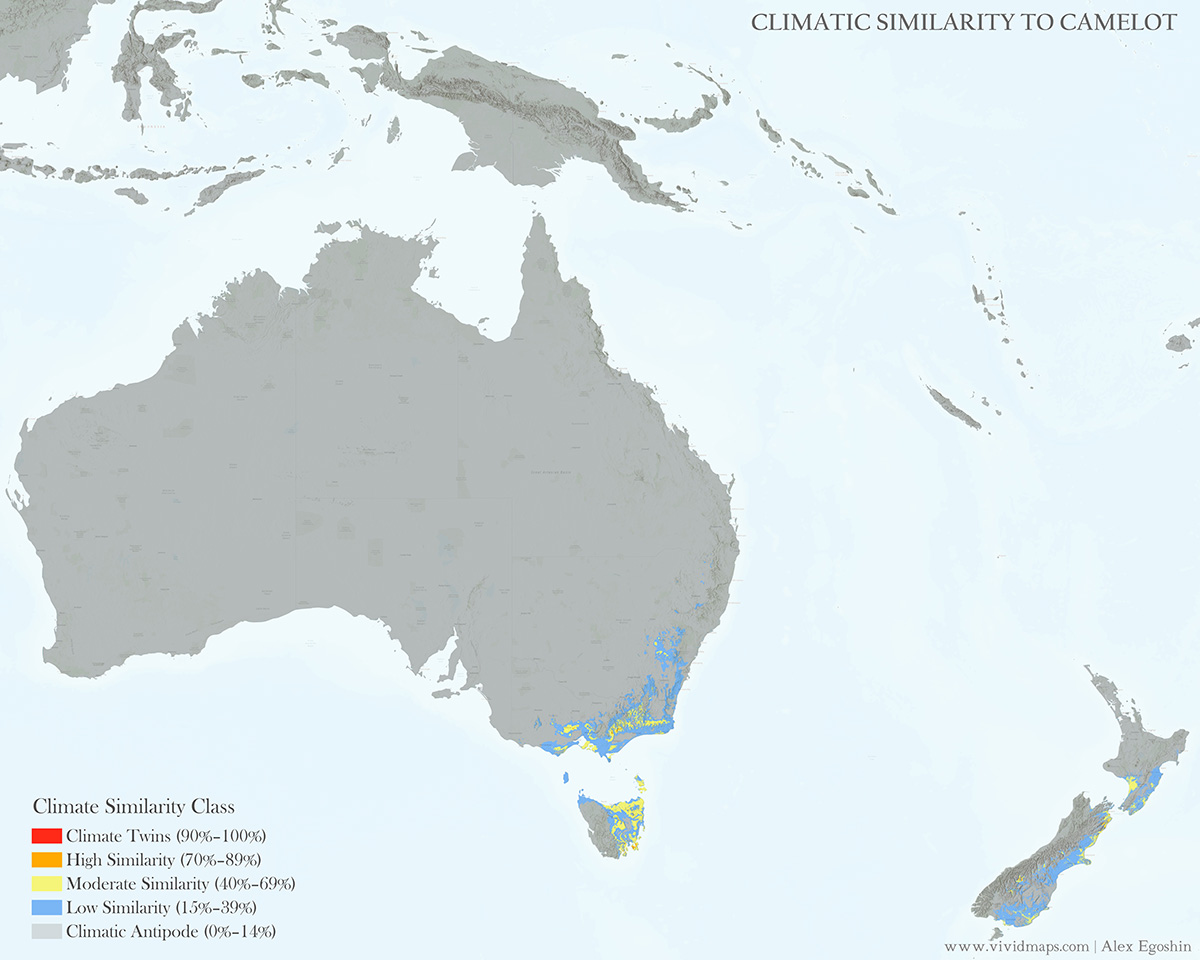
I was not trying to rank comfort at all. I only wanted to find where on the planet actually shares Camelot’s climate. So I measured Camelot’s climate against 16 bioclimatic variables from the WorldClim dataset, covering temperature and precipitation patterns through the year, and used the result as a fixed reference point. Every location on Earth could then be measured by its statistical distance from that reference and sorted into five bands, from Climate Twins down to Climatic Antipode.
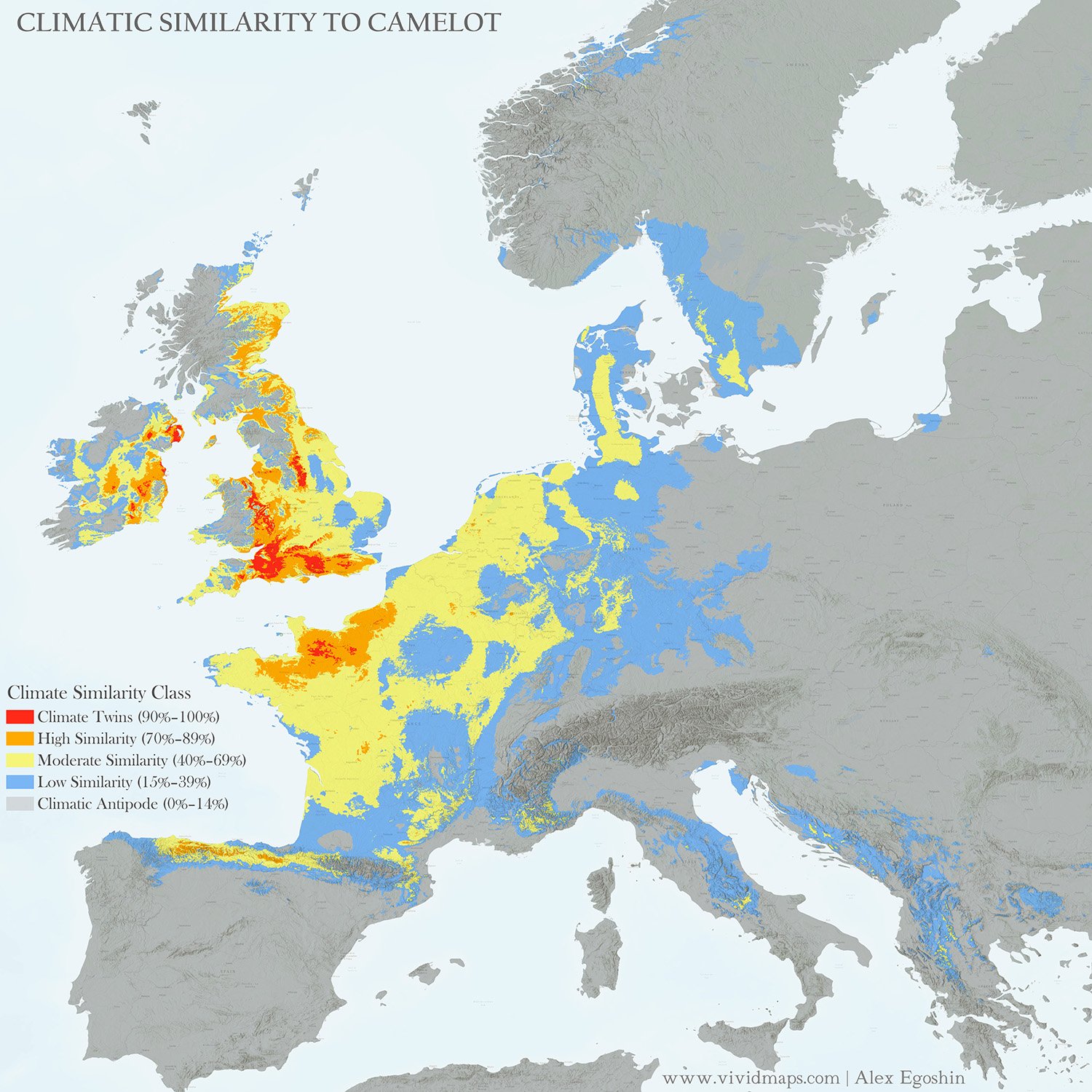
As expected, England is the closest match on the planet. Parts of Ireland and a strip of northern France across the English Channel land in the ‘Climate Twins’ band. Spain’s northern coast lands one band lower.
Outside Europe, high similarity appears in small pockets of the Andes, in Tasmania, and in New Zealand, distant places that share the same moderate temperature swings and steady rainfall.
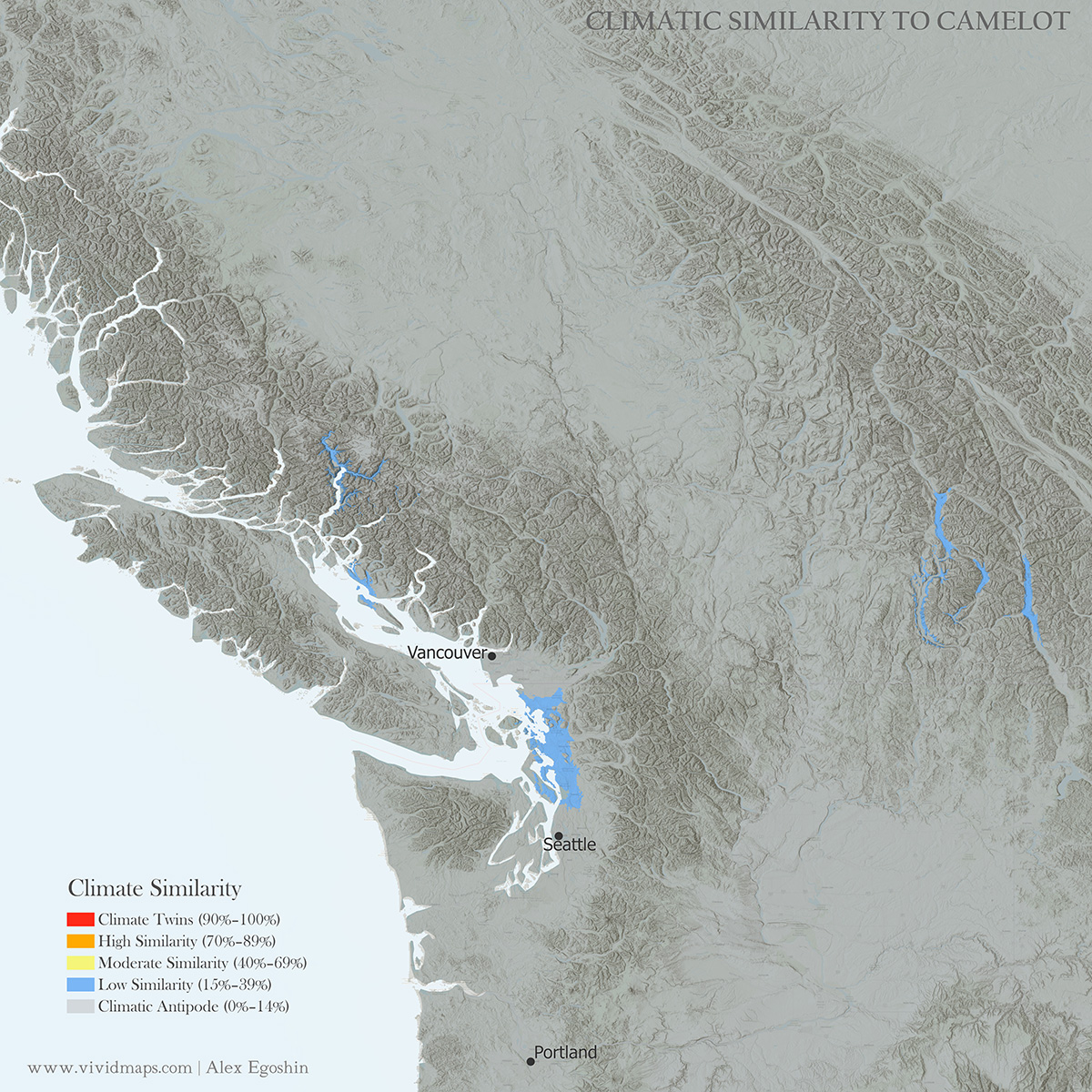
Vancouver and Seattle, both known for grey, temperate weather that outsiders often compare to Britain’s, land in the low similarity band instead.