How Europe Answers the Phone
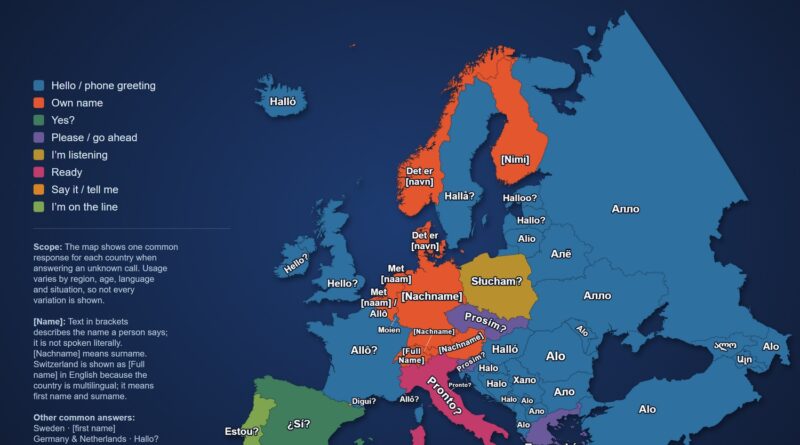
A map of how Europe answers an unknown call shows just how differently each country greets a stranger on the line, from Italy’s ready to Poland’s I’m listening.
Read more: How Europe Answers the PhoneExplore data-driven maps about climate, population, history, cities, travel and the world around us.
A map of how Europe answers an unknown call shows just how differently each country greets a stranger on the line, from Italy’s ready to Poland’s I’m listening.
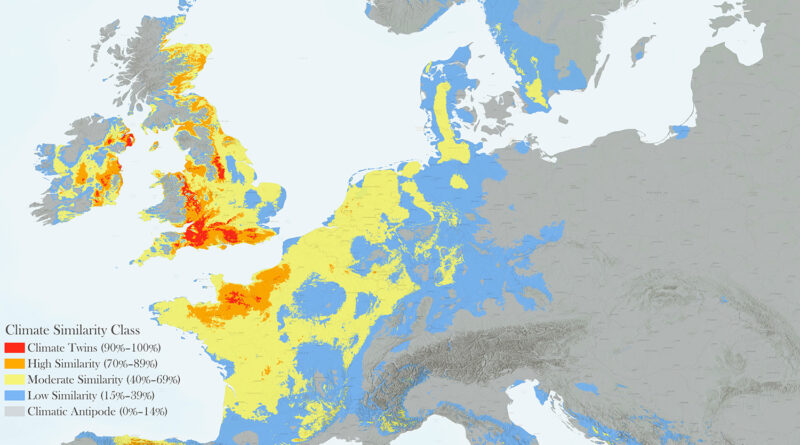
Read more: How Europe Answers the PhoneA new climate similarity map compares global bioclimatic data against a defined Camelot climate profile across 16 bioclimatic variables from WorldClim, sorting every region on Earth into five similarity bands.
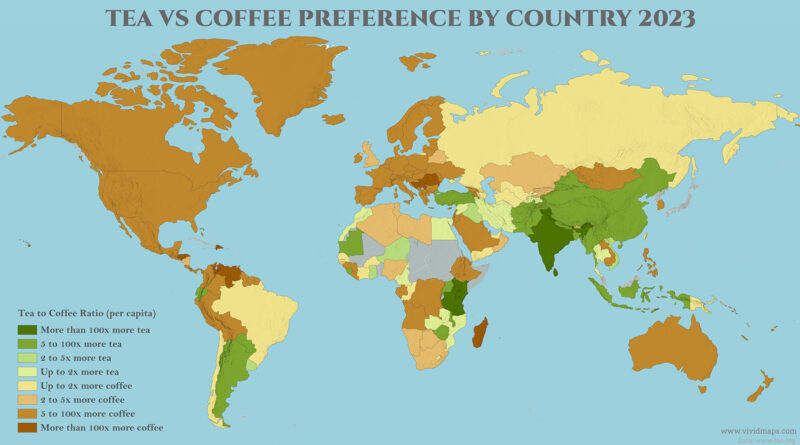
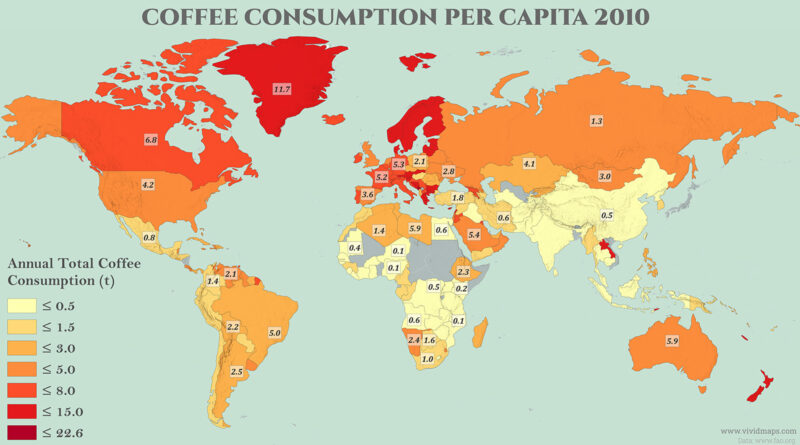
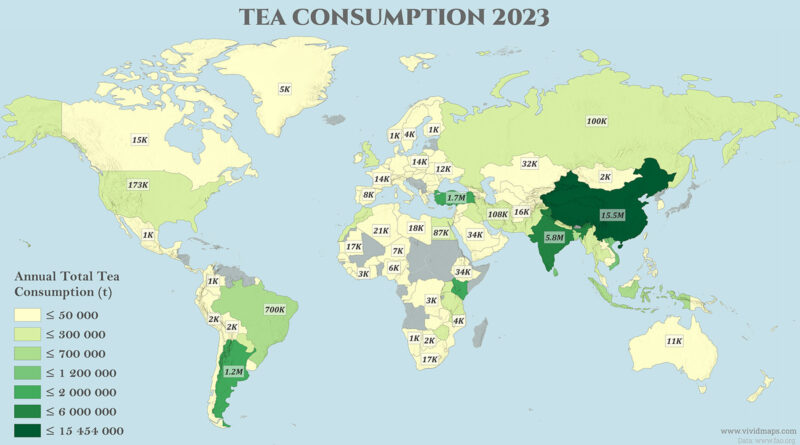
Read more: Where Camelot’s Climate Actually Exists on EarthSri Lanka’s tea supply per person outweighs its coffee supply by about 225 times, the widest gap of any country in 2023. Turkey and China remain firmly tea dominant despite building two of the world’s fastest growing coffee markets. More than half of all countries with usable data lean toward coffee instead.
Read more: Tea vs Coffee by Country, Which One Actually WinsGlobal coffee supply grew from 8,612 to 11,576 thousand tonnes between 2010 and 2023. The United States remained the largest market by volume throughout the period. Laos supplies more coffee per resident than almost any other country, at 22.59 kg (49.8 lbs) per person in 2023. China posted the fastest growth of any major market.
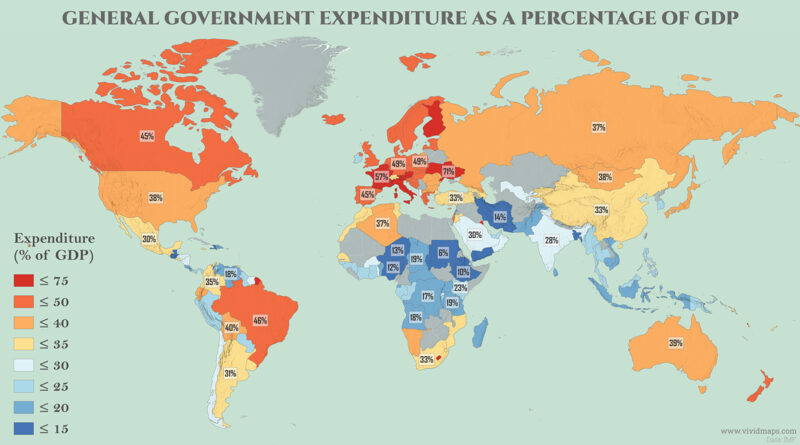
Read more: Coffee Consumption by Country in 2023 and How It Changed Since 2010Kiribati’s government spends 98% of the country’s GDP, the highest share on earth. A cluster of wealthy European countries very nearly match that number, for an entirely unrelated reason.
Read more: The World’s Biggest Governments, MappedGlobal tea and mate supply grew from 11,476 to 33,091 thousand tonnes between 2010 and 2023. China and India together account for about 64 percent of the 2023 total. Sri Lanka leads every country in per capita consumption at 51.69 kg (114.0 lbs) per person. Vietnam and Turkiye posted the sharpest per capita gains of the period.
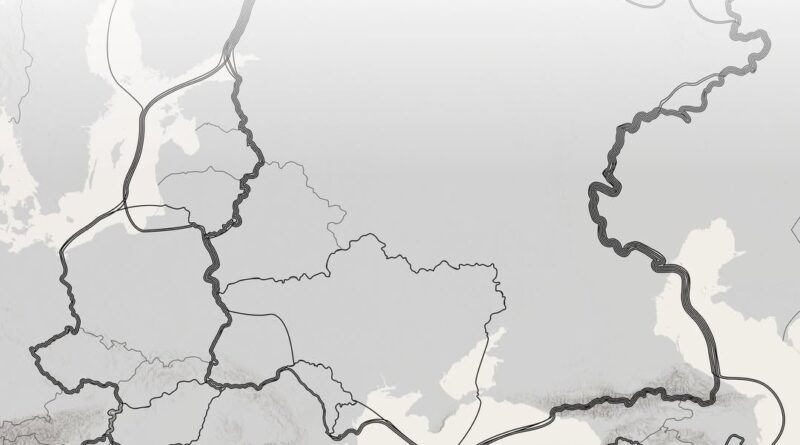
Read more: Tea Consumption by Country and How It Changed Since 2010Geography gives us a starting point, but the actual idea of Eastern Europe comes from centuries of changing borders, politics, and shared traditions. We look at different maps, from the CIA to time zones, to show why this region is so hard to define.
Read more: Where Is Eastern Europe?Canada looks like a country of snow and endless winter on the map, yet its six biggest cities land at the same latitude as London, Paris and even Florence.
Read more: Canada Is Much Further South Than Most Maps Suggest23 states don’t require a front license plate, and the list keeps growing. Utah joined most recently in January 2025, and a bill to make Virginia the next one died in the legislature earlier this year.
Read more: Which US States Require a Front License PlateThe oldest gambling dice are over 5,000 years old. The global gambling market hit $650 billion in 2026. Whether a bet is legal where you are is a completely different question. Five world maps break down casino gambling, online casinos, sports betting and online betting for all 195 countries, plus a Gambling Friendliness score for each.
Read more: Gambling Laws Around the WorldMost of the world writes its official languages in alphabets that arrived from outside, whether Latin from Roman colonialism or Cyrillic from 9th-century Byzantine missionaries. Only about 44 of 195 countries use a script that grew from within their own tradition.
Read more: Countries Where the Official Language Uses a Native Writing ScriptAbout one million species are currently sliding toward extinction, and most of what remains is concentrated in a surprisingly small slice of the planet. This map traces 33 of the regions carrying that weight, from California’s redwood groves to the volcanic forests of Chile and the islands of Wallacea.
Read more: Earth’s Biodiversity Hotspots, MappedA single map tracking the world around 7500 BCE lines up eighteen sites tied to the origins of farming, from Göbekli Tepe in Turkey to Jericho in the West Bank. Only one of them still has people living on it today.
Read more: The Fertile Crescent Around 7500 BCE