
The 35 Best Map-Based Strategy Board Games
A board game changes the moment the map comes out of the box. Once players are staring at a fractured Roman Empire, a hex grid of ancient Greece, or shipping lanes linking Liverpool and Lagos, the terrain starts making decisions for them. Armies bottleneck at mountain passes. Trade routes bend around rivers. The fastest way to lose is usually to ignore the geography printed right on the table.
This list ranks 35 of the best map-based strategy board games, sorted from a 4.0-rated entry point up to games holding 4.9 out of 5 across thousands of reviews. Every entry lists player count, recommended age, average playing time, current rating, and price, along with a link to buy it. Quick family games, hour-long Euro classics, and eight-hour wargames all made the list, so the right pick usually comes down to how much time a group actually has free on a given night.
Runewars

Runewars sends two to four players across the fantasy realm of Terrinoth to seize territory, muster armies, and lay siege to fortified towns before an opponent gets there first. Corey Konieczka designed the game inside the same Terrinoth setting behind Runebound and Descent, and several familiar heroes and monsters turn up here too. Combat resolves through simultaneous card flips instead of dice, so reading an opponent’s likely move counts for almost as much as raw army size.
Players: 2-4
Ages: 13+
Time to play: 120-180 Min
Review: 4.0/5
List Price: $62.10
Buy: Click To Buy On Amazon
Avalon Hill Axis and Allies 1941
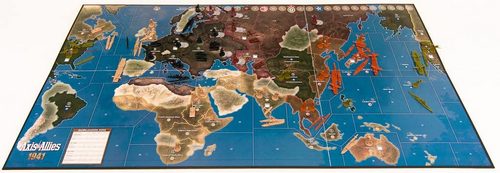
Avalon Hill’s Axis and Allies 1941 drops two to five players into the early years of the Second World War, with the Axis holding momentum across Europe and Asia at the start. Each player controls one nation’s armed forces and wartime economy at once, moving units, funding production, and picking fights on a map divided into named territories rather than abstract zones. It plays faster than the original Axis and Allies and usually wraps in about two hours, which makes it a realistic pick for a weeknight rather than a full Saturday.
Players: 2-5
Ages: 13+
Time to play: 120 Min
Review: 4.4/5
List Price: $49.98
Buy: Click To Buy On Amazon
Sabika

Sabika casts players as Nasrid nobles funding construction of the Alhambra, building trade routes across medieval Europe and the Maghreb to cover tribute demanded by the Catholic Monarchs. The board is built around three connected rondels, one each for construction, poetry carved into the palace halls, and the trade routes themselves, spread across five historical eras. Whoever collects the most prestige points across those eras wins, and the three-rondel structure keeps any single strategy from dominating every game.
Players: 1-5
Ages: 14+
Time to play: 60-120 Min
Review: 4.4/5
List Price: $53.95
Buy: Click To Buy On Amazon
Carcassonne

Carcassonne hands players tiles instead of a fixed board, and the map only exists because everyone keeps building it, one square of city wall, road, or field at a time. Set around the real fortified city in southern France, the game has players placing followers on their own tiles to claim cloisters, roads, and finished cities before someone else’s placement cuts off the expansion. Klaus-Jürgen Wrede designed it in 2000, it won the Spiel des Jahres the following year, and a typical game with two to five players still finishes well under an hour, which is part of why it keeps showing up at both family tables and serious game nights.
Players: 2-5
Ages: 13+
Time to play: 60-120 Min
Review: 4.4/5
List Price: $59.99
Buy: Click To Buy On Amazon
Sid Meier’s Civilization – A New Dawn
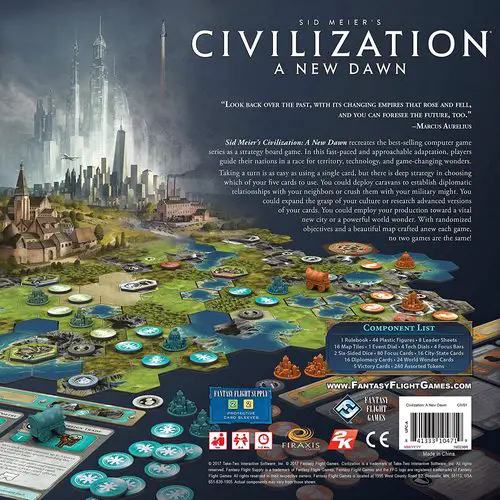
This card-driven take on the Civilization video games has players building an empire from a single city, with the map assembled anew from modular hex tiles at the start of every game. Each turn comes down to playing one card from a hand of five, but the choice between them (military expansion, diplomacy, culture, or technology) carries real weight, since every path closes off some others. Games take one to two hours, considerably shorter than most licensed Civilization board games, which makes this the version to grab for a group that wants the theme without the all-night commitment.
Players: 2-4
Ages: 14+
Time to play: 60-120 Min
Review: 4.5/5
List Price: $46.98
Buy: Click To Buy On Amazon
A Game of Thrones

King Robert Baratheon is dead, and the Seven Kingdoms are bracing for war. A Game of Thrones hands three to six players control of a Great House of Westeros, each with a different starting position and army composition, competing to hold the most castles and strongholds when ten rounds are up. Troop movement across the map is where most of the game happens, and because orders are written down in secret and only shown once everyone has committed, misjudging a neighbor’s plans can undo an entire turn.
Players: 3-6
Ages: 14+
Time to play: 180 Min
Review: 4.6/5
List Price: $52.86
Buy: Click To Buy On Amazon
Steam

Steam turns players loose on a map of named cities and lets them lay track between whichever ones they expect will pay off, picking up goods where they are produced and delivering them where demand is highest. Each completed delivery funds bigger, faster locomotives, and the board itself, cut through by mountain ranges, rivers, and other players’ existing rail lines, decides which routes actually pay off. With more than a million possible track layouts across its maps, no two games of Steam end up looking the same.
Players: 3-6
Ages: 12+
Time to play: 90 Min
Review: 4.6/5
List Price: $29.99
Buy: Click To Buy On Amazon
Diplomacy
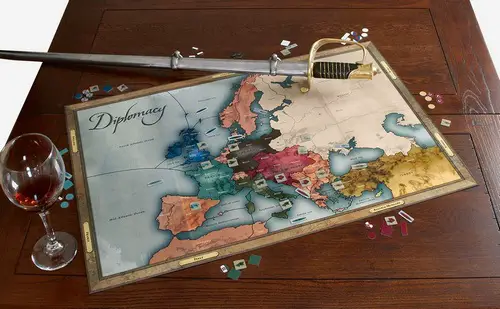
Diplomacy sets seven European powers against each other at the turn of the twentieth century, and unlike almost everything else on this list, no dice are involved anywhere in the rules. Every move is negotiated in private beforehand, armies and fleets clash only because two players agreed, separately, to send them to the same place, and the entire game depends on trust that both sides know is temporary. A full game with all seven powers regularly takes six hours, so it rewards a group that already knows they enjoy spending an entire evening with the same people.
Players: 2-7
Ages: 13+
Time to play: 360 Min
Review: 4.6/5
List Price: $29.99
Buy: Click To Buy On Amazon
Hannibal Rome vs Carthage

Hannibal Rome vs Carthage casts two players as the commanders of the armies that fought the Second Punic War, moving generals, raising troops, and pulling political levers across a map of the Mediterranean and its surrounding provinces. Strategy cards handle movement, recruitment, and historical events, while a second deck of Battle Cards resolves combat whenever two armies actually meet. This edition carries new artwork from Kurt Miller over the original 1996 Avalon Hill design, and it remains one of the more approachable point to point wargames for two players who want real history without a rulebook the size of a phone book.
Players: 2
Ages: 14+
Time to play: 150 Min
Review: 4.7/5
List Price: $69.99
Buy: Click To Buy on eBay
Twilight Struggle the Cold War (1945-1989)

In 1945, two new superpowers stood where several great powers used to be, and the world had only a few months to exhale before the next war began. Twilight Struggle recreates the 44 years of Cold War maneuvering between the United States and the Soviet Union, fought with spies, propaganda, and proxy conflicts instead of open combat, spreading influence across a world map from 1945 until the game’s close in 1989. Ananda Gupta and Jason Matthews designed it in 2005, and it held the top spot on BoardGameGeek’s overall rankings for years, an unusual run for a two-player-only game with no dice-free combat resolution to fall back on.
Players: 2
Ages: 14+
Time to play: 45 Min
Review: 4.7/5
List Price: $94.53
Buy: Click To Buy On Amazon
Terra Mystica Board Game
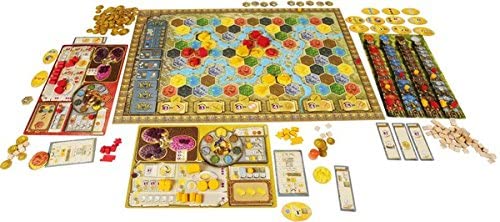
Fourteen fantasy factions share seven types of terrain in Terra Mystica, and since every faction can only build on its own home terrain, expansion means terraforming a neighbor’s landscape into something usable first. Two to five players compete for the most efficient use of a shared, static map, with almost no randomness in the rules to blame a bad result on. Designers Jens Drögemüller and Helge Ostertag built in four religious cult tracks as a second scoring path, which keeps a purely territorial strategy from being the only route to winning.
Players: 2-5
Ages: 12+
Time to play: 45 Min
Review: 4.7/5
List Price: $99.99
Buy: Click To Buy On Amazon
Brass Birmingham Board Game
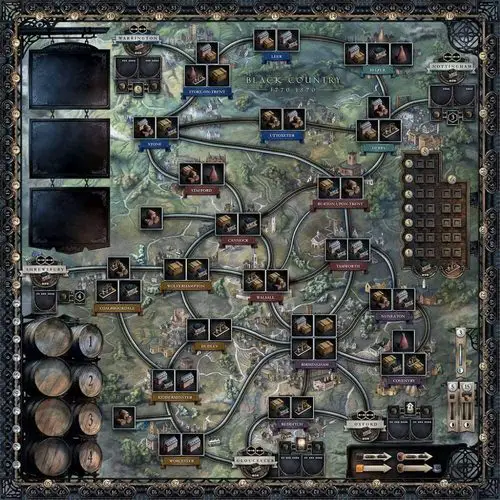
Brass Birmingham drops two to four players into the Industrial Revolution, developing coal mines, cotton mills, and ironworks across a map of the English Midlands between 1770 and 1870. The game splits into a Canal Era and a Rail Era, and industries built early can flip for points later once a network connects them to a working market, so timing a build counts for as much as location does. It is the sequel to Martin Wallace’s 2007 original, Brass, redesigned by Gavan Brown and Matt Tolman, and it picked up the 2018 Golden Geek award for Best Strategy Board Game.
Players: 2-4
Ages: 16+
Time to play: 60 Min
Review: 4.7/5
List Price: $72.95
Buy: Click To Buy on eBay
Risk

Risk has been the default introduction to map based strategy for most people since 1959, and the rules have hardly changed since, roll dice, hold territory, and try to be the last army standing on a world map broken into continents and smaller territories. Holding an entire continent grants extra reinforcements each turn, which is usually the difference between slowly grinding out a win and getting picked apart by two neighbors at once. Dozens of themed editions exist now, but the standard board remains the version most new players learn on.
Players: 2-5
Ages: 10+
Time to play: 45-90 Min
Review: 4.7/5
List Price: $28.32
Buy: Click To Buy On Amazon
Trekking The World
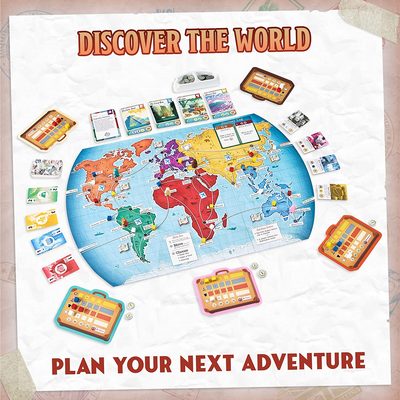
Trekking the World turns a world map into a checklist, with players collecting cards for famous landmarks and natural wonders as they plan a route across continents. Points come from both the number of places visited and how many different continents are represented, so a strategy built entirely around one region eventually stops paying off. It plays light enough for kids and adults to enjoy at the same table, which makes it one of the easier entries on this list to bring out on a family game night rather than saving it for serious gamers only.
Players: 2-5
Ages: 10+
Time to play: 45-90 Min
Review: 4.7/5
List Price: $49.95
Buy: Click To Buy On Amazon
Plunder

Plunder hands two to six players a fleet of ships and a map built fresh from modular ocean tiles every game, then sends everyone chasing resource-rich islands and each other. Naval combat, island claims, and a board that never sets up the same way twice keep any single opening strategy from working reliably twice in a row. It falls on the lighter end of this list in terms of rules overhead, which makes the table time go mostly to maneuvering fleets rather than reading cards.
Players: 2-6
Ages: 10+
Time to play: 40-120 Min
Review: 4.8/5
List Price: $49.99
Buy: Click To Buy On Amazon
Undaunted: Normandy
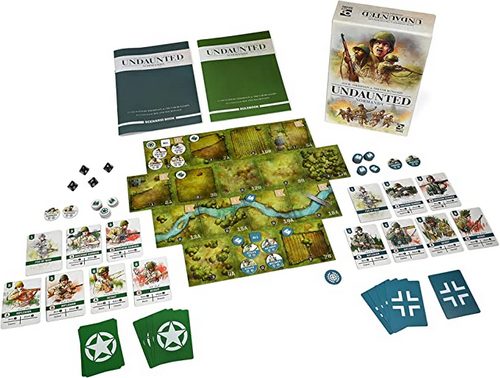
Undaunted Normandy reimagines a World War Two battlefield as a deck-building game, with American and German players each maneuvering units across a modular map built from hexagonal tiles specific to that scenario. Cards represent squads and equipment, and losing a unit in combat means losing its card from the deck permanently, so casualties change a player’s available options for the rest of the game, not just the board position. Historical scenarios drawn from the Normandy invasion give each session a specific objective rather than an open-ended fight to the last unit.
Players: 2
Ages: 14+
Time to play: 120 Min
Review: 4.8/5
List Price: $42.30
Buy: Click To Buy On Amazon
Mage Knight Board Game

Mage Knight builds its map one hex tile at a time as players explore the Atlantean Empire, picking fights with monsters, besieging cities, and leveling up a single hero across a campaign that can stretch well past two hours. It combines deck building, tactical combat, and a fair amount of route planning, since a poorly timed push into unexplored terrain can leave a hero exposed with no way to retreat before nightfall triggers tougher enemies. One to four players can take it on, though most fans agree the game rewards patience more than speed at any player count.
Players: 1-4
Ages: 14+
Time to play: 150 Min
Review: 4.8/5
List Price: $64.00
Buy: Click To Buy On Amazon
Terraforming Mars
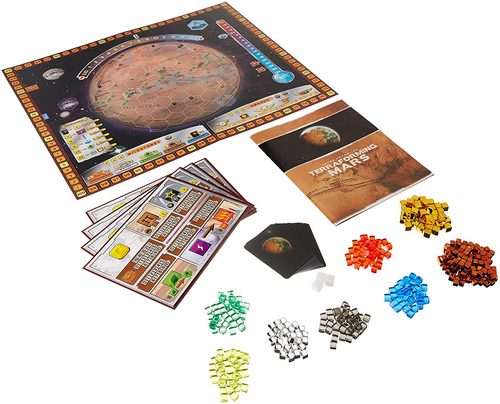
Terraforming Mars casts one to five players as the heads of rival corporations racing to make the planet livable, raising global temperature, oxygen, and ocean coverage through a hand of project cards while a shared board tracks how close the planet is to habitable. Placing a tile next to an opponent’s forest or city can trigger a bonus for whoever owns the adjacent square, so the map itself becomes a running negotiation over whose territory benefits from the next move. Set in the 2400s, it has become one of the more consistently reprinted strategy games of the last decade, largely because no two combinations of corporation and starting hand play the same way twice.
Players: 1-5
Ages: 12+
Time to play: 50 Min
Review: 4.8/5
List Price: $64.37
Buy: Click To Buy On Amazon
Catan

Catan built its island from hexagonal resource tiles arranged differently every game, which meant the map itself, not a printed board, was the innovation that made it the first modern Euro-style game to break into the mainstream.
Players trade wood, brick, sheep, wheat, and ore to build roads, settlements, and cities, and the numbered tokens on each tile decide which resources show up most often on any given layout. Klaus Teuber released it in 1995 as The Settlers of Catan, and the game has since spawned enough expansions and standalone spinoffs that the original four-player base set is now just one entry point among many.
Players: 3-4
Ages: 10+
Time to play: 60 Min
Review: 4.8/5
List Price: $39.99
Buy: Click To Buy On Amazon
Concordia

Concordia sends Roman merchants out across a map of the Mediterranean to found colonies and build trade networks, using a hand of role cards instead of a fixed turn order to decide what happens next. Every card played goes back into a player’s hand eventually, so building an efficient personal deck ends up counting for more than reacting to what a specific board space offers. The map itself can be swapped for different regions in various editions, which keeps the trade routes from feeling identical game after game.
Players: 2-5
Ages: 13+
Time to play: 90 Min
Review: 4.8/5
List Price: $49.55
Buy: Click To Buy On Amazon
War of the Ring
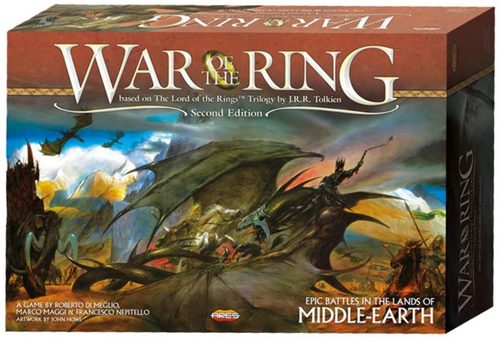
War of the Ring splits players between the Free Peoples and the Shadow armies of Sauron across a detailed map of Middle-earth, with one side racing to sneak the Ring into Mordor while the other tries to crush all opposition before that happens. Combat uses detailed miniatures and an action die system that forces real trade-offs between moving armies, advancing the Fellowship, and using character abilities, since a single turn rarely allows all three. It draws directly from Tolkien’s books rather than just the films, which shows in details longtime readers will recognize on cards and event text that casual fans might miss.
Players: 2-4
Ages: 13+
Time to play: 180 Min
Review: 4.8/5
List Price: $93.09
Buy: Click To Buy On Amazon
Lords of Waterdeep

Lords of Waterdeep sets its worker placement on a map of the Dungeons and Dragons city of Waterdeep, with players recruiting adventurers to complete quests while secretly working toward a personal Lord’s agenda that only they know about. Buildings placed on the map by players themselves open up new actions for everyone, which means an opponent’s construction can end up helping a rival as much as it helps them. It finishes in a tight 60 minutes even at full player count, short enough that a group can usually fit two games into one evening.
Players: 2-5
Ages: 12+
Time to play: 60 Min
Review: 4.8/5
List Price: $48.70
Buy: Click To Buy On Amazon
Power Grid

Power Grid casts players as the heads of competing electric utilities, bidding on power plants and buying the coal, oil, uranium, or renewable resources needed to run them, then racing to connect the most cities across a double-sided map of the United States or Germany. The player currently in the lead pays more for resources and connects new cities last, a built-in handicap that keeps runaway leads from happening early. Designer Friedemann Friese adapted it from his earlier game Funkenschlag, and the numbers-heavy auction phase remains the part most players either love or find themselves needing a second playthrough to appreciate.
Players: 2-6
Ages: 13+
Time to play: 45 Min
Review: 4.8/5
List Price: $55.93
Buy: Click To Buy On Amazon
Paths of Glory
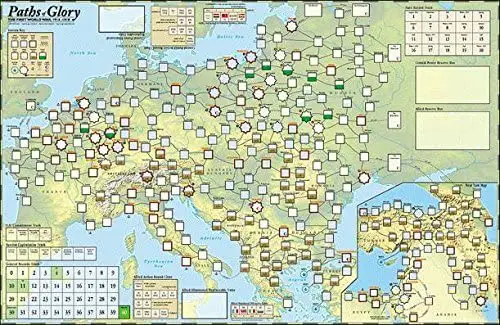
Paths of Glory covers the entire First World War on a single point to point map running from the trenches of the Western Front to the deserts of Arabia, with one player commanding the Central Powers and the other the Entente. Ted Raicer’s 1999 design uses a card-driven system where the same cards can be played for their military value or their historical event, which forces a constant trade off between flexibility now and a stronger hand later. A full campaign game genuinely takes 6 to 8 hours between two committed players, making it one of the heaviest wargames on this list by a wide margin, so plan to block out an evening or splitting it across two sessions rather than expecting to finish it after dinner.
Players: 2
Ages: 14+
Time to play: 45 Min
Review: 4.8/5
List Price: $64.10
Buy: Click To Buy On Amazon

Pandemic
Pandemic flips the usual competitive board game map on its head, since every player is working from the same side against four diseases spreading across a connected world map of major cities. Each character has a unique ability, from building research stations to moving other players’ pieces, and the team has to balance treating outbreaks now against researching cures before the deck of infection cards is exhausted. Matt Leacock designed it in 2008, and it remains one of the most commonly recommended entry points into cooperative board gaming for exactly that reason, the map makes the shared threat visible at all times.
Players: 2-4
Ages: 8+
Time to play: 45 Min
Review: 4.8/5
List Price: $49.99
Buy: Click To Buy On Amazon
Scythe
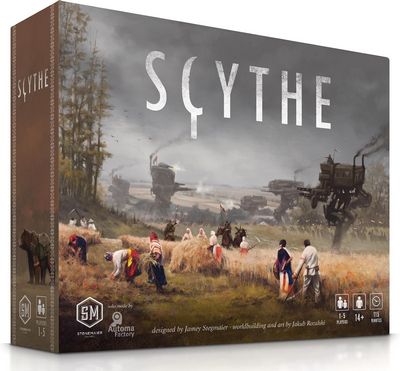
Scythe reimagines 1920s Eastern Europe as an alternate history where five factions, each starting in its own corner of the map, expand outward to gather resources, build structures, and field the occasional mech unit without a single die roll anywhere in the rules. Combat, when it happens, resolves through simultaneous card commitment rather than luck, and most games are won on economic engine building rather than open warfare.
Jamey Stegmaier’s 2016 design became one of the best-selling strategy games of its decade, helped along by Jakub Rozalski’s painted artwork, which is arguably as recognizable at this point as the gameplay itself.
Players: 1-7
Ages: 14+
Time to Play: 90-115 Min
Review: 4.8/5
List Price: $47.99
Buy: Click To Buy On Amazon
Command and Colors Ancients

Richard Borg’s 2006 design recreates ancient battles between Rome and Carthage on a hex map that changes shape and terrain with every scenario in the included battle book. Command cards limit which section of the battlefield, left, center, or right, a player can actually order on a given turn, which means reading the map’s terrain counts for as much as reading an opponent’s army composition. Individual scenarios wrap up in about 45 to 60 minutes, short enough that two players can work through several historical battles, Cannae and Zama among them, in one session.
Players: 2
Ages: 13+
Time to play: 45 Min
Review: 4.9/5
List Price: $49.99
Buy: Click To Buy On Amazon
Ticket To Ride

Ticket to Ride hands each player a set of destination tickets and a map of North America, and the entire strategy comes down to collecting matching train cards fast enough to claim routes before a rival blocks the one path a ticket actually needs. Alan R. Moon designed it in 2004, reportedly inspired by watching ocean waves, and it won that year’s Spiel des Jahres, a rare crossover hit that plays equally well for first timers and people who already own thirty other board games. Blocking a route someone else clearly needs is entirely legal, and often the whole game in miniature.
Players: 2-5
Ages: 8+
Time to play: 30-60 Min
Review: 4.9/5
List Price: $49.99
Buy: Click To Buy On Amazon
Railways of the World
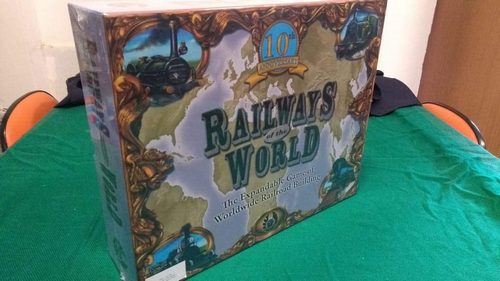
Railways of the World lets players build competing rail networks across a choice of regional maps, laying track, delivering goods between cities, and taking on debt to expand faster than the bank balance technically allows. Each map, whether it covers North America, Europe, or somewhere else entirely, changes which cities are the best early connections, so a strategy that wins on one board rarely transfers directly to another. Multiple expansion maps exist at this point, which turns a single purchase into an entire family of different games built on the same core rules.
Players: 2-6
Ages: 14+
Time to play: 120 Min
Review: 4.9/5
List Price: $91.95
Buy: Click To Buy On Amazon
Twilight Imperium

Twilight Imperium builds an entire galaxy from scratch at the start of every game, with players drafting hex tiles, some holding rich planets, others hiding gravity wells or ion storms, to construct the map around the shared capital of Mecatol Rex. Three to six players, each controlling one of seventeen distinct factions, then spend the game racing for that capital through military conquest, political maneuvering, or economic dominance, since a single galaxy map never plays the same way twice. Sessions commonly last four to eight hours, the biggest single commitment on this entire list, and that scale is exactly what earns it this much devotion from the people who clear a whole day for it.
Players: 3-6
Ages: 14+
Time to play: 4-8 Hours
Review: 4.9/5
List Price: $131.99
Buy: Click To Buy On Amazon
Ticket to Ride: USA 1910 Expansion

This expansion adds new Destination Tickets and train cars to the original Ticket to Ride rather than a new map, opening up longer term route planning goals and bonus scoring for the longest continuous line built during a game. It requires the base Ticket to Ride set to play, since the 225 train cars and 144 cards inside are built to supplement an existing collection rather than stand alone. For a group that already owns the base map and wants more replay value out of the same routes, it costs less than buying an entirely different Ticket to Ride edition.
Players: 2-5
Ages: 8+
Time to play: 30-60 Min
Review: 4.9/5
List Price: $21.99
Buy: Click To Buy On Amazon
Memoir ’44
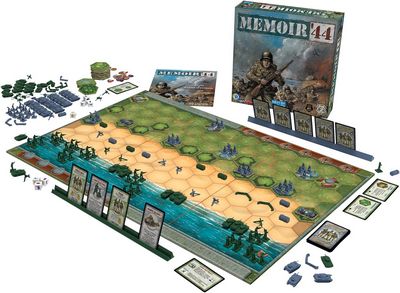
Memoir ’44 recreates specific battles from the Western Front of World War Two, with each scenario using a different hex map layout and terrain mix pulled straight from the included scenario book. Richard Borg’s Command and Colors system splits the battlefield into left, center, and right sections, and command cards restrict which section a player can actually issue orders to, which turns reading the map into half the strategy before a single die gets rolled. Dozens of expansions have followed since the original launch, each adding a new theater, from the Pacific to North Africa, on top of the same core system.
Players: 2
Ages: 8+
Time to Play: 30-60 minutes
Review: 4.9/5
List Price: $55.99
Buy: Click To Buy On Amazon
Root
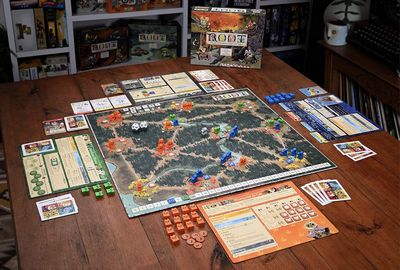
Root sets four sharply asymmetric factions against each other across a hex map of a contested woodland, and no two factions play by the same rules or chase the same win condition. The industrious Marquise de Cat expands a sprawling supply network while the Woodland Alliance quietly builds sympathy among the map’s own clearings, so the same board can look completely different depending on which faction controls which corner. That asymmetry means new players usually need one full game just to understand their own faction, but it is also the reason Root gets replayed so often once everyone has a favorite.
Players: 2-4
Ages: 10+
Time to Play: 60-90 minutes
Review: 4.9/5
List Price: $48.00
Buy: Click To Buy On Amazon
Terraforming Mars Amazonis & Vastitas Expansion
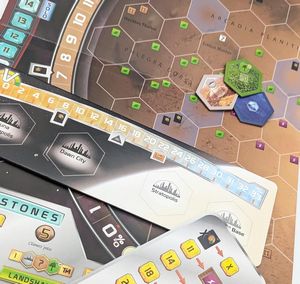
This expansion swaps the standard Terraforming Mars board for two new double-sided maps designed by Jacob Fryxelius, the original game’s designer. Amazonis Planitia stretches the playing field with extra hexes and longer global parameters, built specifically to smooth out four and five player games, while Vastitas Borealis centers on the frozen north pole, where placing a tile over the ice releases carbon dioxide that raises the temperature track at a cost. It requires the Terraforming Mars base game and does not work as a standalone purchase, so this one is for players already terraforming who want a genuinely different map rather than more cards for the same one.
Players: 1-5
Ages: 12+
Time to Play: 90-120 minutes
Review: 4.9/5
List Price: $28.24
Buy: Click To Buy On Amazon
Ticket to Ride Rails and Sails
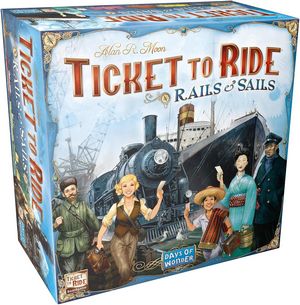
Rails and Sails is a standalone entry in the Ticket to Ride series rather than an expansion, built around an oversized double-sided board, the entire world on one side and the Great Lakes of North America on the other. Ships join trains as a second way to claim routes, and Tour tickets add multi-stop objectives on top of the usual point to point destination cards, pushing route planning further ahead than the original game ever asked for. Alan R. Moon designed it as a follow-up to the 2004 original, released in September 2016, and a group never needs to own the base Ticket to Ride to play this version.
Players: 2-5
Ages: 10+
Time to Play: 90-120 minutes
Review: 4.9/5
List Price: $84.75
Buy: Click To Buy On Amazon
Ratings and prices above reflect Amazon listings at the time of writing and shift often, so double check the current price before buying. Playing time is the biggest single filter for this list. A group with ninety minutes on a weeknight wants Ticket to Ride or Pandemic, not Paths of Glory, and matching the game to the actual evening tends to decide whether it gets played again more than the star rating does.
Choosing The Right Board Game
Ratings and prices above reflect Amazon listings at the time of writing and shift often, so double check the current price before buying. Playing time is the biggest single filter for this list. A group with ninety minutes on a weeknight wants Ticket to Ride or Pandemic, not Paths of Glory, and matching the game to the actual evening tends to decide whether it gets played again more than the star rating does.
Main flaw here is there’s no “Eclipse: Second Dawn” on the list