Hurricanes and tornadoes get all the press, but lightning kills around 20 Americans annually. The pattern of where isn’t what you’d guess.
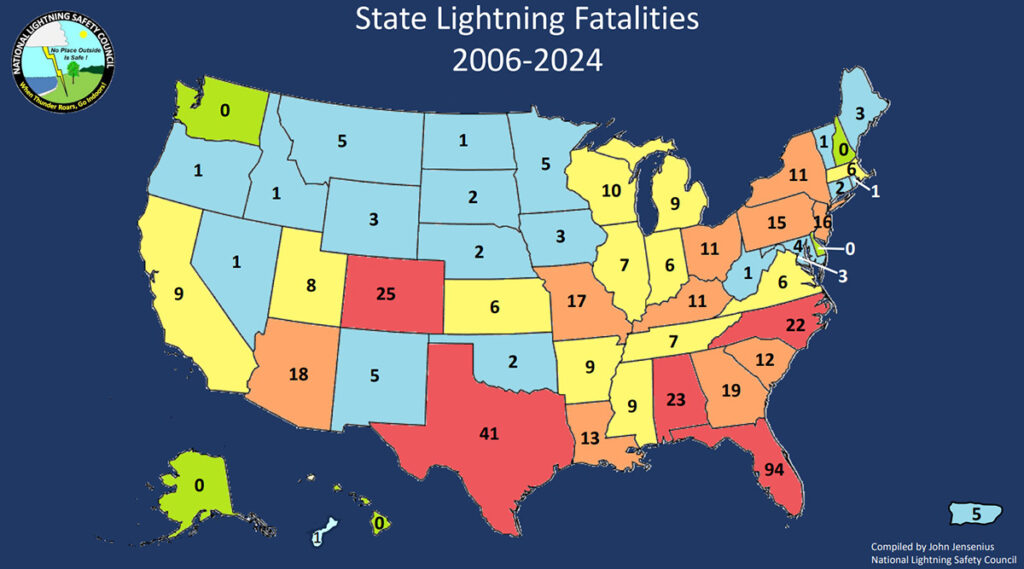
According to the National Lightning Safety Council, since 2006, Florida has had 94 lightning deaths. Texas is way behind at 41. Then Colorado with 25, Alabama with 23, and North Carolina with 22. Meanwhile, Alaska, Delaware, Hawaii, New Hampshire, and Washington? Zero deaths in that entire time.
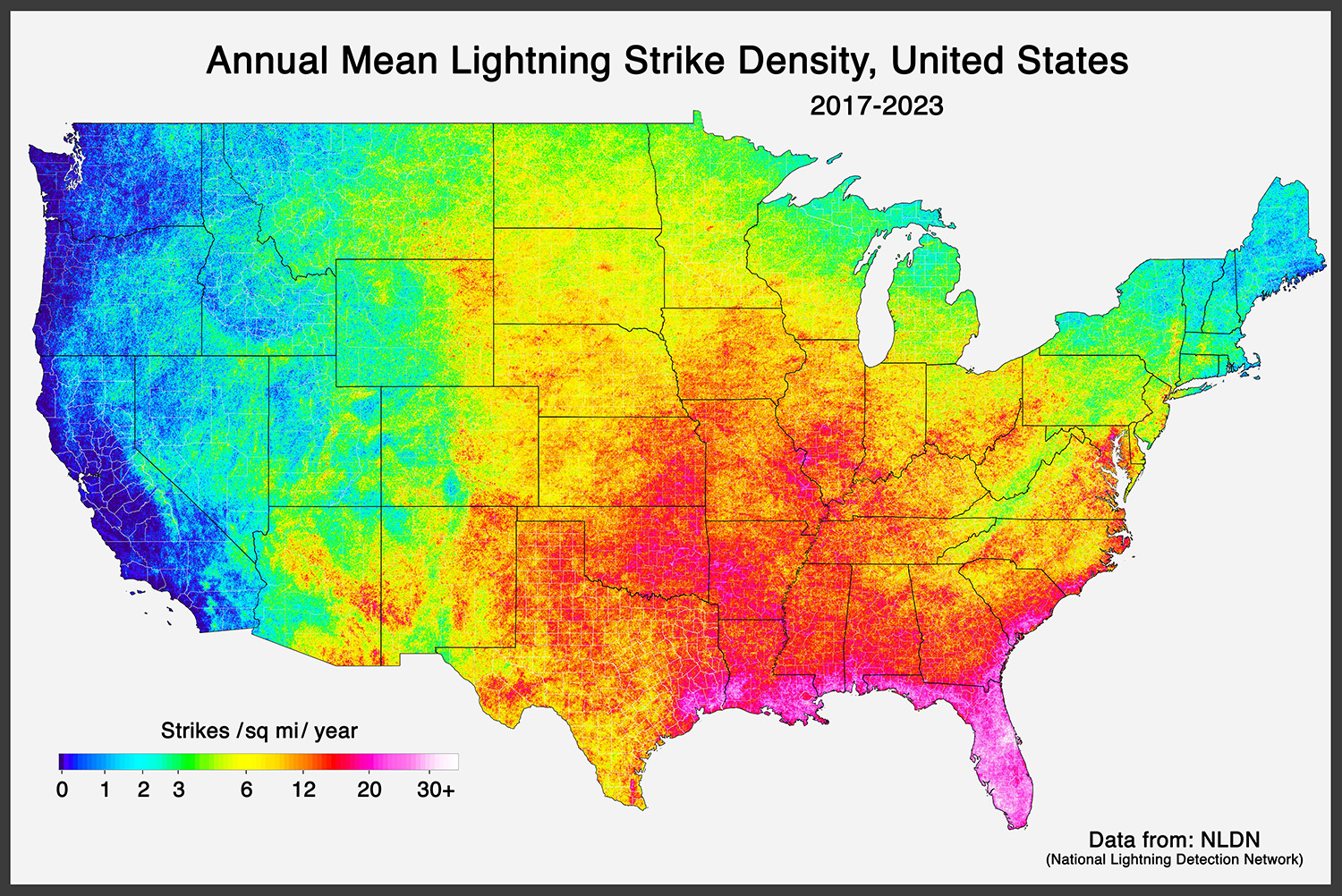
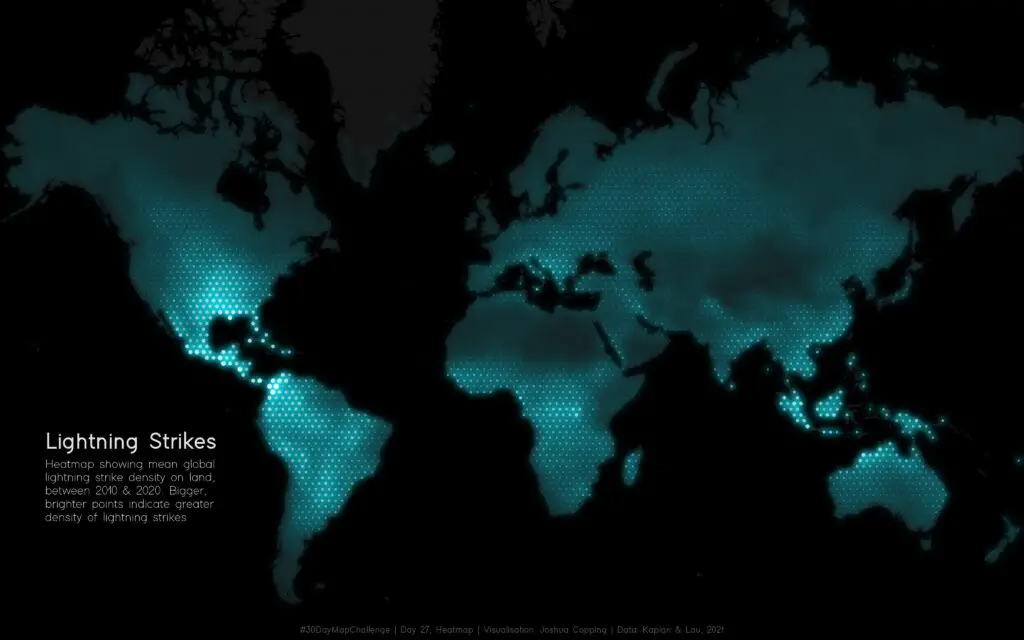
Looking at the lightning strike density map created by Reddit user: adkinsadam1, Florida lives up to its reputation. The state has the highest lightning strike density in the US—more strikes per square kilometer than anywhere else. The peninsula sits between the Gulf and the Atlantic, so sea breezes from both sides crash into each other over hot land, spawning storms almost daily in summer. Combined with millions of people at the beach or outside doing something year-round, that creates constant exposure to risk.
The National Lightning Detection Network tracks actual strikes. You’ll see clusters in Florida, along the Gulf Coast, through the Midwest. Compare this to the fatality map, though—they don’t line up the way you’d expect. Where lightning strikes most often isn’t necessarily where people are getting killed.
Men get hit four times more often than women. The typical victim is around 37. June, July, August—these three months account for over 70% of deaths. What were they doing? Fishing and boating cause 14% of deaths. Leisure activities overall? 63%. The National Lightning Safety Council lists fishing, beach time, boating, and camping as your highest risks. Yard work accounts for 20% of deaths, with farmers and ranchers getting hit more than most.
Water activities are especially dangerous. You’re stuck out in the open. The boat motor or crashing waves drown out thunder. By the time you notice the storm building, you’ve got to get back to shore first.
Staying Safe
The 30-30 rule. See a flash? Start counting. Hear thunder before 30 seconds pass? Get inside. Lightning strikes can happen 10 miles away from the main storm, even when it’s not raining where you are.
Rain stopped? Don’t go back out yet. Give it 30 minutes from the last thunder. Half the people killed by lightning die after they assume it’s safe. You need an actual building. Four walls, roof, preferably with plumbing or wiring. If it has plumbing or wiring, even better—that gives electricity a path to ground. Your car counts as safe too, just don’t touch metal parts. Park pavilions and dugouts won’t cut it.
Stuck outside? Nothing you can do will make a thunderstorm safe when you’re exposed. Remember that crouch position some people talk about? It doesn’t help. Won’t save you from current running through the ground or electricity arcing off a nearby tree .Your only real option is heading for shelter. In a group? Don’t bunch up—put 50 to 100 feet (15-30 m) between people. Get away from anything tall and isolated. Standing alone in a field? Keep moving. Get off the water immediately. The key is getting to actual shelter as fast as possible.
Here’s some good news: deaths have been dropping. Last year only 12 people died from lightning versus the typical 20 per year average we’ve seen over two decades. People are catching on. When you hear thunder, go inside. Your golf round can wait. So can that fish you were about to catch.