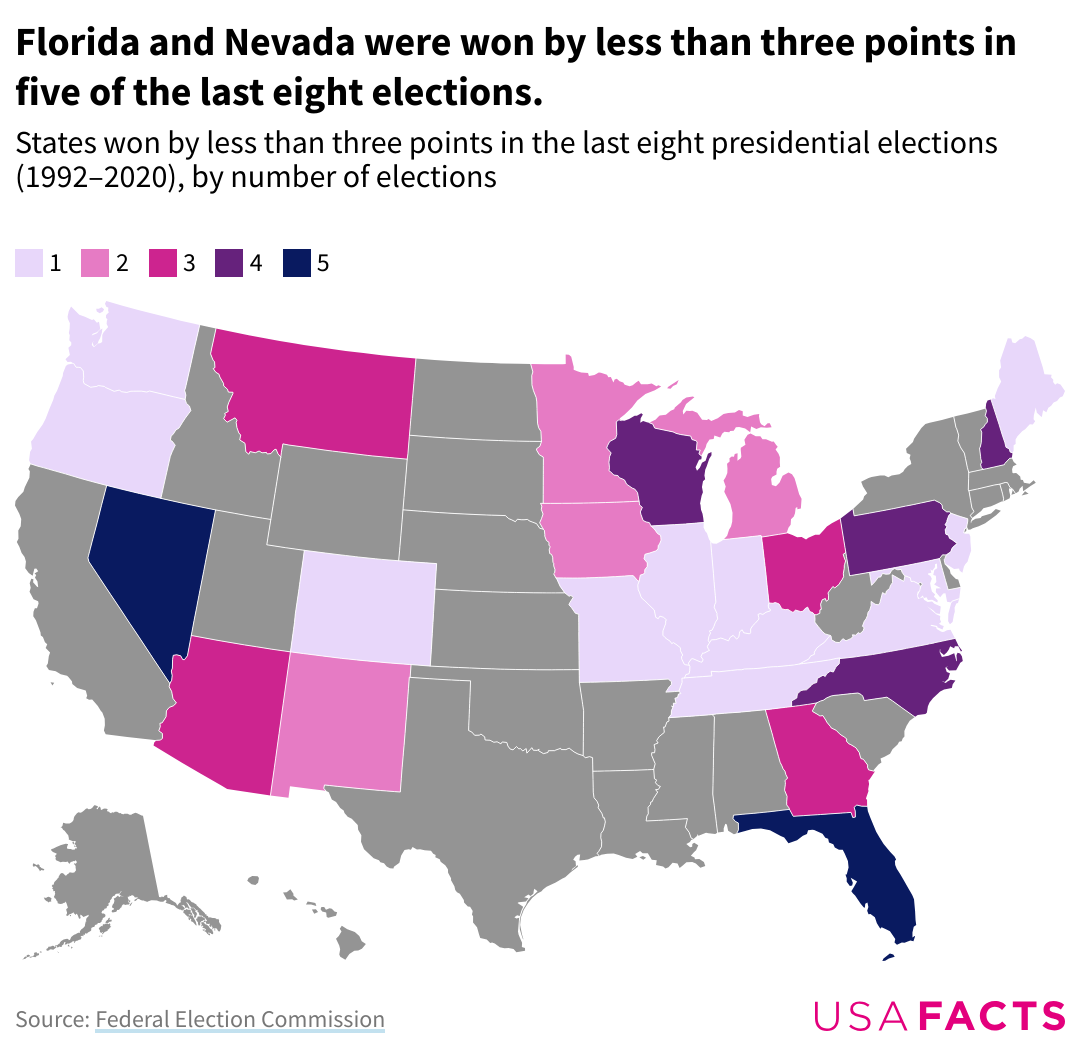
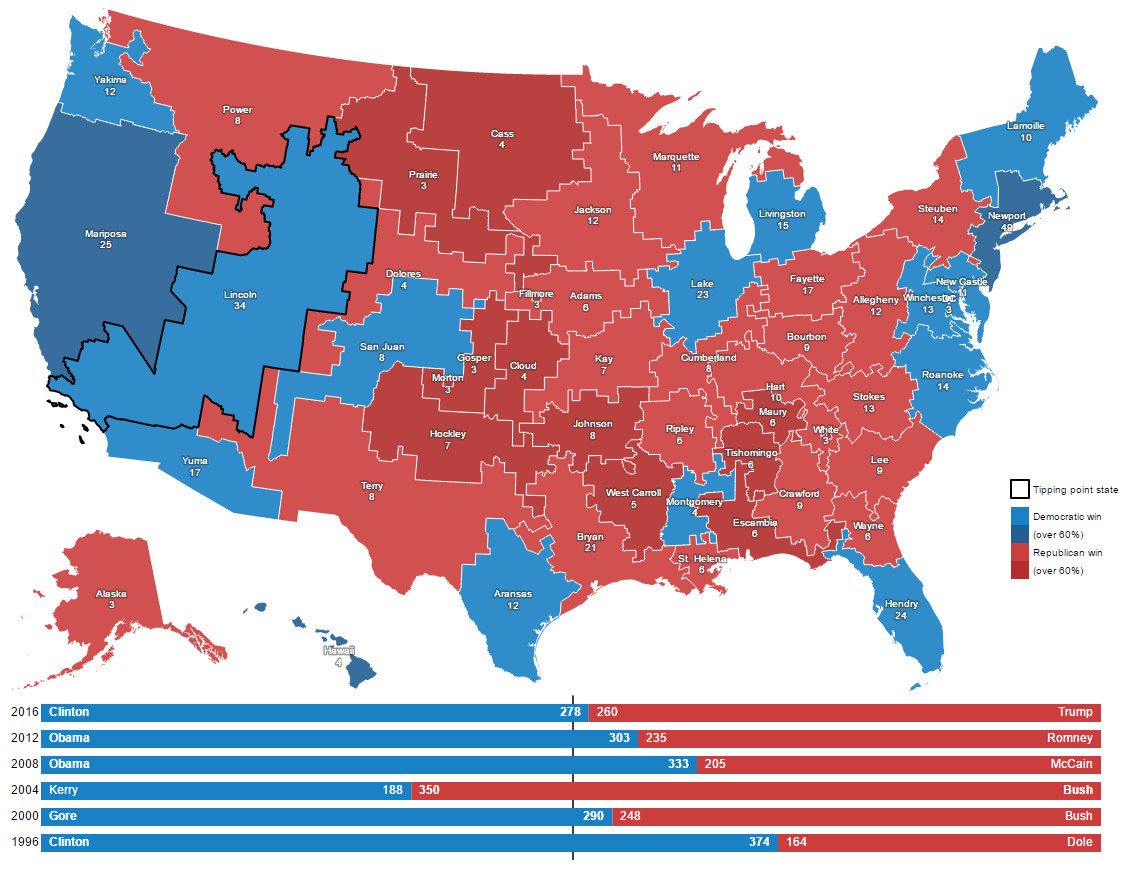
Election coverage obsesses over battleground states. You know the ones – Pennsylvania, Arizona, Wisconsin, Michigan, Nevada, Georgia. The states where both parties actually compete and either candidate could win.
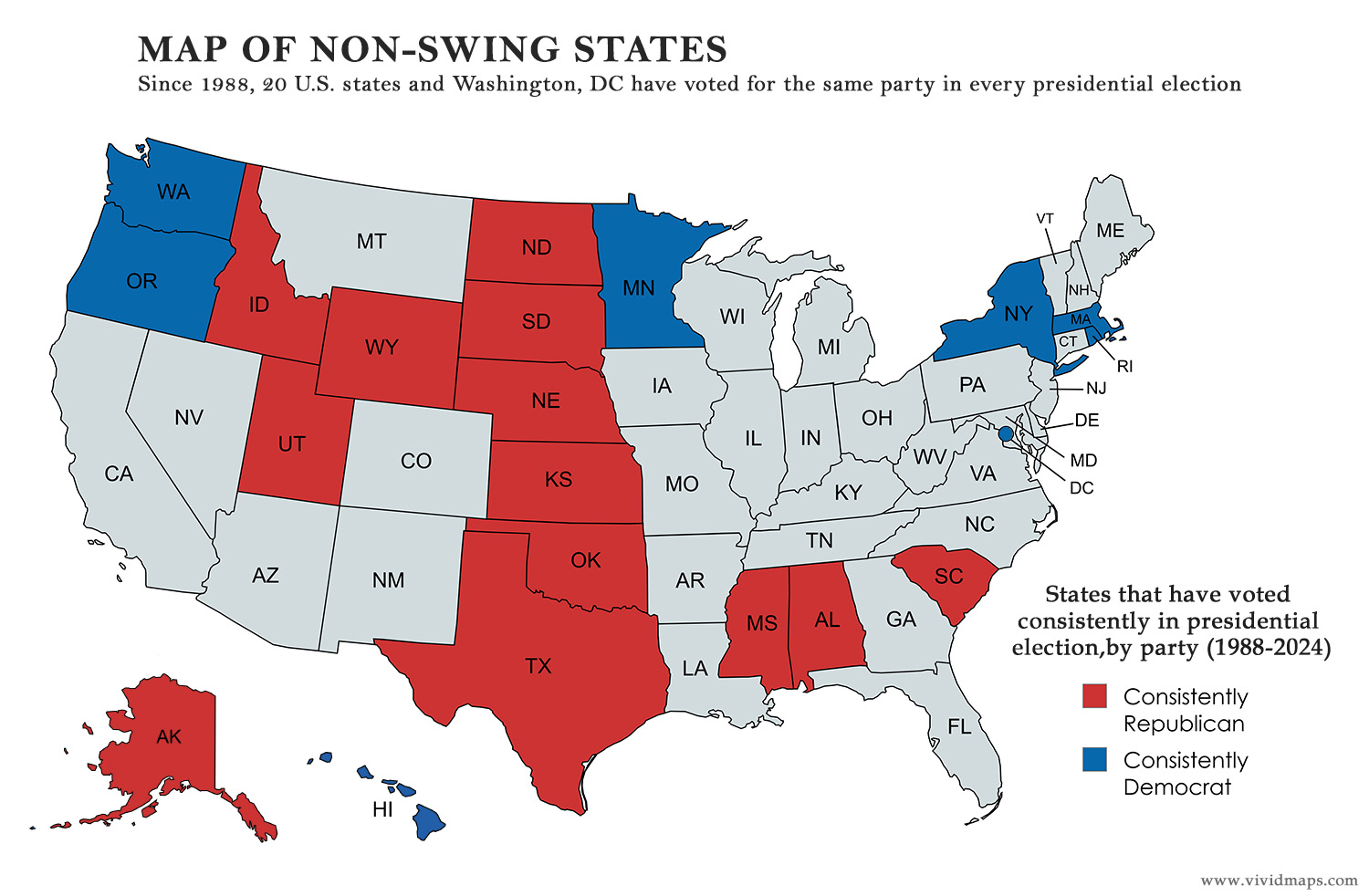
These get all the attention because the outcome matters. Meanwhile, nineteen states and Washington, DC have voted the same way in every presidential election since 1988. Not most elections. Every single one. Ten straight cycles without changing sides.
The Republican column has thirteen states. Alaska, Idaho, Utah, Wyoming, North Dakota, South Dakota, Nebraska, Kansas, Oklahoma, Texas, Mississippi, Alabama, and South Carolina. They stretch from the Canadian border down through the interior West and into the Deep South. Mostly rural and low-population, except Texas with its huge cities.
The Democratic side has seven states plus DC. Hawaii, Oregon, Washington, Minnesota, New York, Massachusetts, Rhode Island, and the District. More scattered geographically but just as reliable.
The Republican belt runs continuously through America’s middle. The Democratic states jump around the map but stay predictable. Geography matters here, though it doesn’t explain everything about why these particular places stay loyal while neighbors switch around.
Take Minnesota. Right in the heartland, bordered by states that swing. But it hasn’t gone Republican since 1972. Longest Democratic streak in the country. Wisconsin next door? Competitive. Iowa? Competitive. Minnesota? Blue every time.
Why start at 1988? That election marked a shift in American politics. Current alignments began taking shape then. Since that year, these twenty states held their ground through the internet, 9/11, the 2008 crash, social media, everything. Huge upheavals, same voting patterns.
For campaigns, this creates a math problem. Republicans bank on 107 electoral votes before they start. Democrats count on 112. Those numbers are guaranteed. The fight happens everywhere else.
Living in one of these states means your presidential vote happens in a predetermined environment. No campaign visits. No ads. The result is baked in. The electoral college amplifies this because all the action happens in maybe seven competitive states while everyone else watches.
Will this change? Probably not soon. These states proved their reliability across four decades. They’re stable in ways that make them invisible during campaigns, but they’re the foundation everything else sits on.