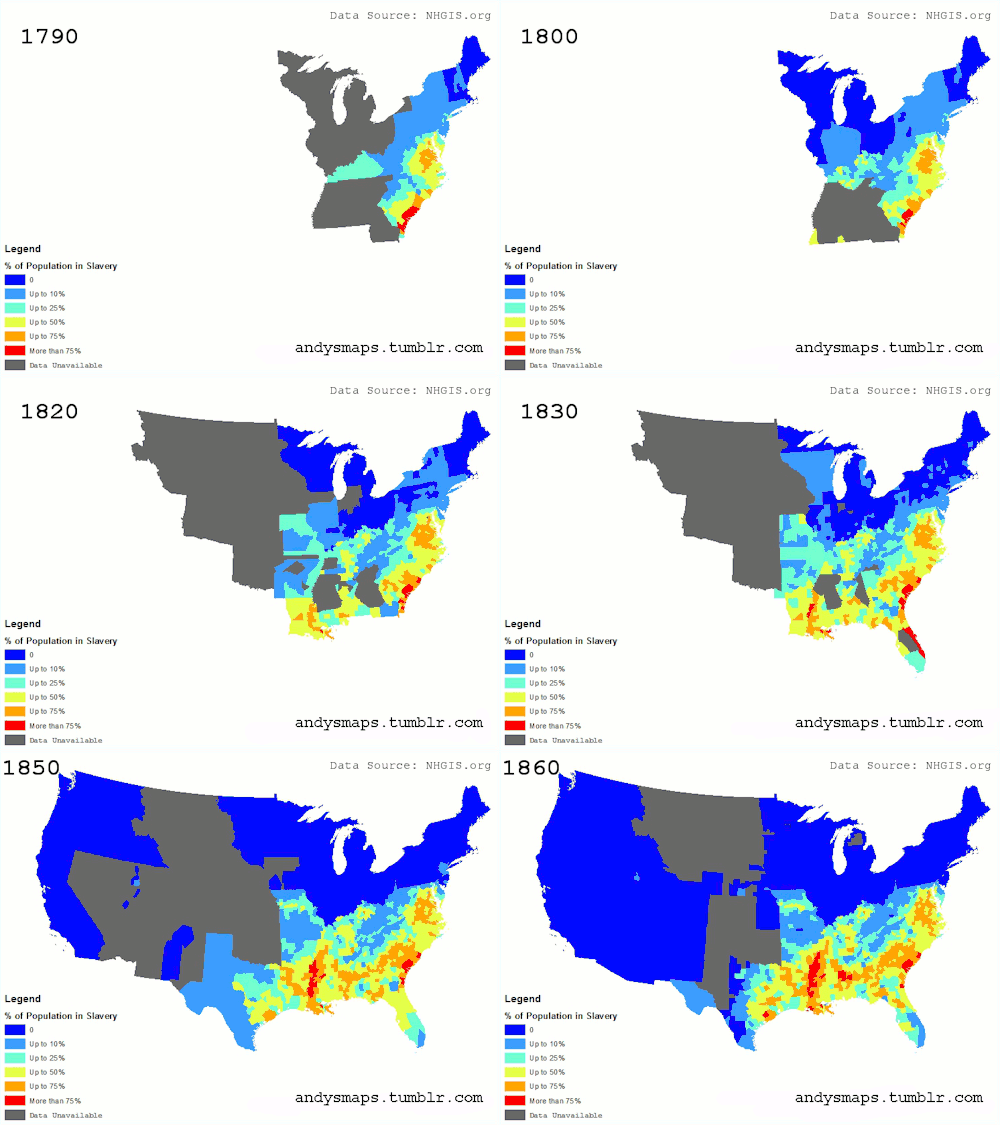
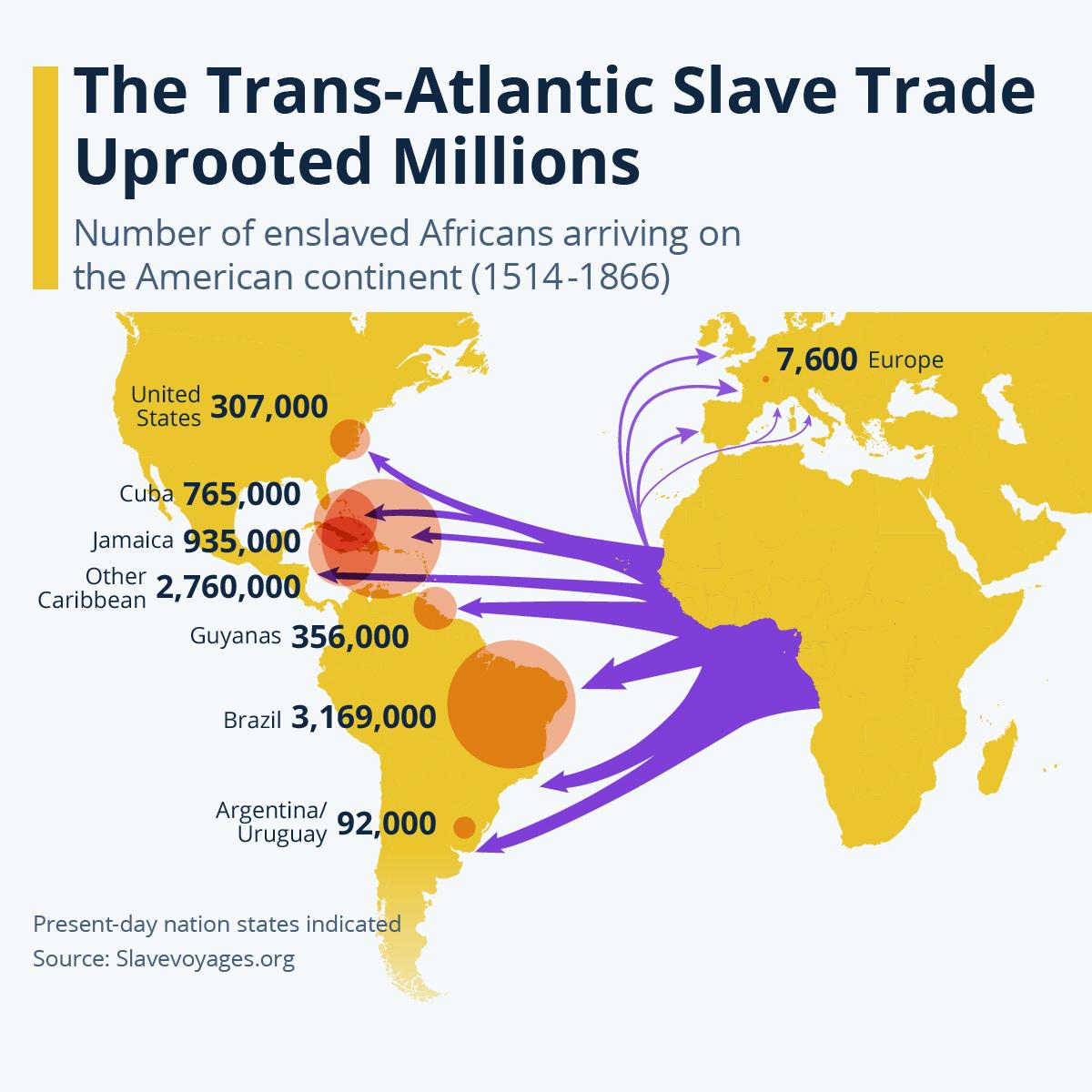
Early on, right after the U.S. formed in the late 1700s, censuses began capturing how slavery took hold in key parts of the country. Come 1860, the total headcount reached about 31 million, and nearly 4 million folks were enslaved. J. David Hacker, who’s studied this stuff, looked at everything from 1776 to 1865 and put the overall figure at around 10 million people who faced enslavement. Most Africans forced to come arrived between 1720 and 1780, well before Eli Whitney put together his cotton gin and sent southern labor demands skyrocketing.
A few months after the Civil War began, in September 1861, the U.S. Coast Survey rolled out a map using data right from the 1860 census. It gave the enslaved percentage for each county in the South. Lincoln checked it a lot during the war, whether plotting next steps or writing up the Emancipation Proclamation.
Some places really stood out, like counties lining the Mississippi River that often hit over 70 percent. South Carolina and Georgia coasts had the same issue, along with the big area cutting through Alabama, Mississippi, and Georgia known as the Black Belt. Lots of these counties had enslaved people outnumbering free whites.
Map showing the Slave Population of Southern States (1860)
Map showing the Slave Population of Southern States (1861)
You can see the changes in Charleston County, South Carolina. There were around 51,000 enslaved people counted in 1790. That rose to 59,000 by 1840, but fell to 37,000 in 1860. The difference? Folks got sold and hauled out west, mostly.
The U.S. snapped up land in big pieces: the Louisiana Purchase in 1803 doubled everything fast, Native people were run out of the Southeast in the 1830s, the Mexican War in the 1840s brought in Texas plus extra. All that room meant larger cotton operations, and they required heaps more enslaved workers. That’s when trading inside the country got busier. Steven Deyle did the math and came up with at least 875,000 folks shifted from Upper South to Lower South between 1820 and 1860. Something like 60 to 70 percent from plain old sales, not from owners picking up and going. Slavery stayed in the black by reaching into untouched places; cramming more into the same old ground wouldn’t do.
Lincoln laid it out clear in his House Divided speech back in 1858: keep slavery from spreading and it’d fade out over time, or the people for it would shove it into every state, fresh ones and longtime ones, up north same as down south.
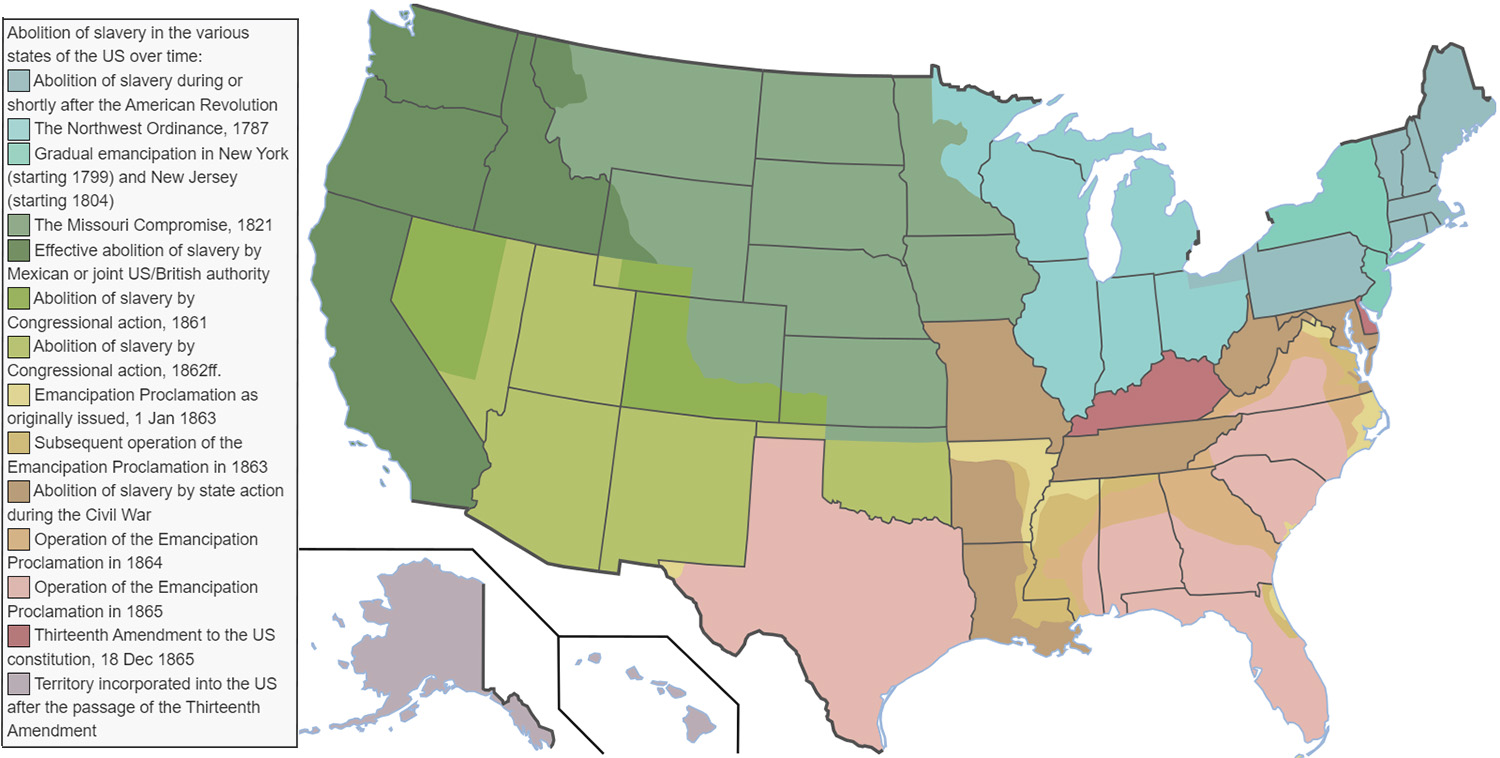
Looking at censuses from 1790 right through to 1860, some details come up that catch you off guard. Slavery happened up north at the start as well, in spots like New York, New Jersey, and Connecticut. Those places cut it loose bit by bit, laws dragging on for years, some hanging in there till the 1840s. South kept adding to it though. Enslaved count from about 700,000 in 1790 up to nearly 4 million by 1860, but stretched over a way bigger country as lines moved further out. Going after more ground all the time set off the arguments that broke things open.