National Identity in the United Kingdom
The UK came together by combining different countries that never really gave up their own character. Scotland hooked up with England back in 1707 but made sure to keep its own courts, church, and school setup. Wales got pulled in a lot earlier, but the people there managed to keep the Welsh language alive and kicking. Northern Ireland popped up after the 1921 division, which basically locked in some old tensions. These places aren’t just random districts—they’re actual nations, each with their own background and take on things.
Census data puts these identities into clear numbers. The way people answer the identity question on the form tends to stick close to those classic national divides.
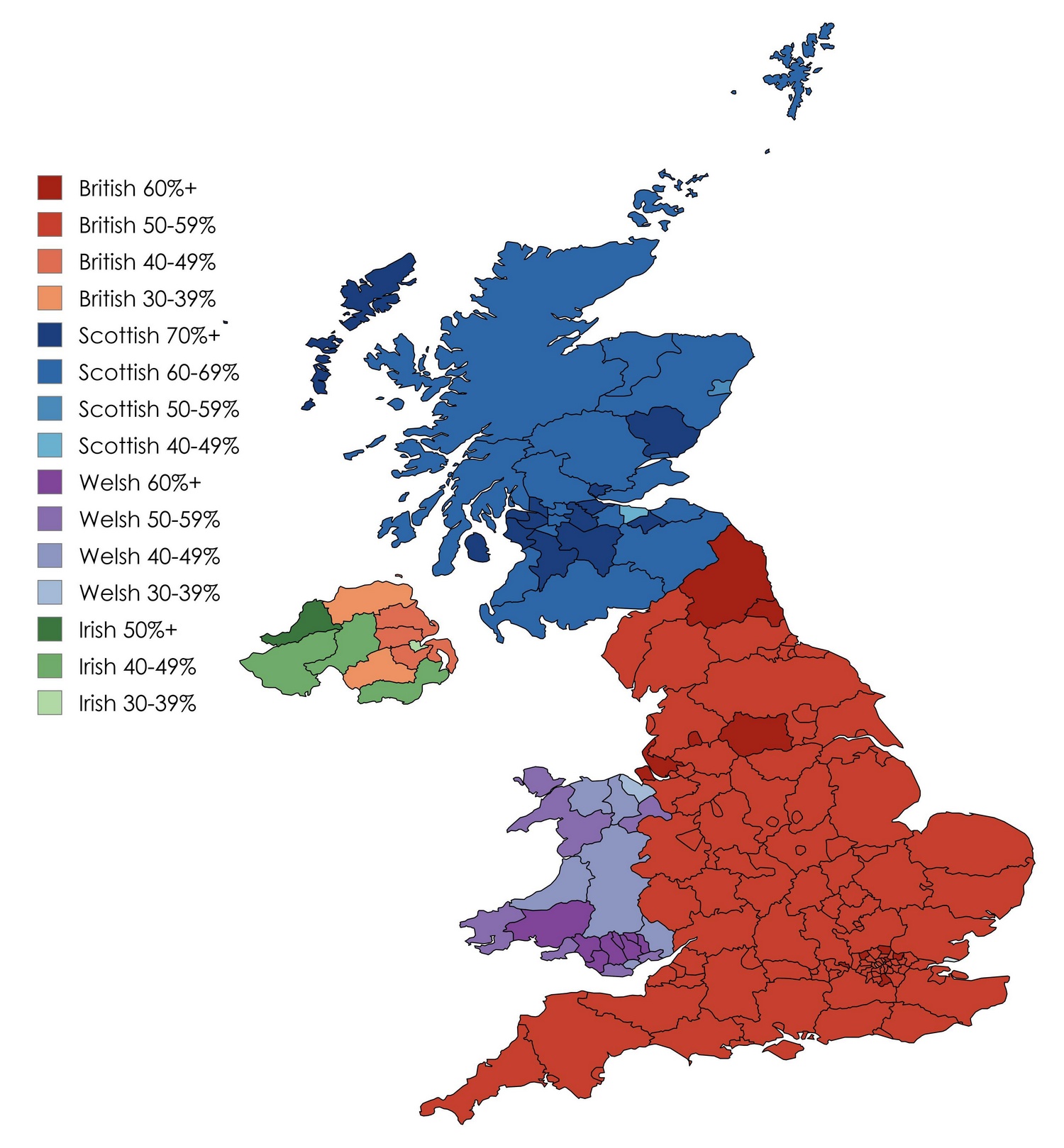
The map has British as the number one identity right across England’s 309 local councils. Scotland’s firmly Scottish, Wales is Welsh through and through, and in Northern Ireland it depends on the spot—some areas Irish, others British.
England’s seen a decent change since 2011.
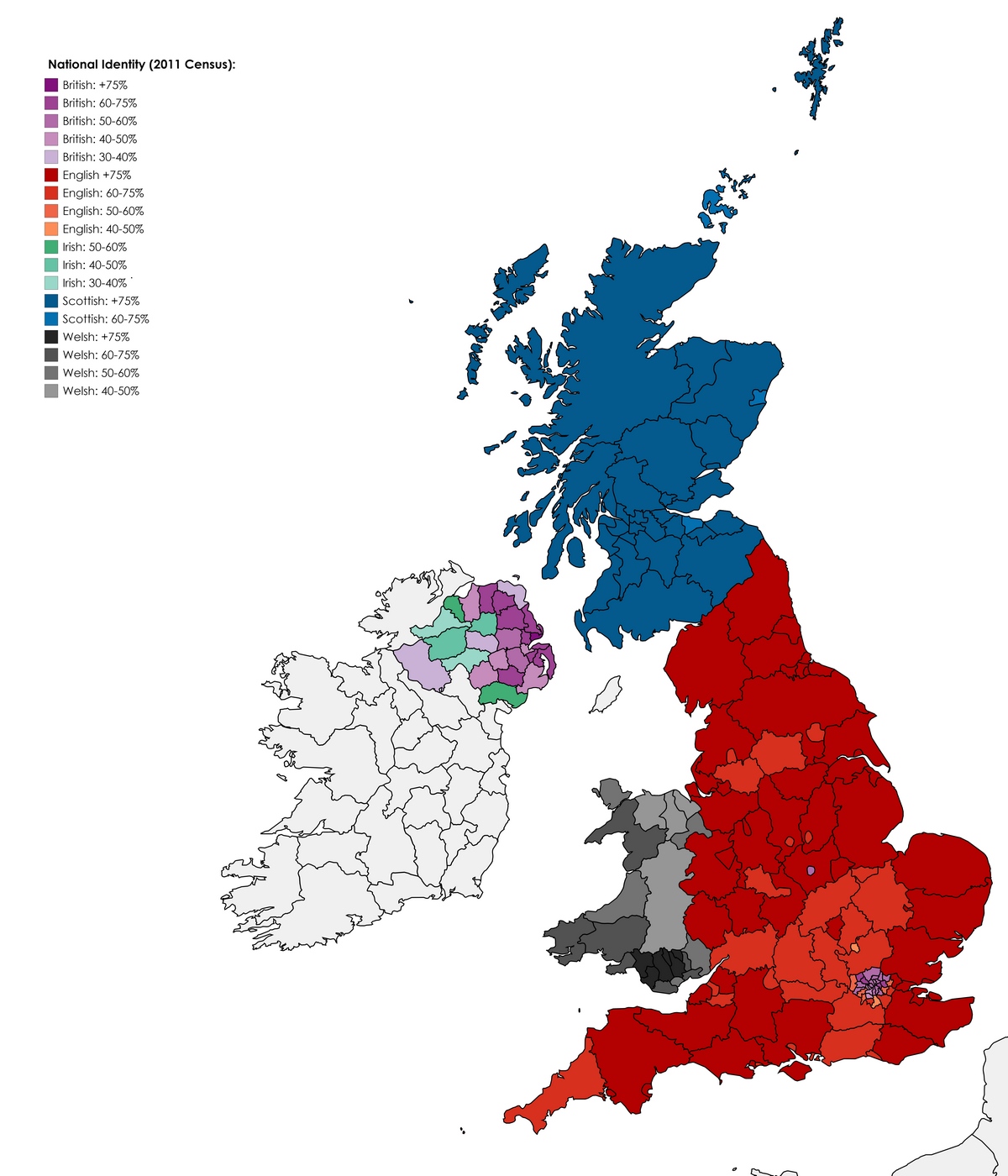
Back in 2011, English was the main identity in the bulk of England, but British was more common in London.
That shift wasn’t due to people feeling differently overnight—it stemmed, according to the Office for National Statistics, from the order of options on the questionnaire. In England’s 2011 census, the list put “English” ahead of “British.” They reversed it for 2021, starting with “British” instead. Wales kept “Welsh” at the top both times, and Scotland did the same with “Scottish.”
As for the stats, 60% in England went with “English only” back in 2011, but that number crashed to 15% by 2021. On the flip side, “British only” shot up from 19% to 55%. Wales had no change in how the options were ordered, so things stayed about the same—58% picking “Welsh only” in 2011, slipping a little to 55% in 2021.
The Office for National Statistics ties the uptick in British answers directly to how they tweaked the question. It makes sense in England, where lots of folks see themselves as both English and British without any issue, so whatever’s first on the list gets more picks. In Wales and Scotland, though, those local identities stand more on their own apart from British, so the order doesn’t sway things as much.
The British Social Attitudes survey asks differently, like do you feel more English than British, or both the same? It’s only shown small changes over the last 20 years, nothing sudden.
Beyond the primary UK identities, roughly 10% of residents in England and Wales chose ones from outside the UK. Polish was the top non-UK identity at 593,000 people, with Romanian second at 477,000.
You can learn more about the national identity in Britain from the following books (Note: the links lead to Amazon’s site) :