German has been spoken in the Eastern Alps since around the 6th century. That’s when the first Bavarian tribes settled the area — long before Austria was even a country. The Habsburgs came from that same German-speaking region and started building their empire back in the 13th century. German stayed the court language as they expanded across Central Europe. After World War I the empire collapsed, and the German-speaking heartland inside it became the Republic of Austria.
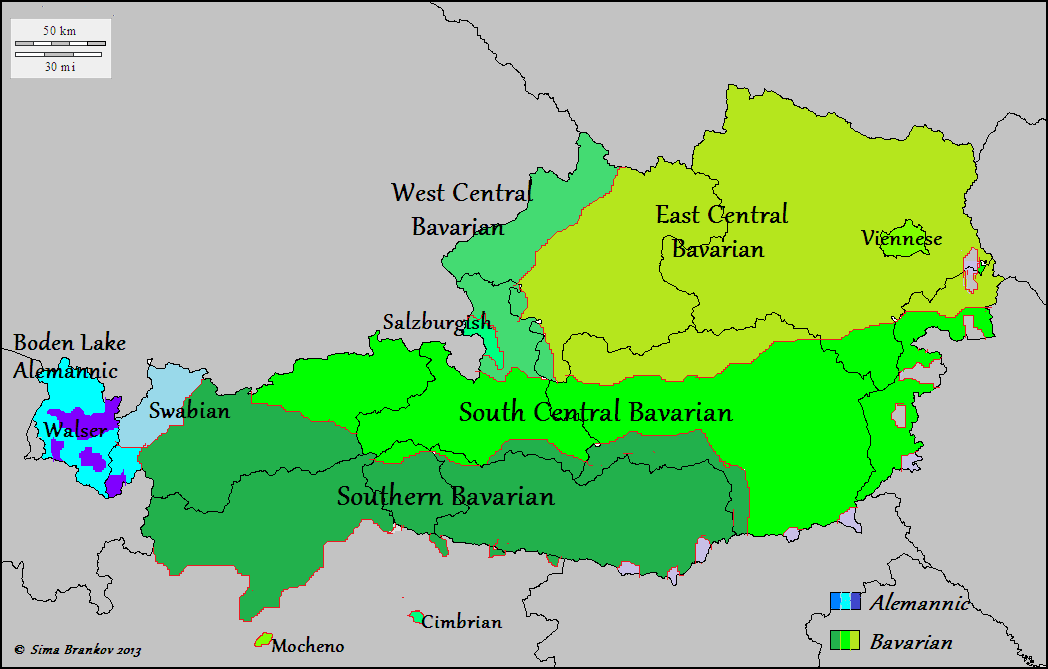
Bavarian dialects still make up most of what you hear in Austria today, with nine main zones covering Vienna, Salzburg, Styria, Carinthia, and Tyrol. But if you go all the way west to Vorarlberg you’ll run into Alemannic instead — a completely different branch of German that sounds way more like Swiss German than anything you’d hear in Vienna. The Arlberg pass kept Vorarlberg pretty isolated from the rest of the country for centuries, and that’s why the difference never really went away.
Dialect
Group
Primary Area
West Central Bavarian
Bavarian
Upper Austria, western Lower Austria
East Central Bavarian
Bavarian
Lower Austria
Viennese
Bavarian
Vienna
Salzburgish
Bavarian
Salzburg
South Central Bavarian
Bavarian
Styria, Carinthia
Southern Bavarian
Bavarian
Tyrol, South Tyrol
Mocheno
Bavarian
Fersina Valley, Trentino (Italy)
Cimbrian
Bavarian
Asiago Plateau and Luserna (Italy)
Boden Lake Alemannic
Alemannic
Vorarlberg (Rhine Valley, Lake Constance)
Swabian
Alemannic
Parts of Vorarlberg
Walser
Alemannic
Montafon and alpine enclaves in Vorarlberg
Two of the dialects on this map aren’t spoken in Austria anymore. Mocheno and Cimbrian got carried south by Bavarian settlers back in medieval times and only survive now in Italy. Their communities have been surrounded by Italian for about seven hundred years, so both are pretty endangered these days.
Walser’s got its own story. Settlers from the Swiss Valais crossed the Alpine passes in the 13th and 14th centuries and set up home in Vorarlberg’s remote high valleys. They were Alemannic speakers moving into Alemannic land, but the dialect they brought from Valais stayed different from the Alemannic spoken down in the Rhine Valley — and you can still hear that split today.