When did we actually finish exploring the whole planet?
Edward Quin and W. Hughes published a historical atlas in 1856 that tracks this precisely. Each map shows geographical knowledge at a specific moment in history, starting from 2348 BC (the Biblical Deluge, since this atlas was made for a Christian European audience) and running through to Napoleon’s empire in 1811. The complete atlas is at the David Rumsey Map Collection.
TABLE
Year
Historical Event
Unknown Regions
B.C. 2348
The Deluge
North America, South America, Northern Africa, Sub-Saharan Africa, Australia, New Zealand, Antarctica, Arctic, East Asia, Southeast Asia, Northern Europe, Central Europe, British Isles, Siberia, Pacific Islands
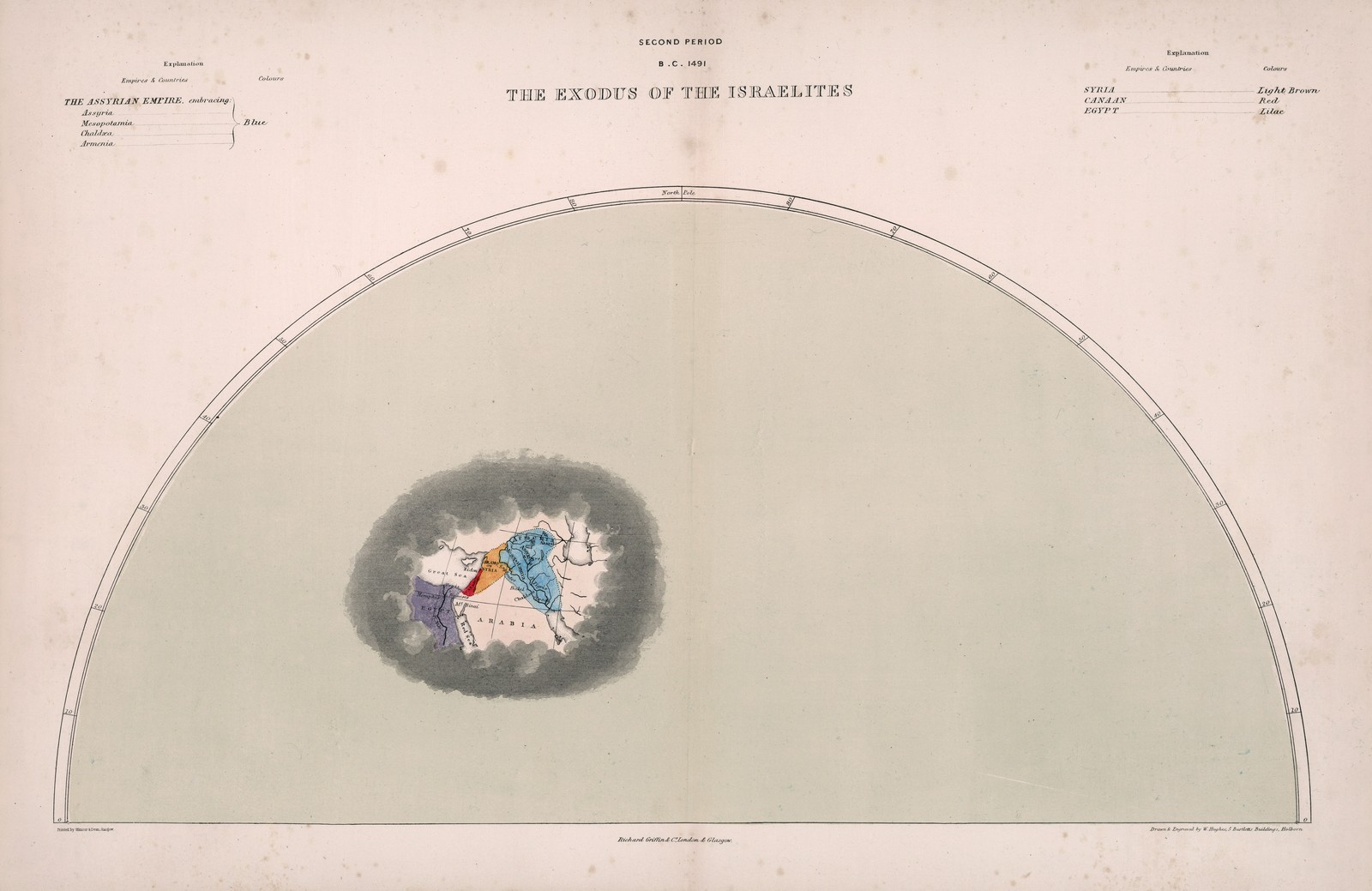
B.C. 1491
Exodus of the Israelites
North America, South America, Northern Africa, Sub-Saharan Africa, Australia, New Zealand, Antarctica, Arctic, East Asia, Southeast Asia, Northern Europe, Central Europe, British Isles, Siberia, Pacific Islands
B.C. 753
Foundation of Rome
North America, South America, Northern Africa, Sub-Saharan Africa, Australia, New Zealand, Antarctica, Arctic, East Asia, Southeast Asia, Northern Europe, Central Europe, Siberia, Pacific Islands
B.C. 529
Empire of Cyrus
North America, South America, Northern Africa, Sub-Saharan Africa, Australia, New Zealand, Antarctica, Arctic, East Asia, Southeast Asia, Northern Europe, British Isles, Pacific Islands
B.C. 323
Empire of Alexander
North America, South America, Northern Africa, Sub-Saharan Africa, Australia, New Zealand, Antarctica, Arctic, East Asia, Southeast Asia, Northern Europe, British Isles, Siberia, Pacific Islands
B.C. 301
Partition of Alexander’s Empire
North America, South America, Northern Africa, Sub-Saharan Africa, Australia, New Zealand, Antarctica, Arctic, East Asia, Southeast Asia, Northern Europe, British Isles, Siberia, Pacific Islands
B.C. 146
End of Third Punic War
North America, South America, Northern Africa, Sub-Saharan Africa, Australia, New Zealand, Antarctica, Arctic, East Asia, Southeast Asia, Northern Europe, Siberia, Pacific Islands
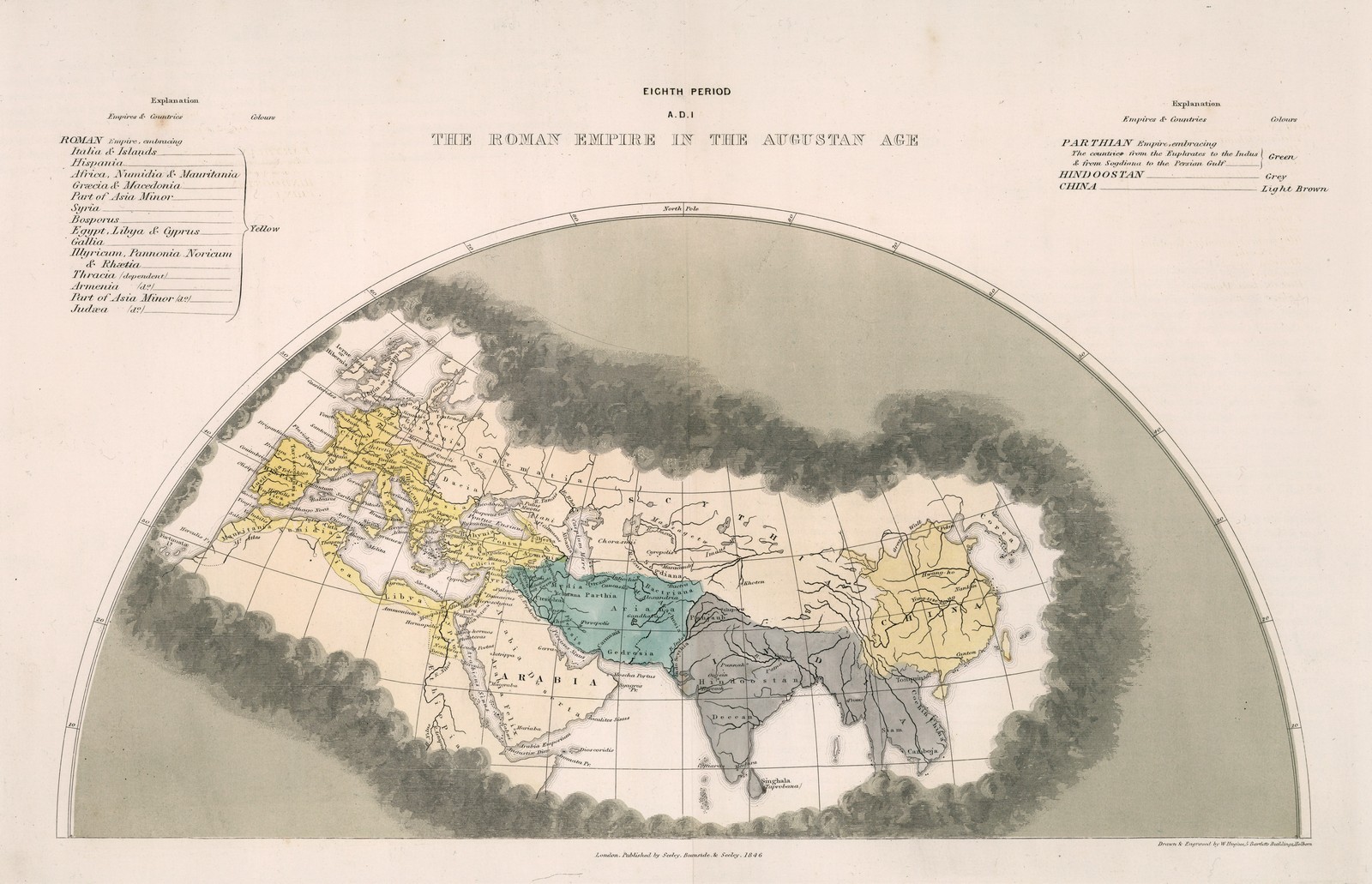
A.D. 1
Roman Empire (Augustan Age)
North America, South America, Northern Africa, Sub-Saharan Africa, Australia, New Zealand, Antarctica, Arctic, East Asia, Southeast Asia, Scandinavia, Siberia, Pacific Islands
A.D. 337
Death of Constantine
North America, South America, Northern Africa, Sub-Saharan Africa, Australia, New Zealand, Antarctica, Arctic, East Asia, Southeast Asia, Scandinavia, Siberia, Pacific Islands
A.D. 395
Division of Roman Empire
North America, South America, Northern Africa, Sub-Saharan Africa, Australia, New Zealand, Antarctica, Arctic, East Asia, Southeast Asia, Scandinavia, Siberia, Pacific Islands
A.D. 476
Dissolution of Western Empire
North America, South America, Northern Africa, Sub-Saharan Africa, Australia, New Zealand, Antarctica, Arctic, East Asia, Southeast Asia, Siberia, Pacific Islands
A.D. 814
Empire of Charlemagne
North America, South America, Northern Africa, Sub-Saharan Africa, Australia, New Zealand, Antarctica, Arctic, East Asia, Southeast Asia, Siberia, Pacific Islands
A.D. 912
Dissolution of Charlemagne’s Empire
North America, South America, Northern Africa, Sub-Saharan Africa, Australia, New Zealand, Antarctica, Arctic, East Asia, Southeast Asia, Siberia, Pacific Islands
A.D. 1100
First Crusade
North America, South America, Northern Africa, Sub-Saharan Africa, Australia, New Zealand, Antarctica, Arctic, East Asia, Southeast Asia, Siberia, Pacific Islands
A.D. 1294
Empire of Kublai Khan
North America, South America, Northern Africa, Sub-Saharan Africa, Australia, New Zealand, Antarctica, Arctic, Pacific Islands
In 1491 BC, during the Exodus, Western civilization’s geographical knowledge covered the Mediterranean basin, the Near East, and Egypt. That was about it. The Americas weren’t on anyone’s map. Australia and sub-Saharan Africa were completely unknown.
Alexander conquered from Greece to India by 323 BC. His empire was massive. But two entire continents across the Atlantic Ocean? Nobody in his world knew they existed. Rome’s territory went from Britain all the way to Mesopotamia. North and South America though? Not on Roman maps. Romans had no concept these continents existed.
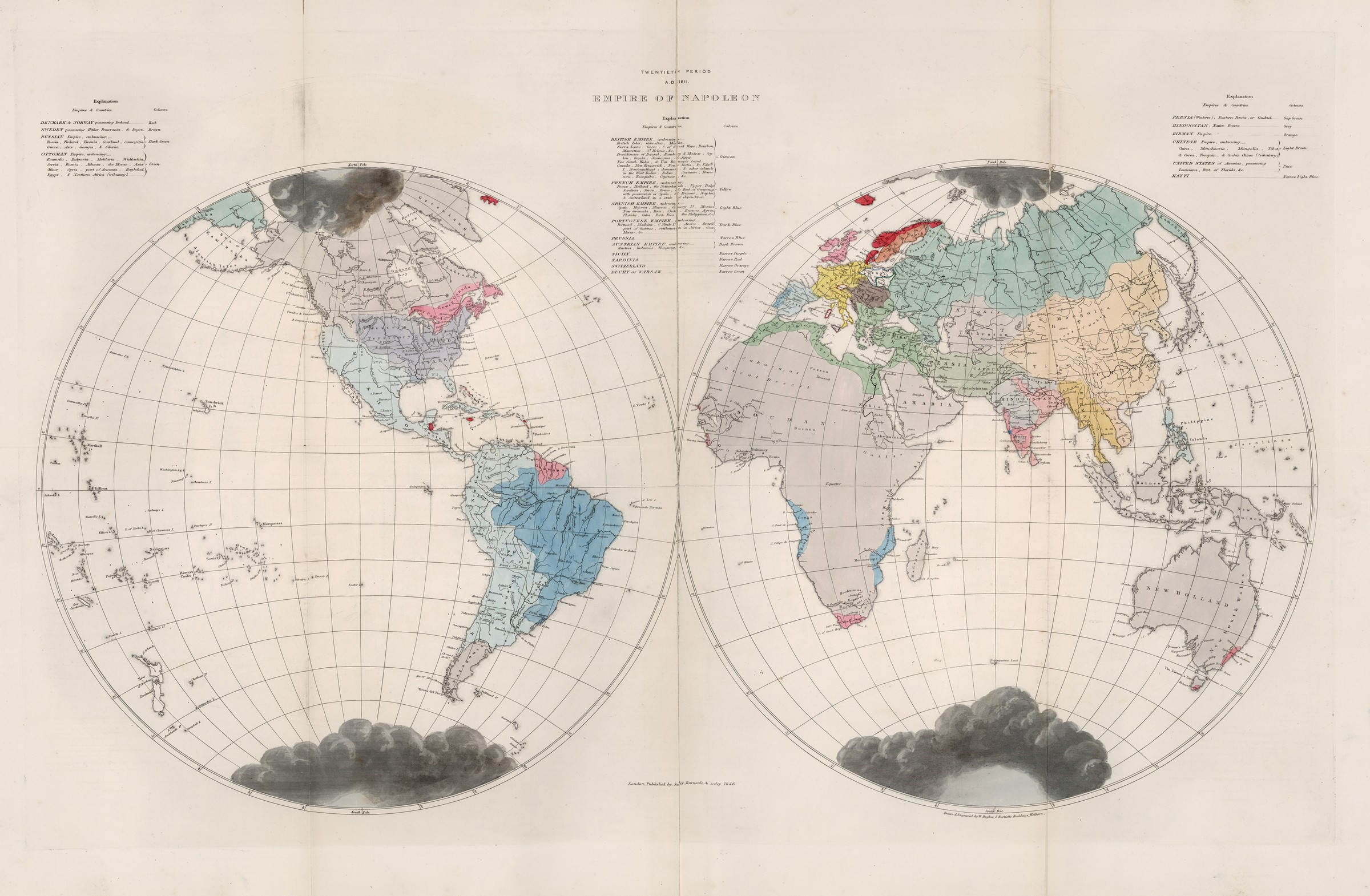
Napoleon controlled most of Europe by 1811. Explorers had been to the Americas by then. They’d mapped the coasts of Africa and Australia. Cook had charted the Pacific. Antarctica though? Still undiscovered. Nobody knew it was there. Much of the Arctic was also unmapped at this point.
This was only 213 years ago. Thousands of years of human exploration, and we still hadn’t filled in all the continents.
Today our maps feel complete. Satellites have pretty much photographed every bit of land in stunning detail. Still, you stop and think and it hits you how much is left unknown. The ocean floor has high-resolution maps for only about a quarter of its area, and that’s the majority of the planet right there. We’re always coming across new species in ecosystems we hardly ever reach. Even the ground under us is as big a blank spot as Africa’s interior was back in Napoleon’s day.