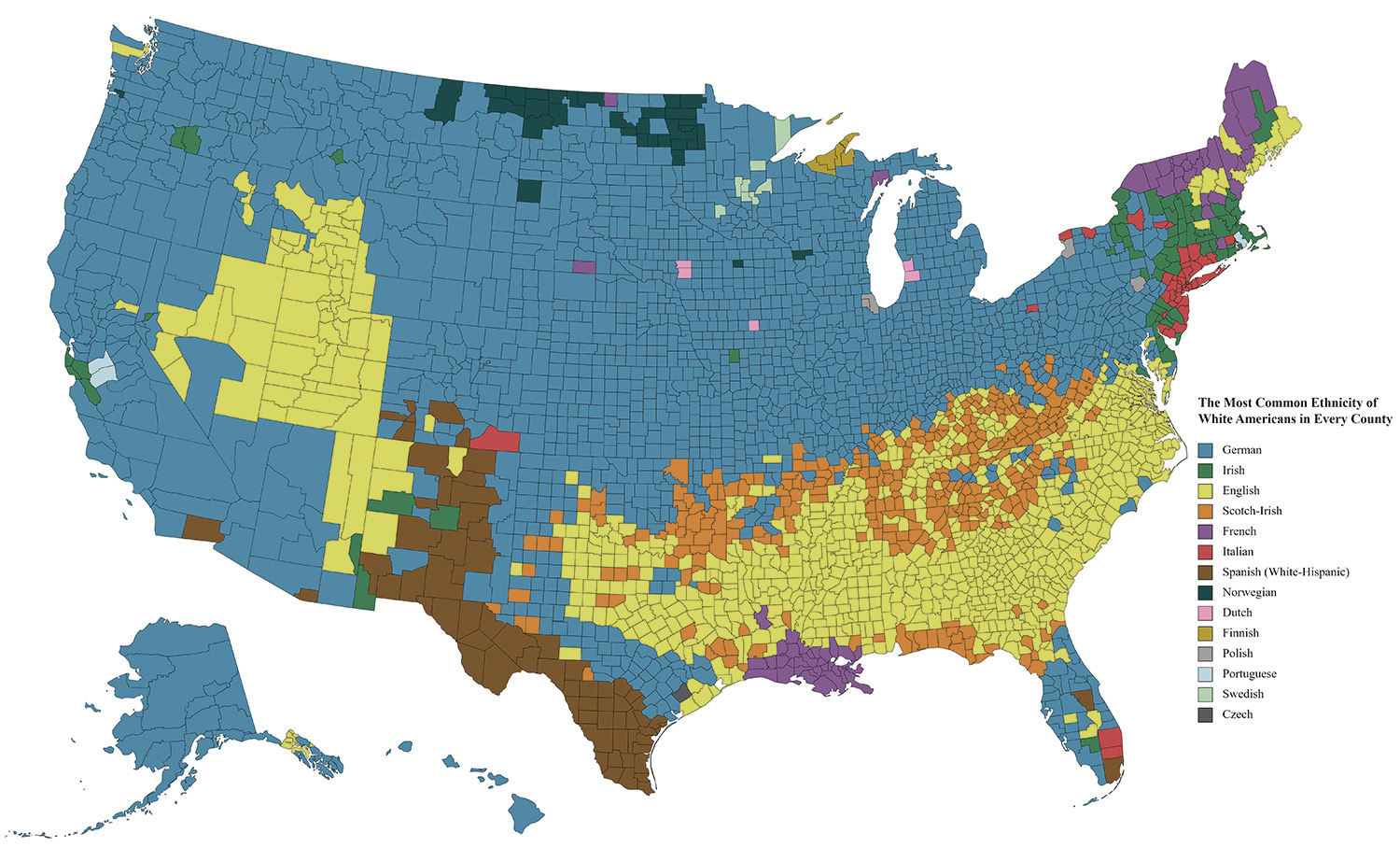
The ethnic composition of North America is unique. Native peoples lived here for thousands of years before anyone else showed up. Starting in the 1600s, people from Europe crossed the Atlantic—Germans, Irish, English, French, Italians, Dutch, Norwegians. Mexicans pushed north. Millions of Africans were kidnapped and brought here in chains. Each group carried different languages and traditions. This map shows which ancestry dominates in each county based on what people told census workers.
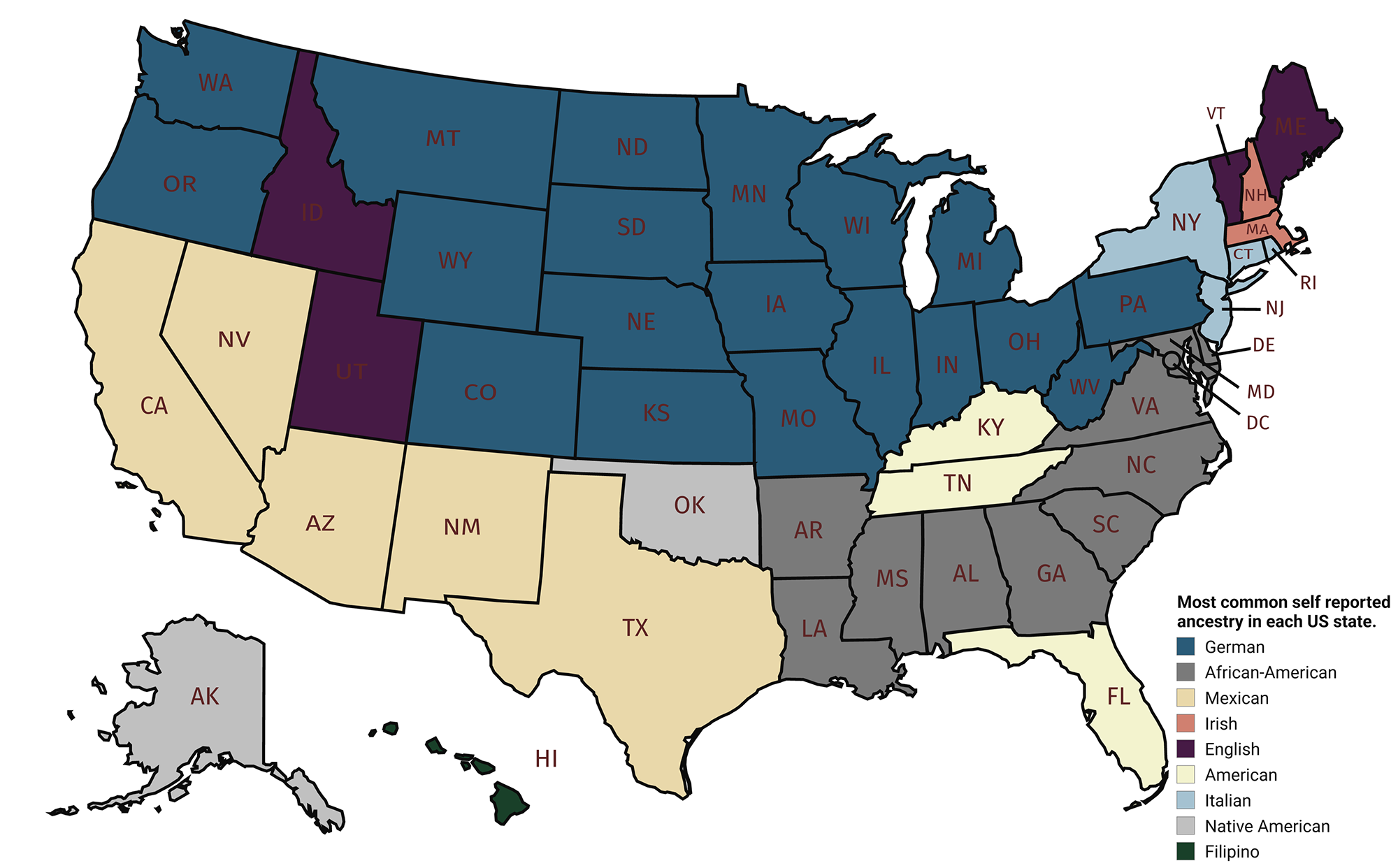
Germans blanket the Midwest. Around 41 million Americans claim German ancestry, making them the biggest group at 12%. Wisconsin is 36% German. North Dakota is 34%, South Dakota 33%. McIntosh County in North Dakota? 64% German! Most Germans came during the 1800s when economies collapsed back home and revolutions failed.
The Deep South is African American. Alabama. Mississippi. Louisiana. Georgia. South Carolina. Plantation counties where slavery was heaviest. When freedom came, most people had nowhere else to go and stayed.
English ancestry dominates Appalachia, Kentucky, Tennessee, Utah where Mormon converts from England settled towns. Irish shows up in scattered Northeast counties and out West. Around 11% of Americans claim Irish roots—more people than actually live in Ireland today, which has 5 million. The 1840s famine sent them over.
Political lines don’t always separate ethnic groups. Montana? Mostly German. Walk across into southern Saskatchewan? German. But go west and watch what happens. Washington State is German. British Columbia right across the border is English.
Why the split? BC was British territory. The railway came in the mid-1880s and the government went looking for British immigrants. Washington’s farmland drew Germans instead.
Southern Ontario is English. Michigan right below it is German. Maine is English. Cross north into Canada and suddenly it’s French. Montreal sits just 300 miles from the US border, and French speakers spill down into northern Maine and New Brunswick—all that’s left of New France.
French Canadians moved west too. Between 1880 and 1912, missionaries pushed French settlement in the Prairie provinces, bringing people from Quebec, New England, France, Belgium. More headed to Peace River after 1926.
Canada’s 2021 census results: “Canadian” came first at 15.6%. Then English at 14.7%. Irish 12.1%. Scottish 12.1%. French 11%. German 8.1%. British Columbia specifically goes English, Scottish, Irish, Canadian (and nowadays Chinese). BC’s immigrants came mostly from Scotland, Wales, and northern England.
People self-report this stuff. They tell the census what they think their background is, not what a DNA test might say. In 2001, 38% of Canadians listed multiple ancestries. Some Americans just write “American,” especially in the South where families have been around so long nobody knows the details anymore.
Indigenous populations get undercounted here even though they’re 5% of Canada. In the US, American Indian ancestry appears mainly in Western counties where reservations are.
Wisconsin? Bratwurst shops, Lutheran churches, German street names. South Texas? Spanish everywhere. Quebec? Totally different architecture, accent, politics.
First groups to show up in big numbers built the institutions—schools, churches, town layouts. Later arrivals usually worked within what was already there.