Where Are Europe’s Redheads? A Look at the Red Hair Map of Europe
Check out this map showing where red hair is most common across Europe – it reveals some surprising patterns in different regions and tells us a lot about genetic history.
Read More
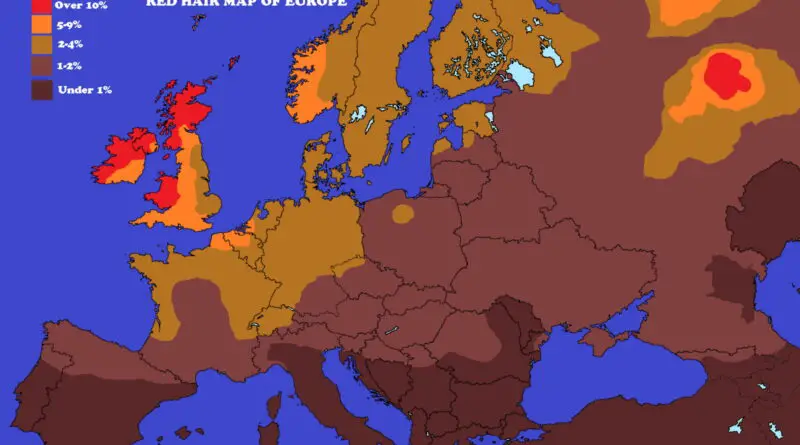
Check out this map showing where red hair is most common across Europe – it reveals some surprising patterns in different regions and tells us a lot about genetic history.
Read More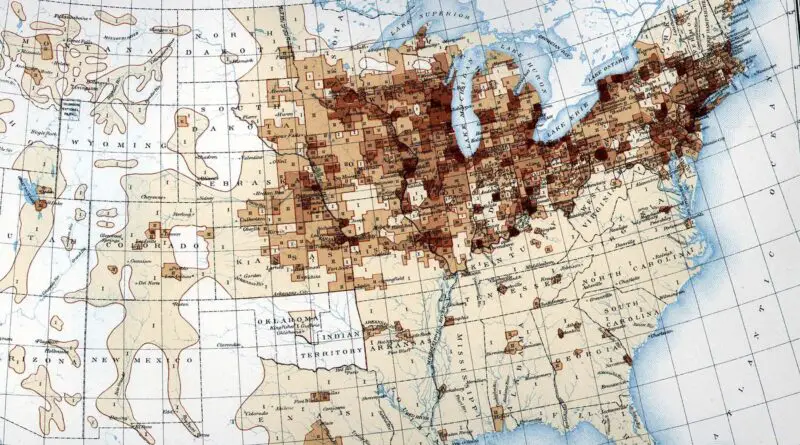
German Americans are individuals in the United States with German ancestry or heritage. They represent one of the largest ethnic groups in the country, with a significant historical and cultural impact. The first wave of German immigrants arrived in the 1600s, and a more substantial influx occurred during the 19th century. German Americans have contributed significantly to various aspects of American society, including education, science, arts, and industry.
Read MoreLondon, the South East and the East of England have greater surname heterogeneity than the rest of the United Kingdom. Big urban areas attract foreign and domestic migration and produce a large and ethnically diverse society, with high population mixing, and consequently form a higher diversity of surnames.
Read MoreUnited States Census Bureau officially identified 5 races: White American, Black American, Native American, Asian American, Native Hawaiian, and Other Pacific Islander.
Read MoreWhen we examine a United States map showing ethnic majorities at the county level, we uncover fascinating patterns that reflect centuries of migration, settlement, and cultural evolution. From the strong presence of African American majorities in the Southeast to the Hispanic-majority counties in the Southwest, each region tells a unique story of America’s diverse heritage.
Read MoreWhite Americans are the racial majority. African Americans are the largest racial minority, amounting to an estimated 12.7 percent of
Read MoreRelated posts: – Language families of the Middle East – Religious composition of the Middle East – Sects of Muslims
Read More
The United States Hispanic population reached 57 million. The Hispanic population still accounted for more than half (54.2%) of total
Read MoreAboriginal Australians comprise many distinctive peoples who developed across Australia for more than 65,000 years. These peoples have a largely shared, though complex, genetic history, but only in the last 200 years have been determined and begun to self-identify as a single group.
Read More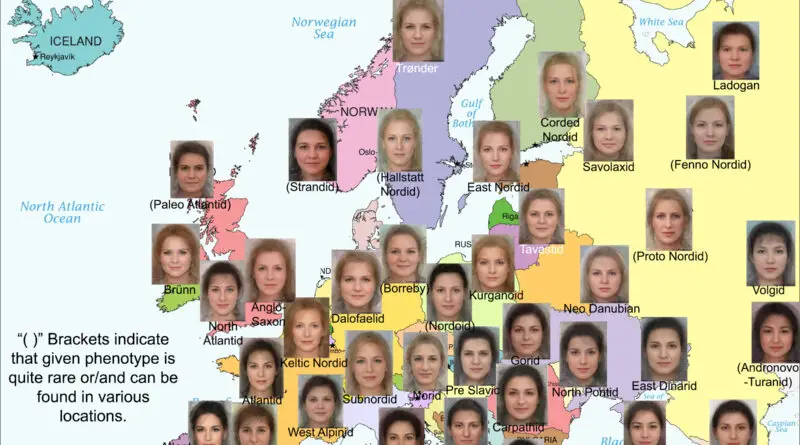
Europe’s anthropological landscape reflects the complex history of human migrations and interactions on the continent. While certain phenotypic traits may be more prevalent in specific regions, the diversity observed across Europe serves as a testament to its rich cultural and genetic heritage.
Read More