Population change from 2001 to 2011
Red – increase. Blue – decrease.
Read more: Population change from 2001 to 2011
Red – increase. Blue – decrease.
Read more: Population change from 2001 to 2011The most populated region in Europe
Read more: Population density of Europe
France has around 36,000 communes, which are the smallest administrative divisions in the country. These communes can range from large cities like Paris, Marseille, and Lyon to tiny rural villages.
Read more: Urban areas of FranceRedditor usvsth3m split the world into 200 nations with equal populations. Each country contains about 1/200th of the world’s population
Read more: Another take on dividing the world into equal-population countriesDanny Dorling, Professor of Geography at The Oxford University, reportsabout population increase and decline, immigration and the possibilities forthe United
Read more: Changing Populations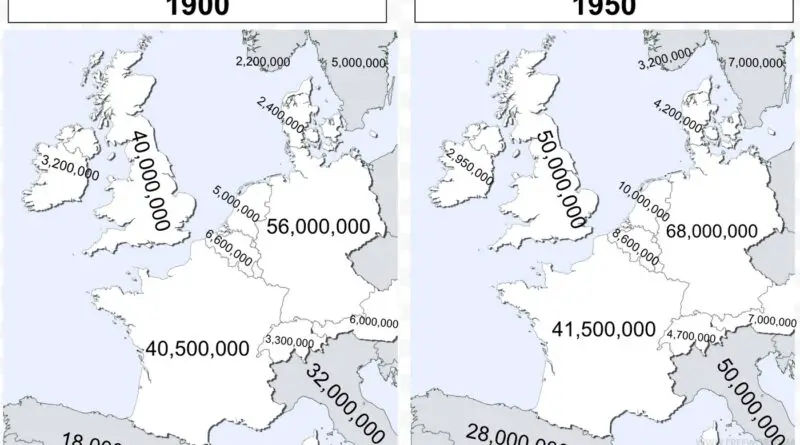
This blog post explores the population growth trends in Europe from 1900 to 2020, emphasizing both historical and current demographic shifts.
Read more: Population growth in Europe mapped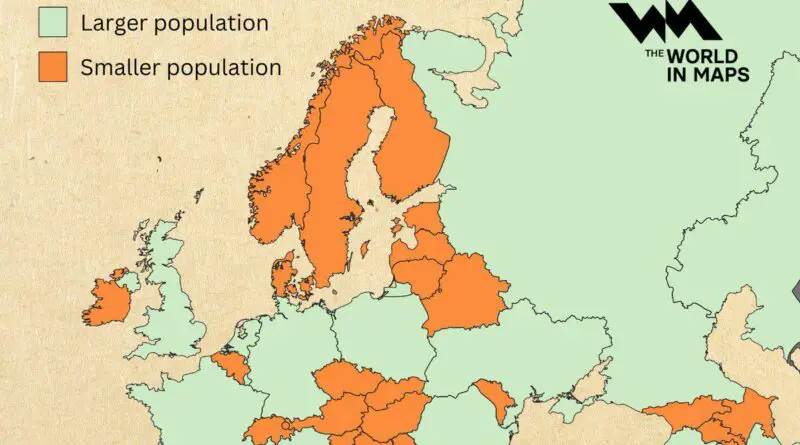
More than a city, Istanbul is a demographic phenomenon—a metropolis larger than many countries, bridging continents and capturing the essence of human potential.
Read more: Istanbul: When a City Becomes Bigger Than Countries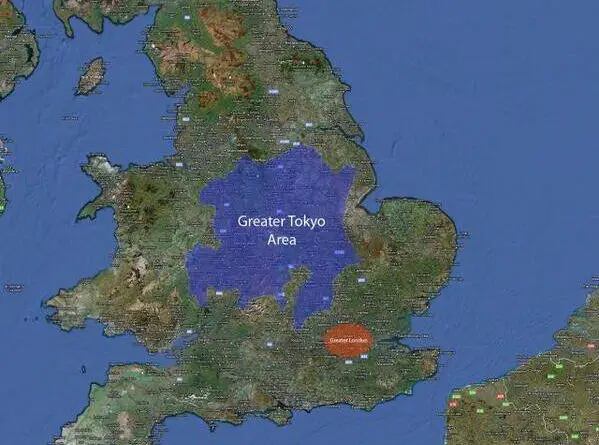
The Greater Tokyo Area or Tokyo-Yokohama Metropolitan Area is the most populated urban area globally, comprising Japan’s Kantō region (Tokyo; prefectures: Kanagawa, Chiba, Saitama, Ibaraki, Tochigi, Gunma) and the prefecture of Yamanashi of the nearby Chūbu region.
Read more: Territories with a smaller population than Greater Tokyo