Countries With The Most Threatened Mammals
The International Union for Conservation of Nature lists 474 endangered mammalian species. 8.6 percent of all evaluated mammalian species are
Read more: Countries With The Most Threatened Mammals
The International Union for Conservation of Nature lists 474 endangered mammalian species. 8.6 percent of all evaluated mammalian species are
Read more: Countries With The Most Threatened MammalsA non-native species is a species living outside its native distributional range. Non-native species which are harmful to a local
Read more: Non-Native Plant Species in North American Forests
“Each year, (hiring October, pharmacists in Anglo-Saxon countries make a special effort to bring to the attention of the public
Read more: A Depression-Era Medicinal Plant Map of the US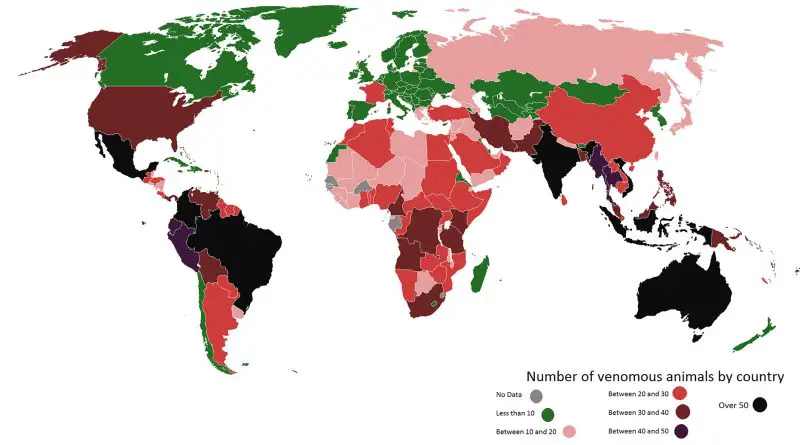
Many animal species produce chemical venoms to kill or incapacitate prey or protect against predators. Such animals actively deliver their venom to their victim through a specially developed tool, such as a sting or bite or sting.
Read more: Number of Venomous AnimalsTurkeys were domesticated in ancient Mexico, for food in 180 CE. The guppy is the most popular freshwater aquarium fish
Read more: Historic ranges of various domestic animals wild ancestorsPredicted extinction risks by regions. Predicted extinction risks from climate change differ by region. The highest risks characterized South America,
Read more: Global warming could drive 1 in 6 of Earth’s species to extinctionHolarctic, Neotropical, Paleotropical, South African, Australian, and the Antarctic the largest natural units he determined for flowering plants.
Read more: The six floristic kingdoms26% of the world’s mammals are threatened. The map above shows the 4 countries with over 90 threatened mammal species
Read more: Most threatened mammals in the worldThe Sturnus vulgaris (common starling) is a medium-sized passerine bird in the starling family. It is about 20 cm (8
Read more: Sturnus vulgaris mapPictorial wildlife and game map of the United States.
Read more: US Wildlife Map (1956)