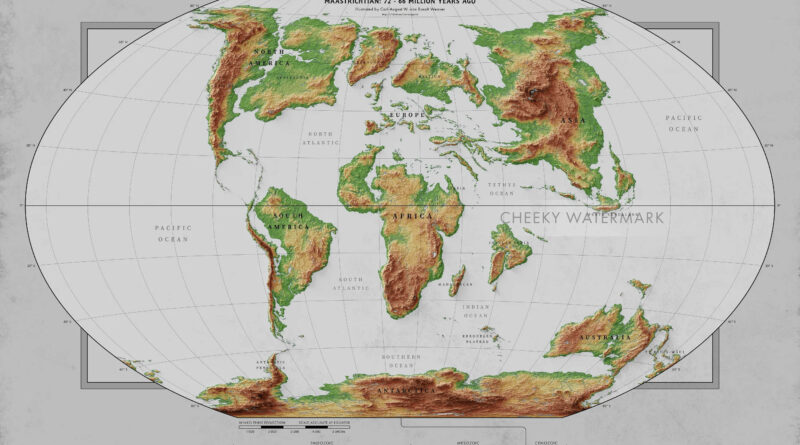
The Earth 70 Million Years Ago
Seventy million years ago, no ice covered either pole, sea levels were about 170 meters (560 feet) higher than today, and large parts of what is now Europe lay beneath shallow seas.
Read MoreMaps depicting environmental degradation across planet.
Seventy million years ago, no ice covered either pole, sea levels were about 170 meters (560 feet) higher than today, and large parts of what is now Europe lay beneath shallow seas.
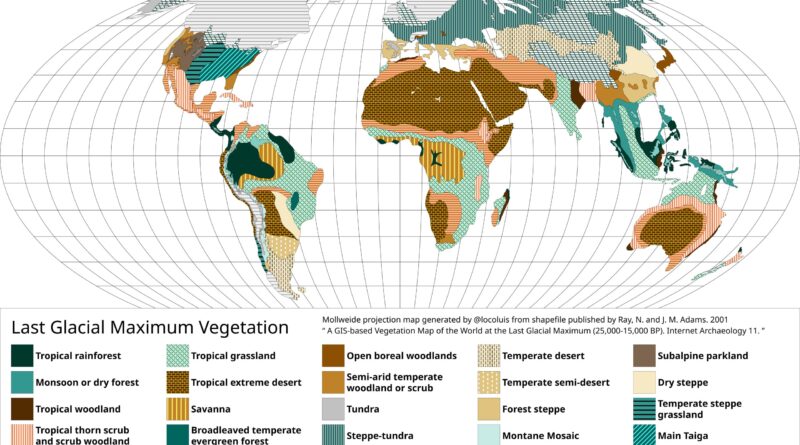
Read MoreAround 21,000 years ago you could walk from Britain to France without crossing water. The North Sea floor was dry land, because so much water was locked up in ice sheets that coastlines everywhere looked different. The Sahara during this period was more barren than it is today, not less, and the Amazon existed as two separate forest fragments.
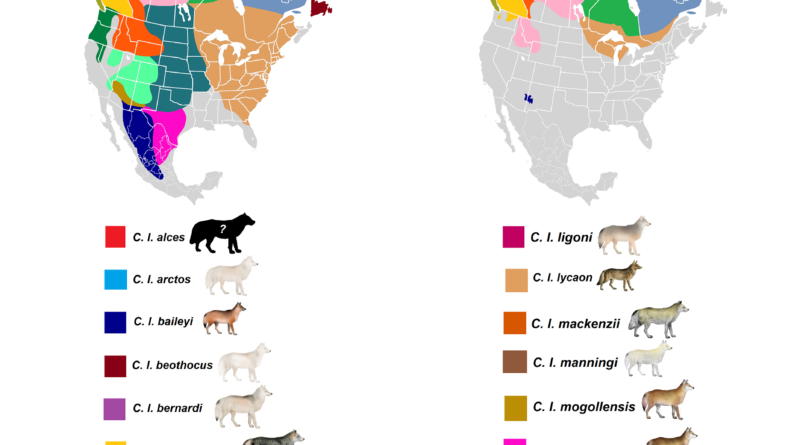
Read MoreWolves once roamed from Mexican deserts to Arctic ice, but their North American range has collapsed dramatically.
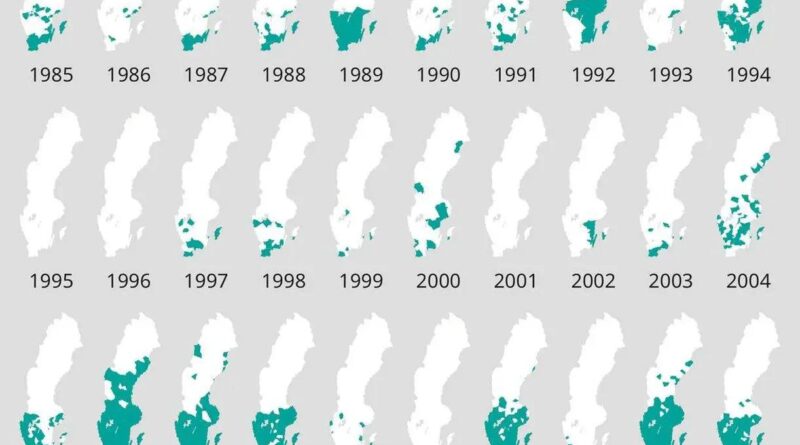
Read MoreHow has Sweden’s white Christmas changed over the past fifty years? This SMHI dataset maps snow presence across the country from 1975 to 2024, showing a geographic divide that’s become more pronounced over time.
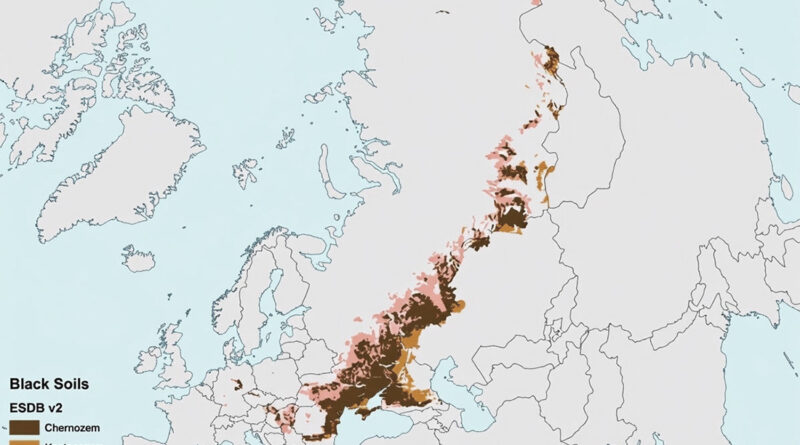
Read MoreEver wondered where the world’s richest soils are? This map shows the global distribution of chernozems (a type of black soil). And according to the map, just three countries hold most of these extraordinarily fertile lands.
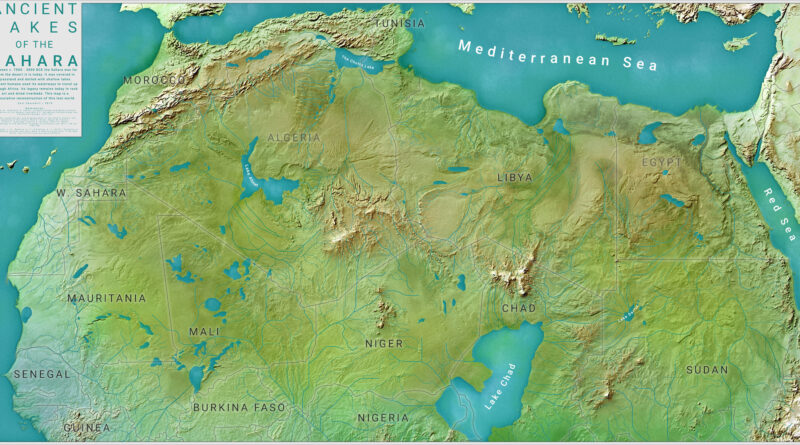
Read MoreThe Sahara wasn’t always sand and heat. Carl Churchill’s map reconstructs what North Africa looked like 8,000 years ago during the African Humid Period—a time when Lake Chad, Lake Darfur, Lake Ahmet, and The Chotts formed a network of waterways across grasslands. Ancient humans traveled these routes before climate shifts turned the region into desert.
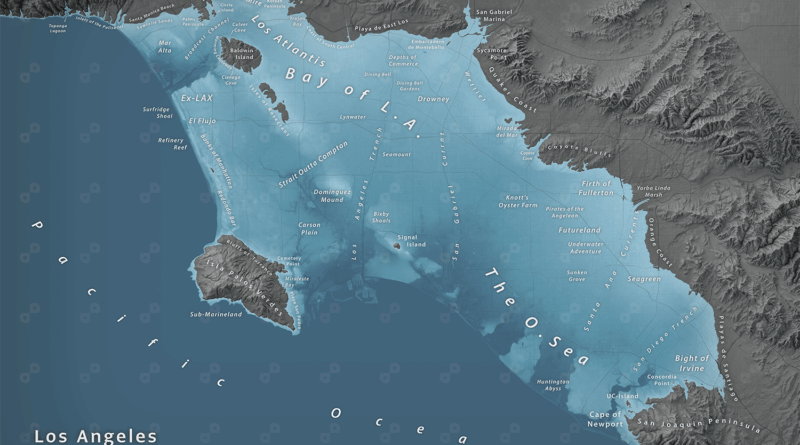
Read MoreJeffrey Linn mapped what Southern California looks like when 80 meters (260 ft) of seawater flood the LA Basin. Two versions show the transformation from basin to bay.
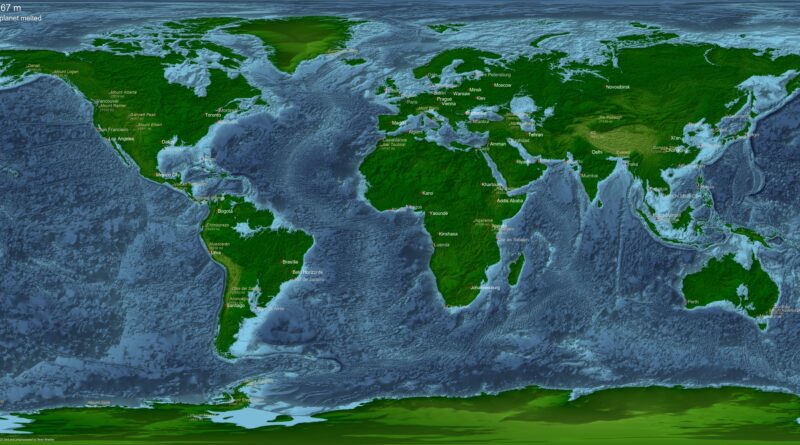
Read MoreEarth’s seas are rising today, but the long-term future holds both floods and droughts on a planetary scale. See maps I created showing what our world would look like if all ice melted, if alien oceans were added, and when Earth eventually runs dry.
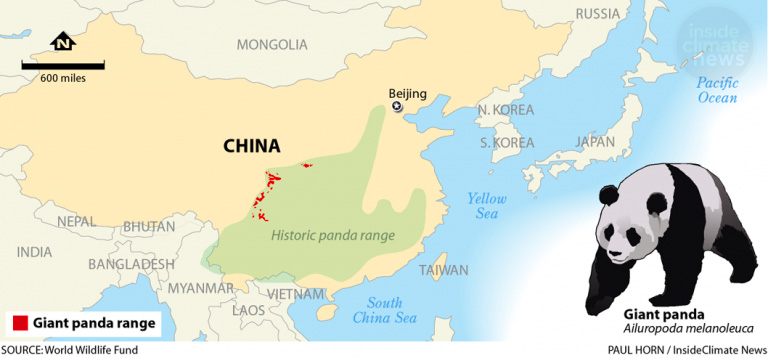
Read MoreA map comparing the historic and current range of the giant panda shows how much its world has shrunk.
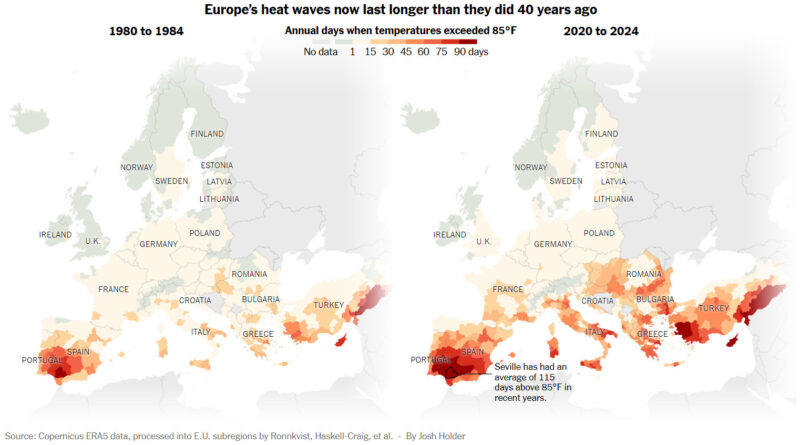
Read MoreHeat waves in Europe are no longer rare events. A new map shows how often summer days over 30ºC now occur compared to the early 1980s.
Read More