Gender stereotypes remain strong across Europe. In December 2024, the European Commission surveyed over 26,000 people in all 27 EU member states to measure just how widespread these views are.
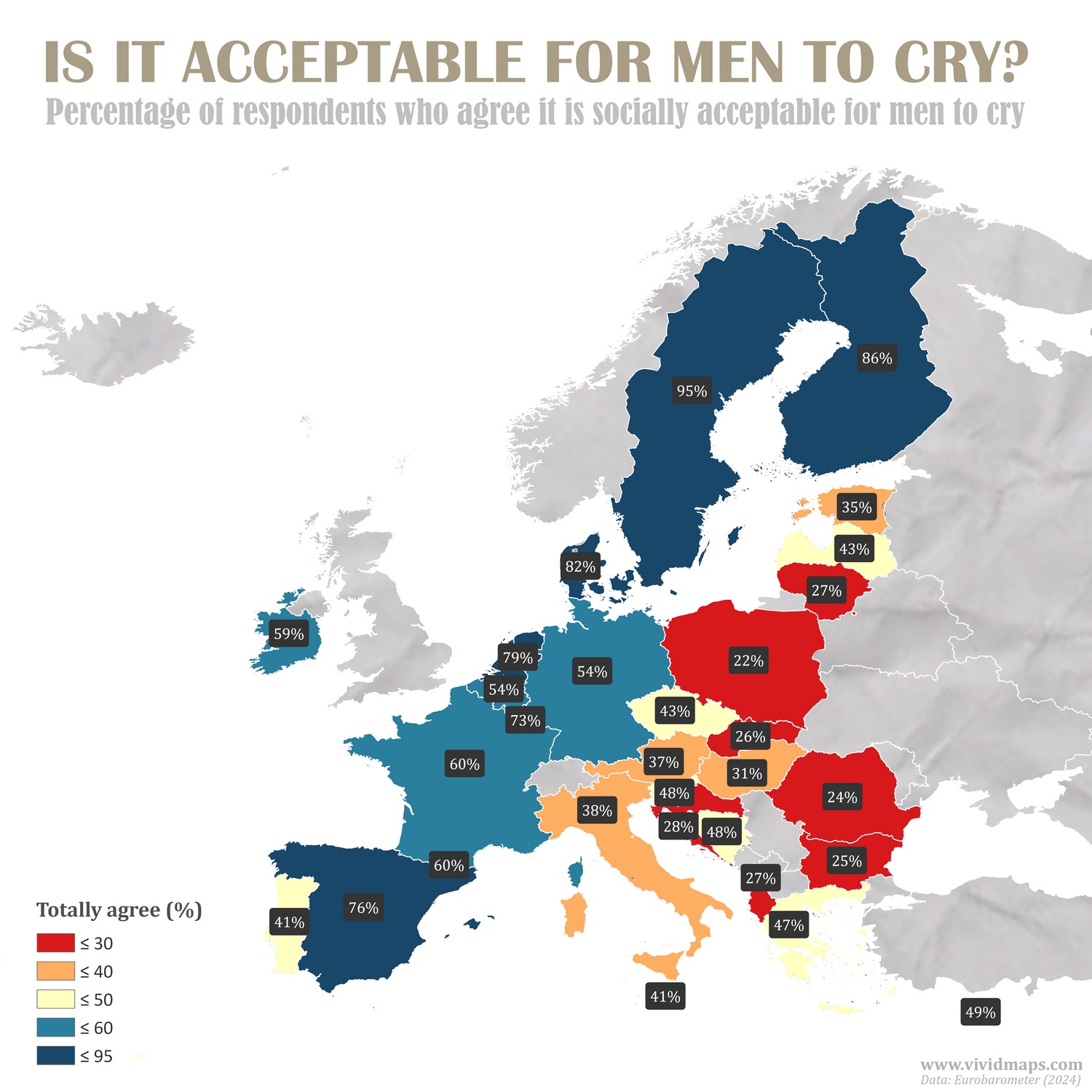
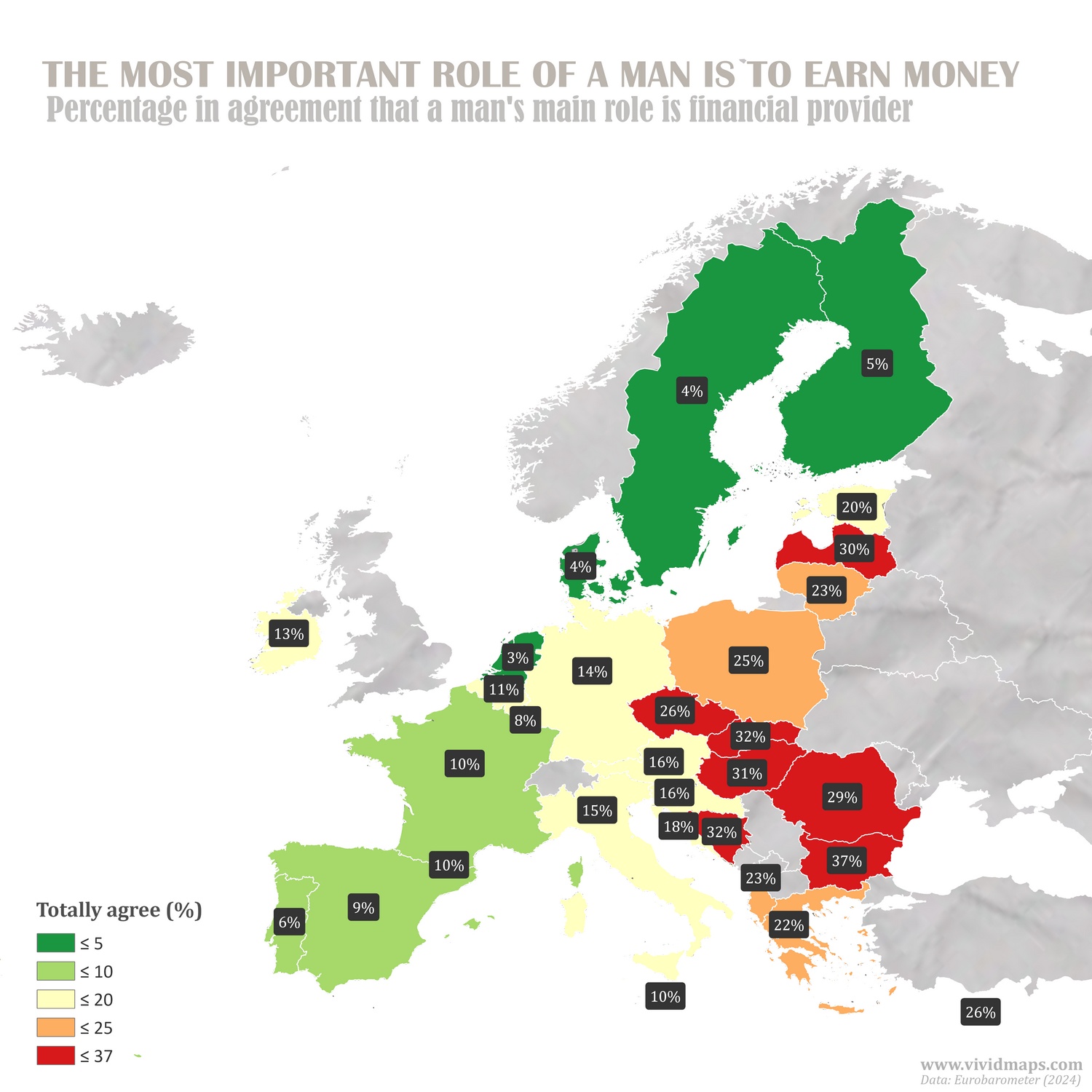
In Bulgaria, 37% say earning money is the most important role of a man. In Poland, just 22% think it’s acceptable for men to cry. I mapped all of it from Special Eurobarometer 545.
Take that first question. Sweden: 95%. Poland: 22%. The EU average is 51%, meaning the continent is genuinely split on this. And nearly every other question in the survey produces the same geographic shape.
Country
It is acceptable for a man to cry
The most important role of a man is to earn money
EU27
51
15
Belgium
54
11
Bulgaria
25
37
Czechia
43
26
Denmark
82
4
Germany
54
14
Estonia
35
20
Ireland
59
13
Greece
47
22
Spain
76
9
France
60
10
Croatia
28
18
Italy
38
15
Cyprus
49
26
Latvia
43
30
Lithuania
27
23
Luxembourg
73
8
Hungary
31
31
Malta
41
10
Netherlands
79
3
Austria
37
16
Poland
22
25
Portugal
41
6
Romania
24
29
Slovenia
48
16
Slovakia
26
32
Finland
86
5
Sweden
95
4
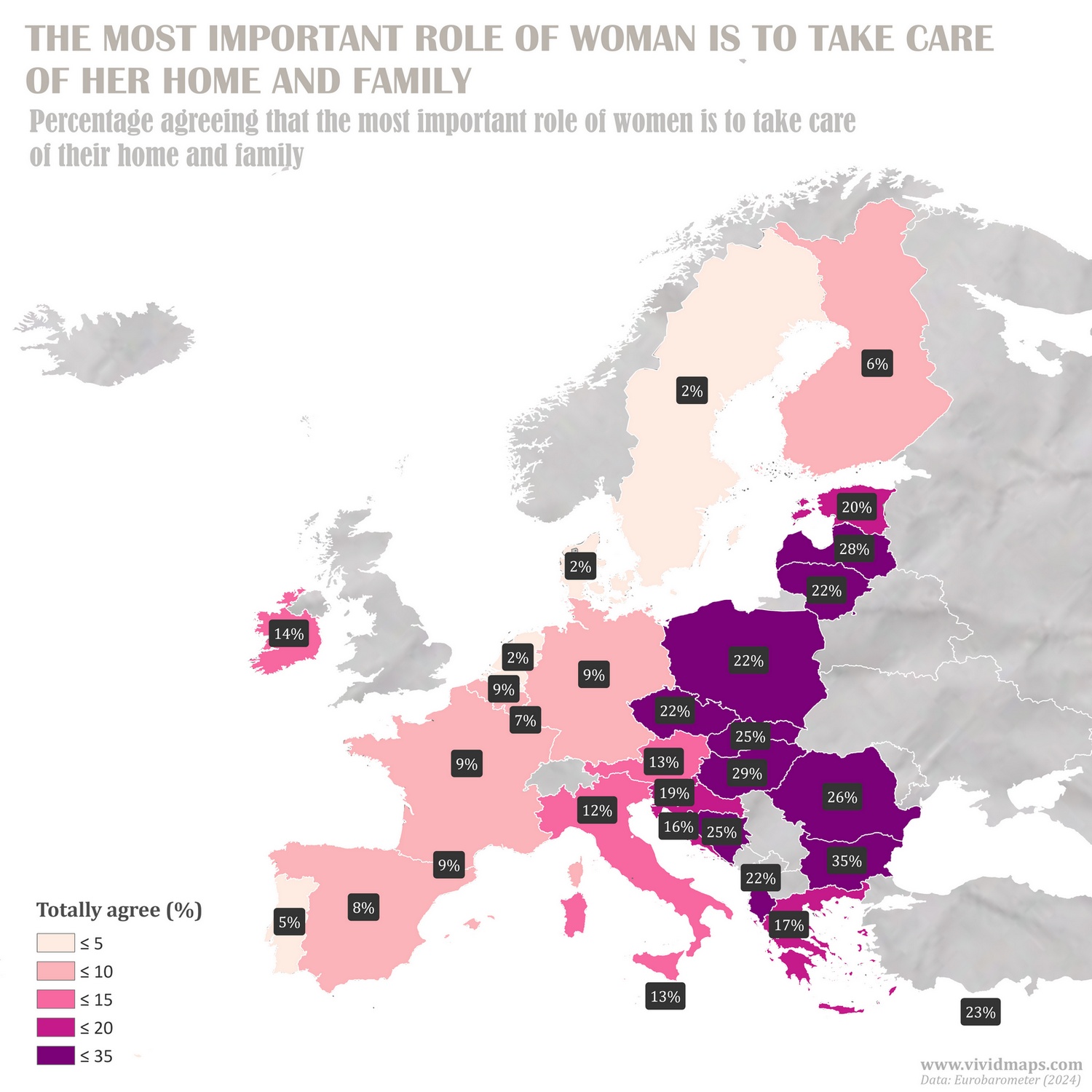
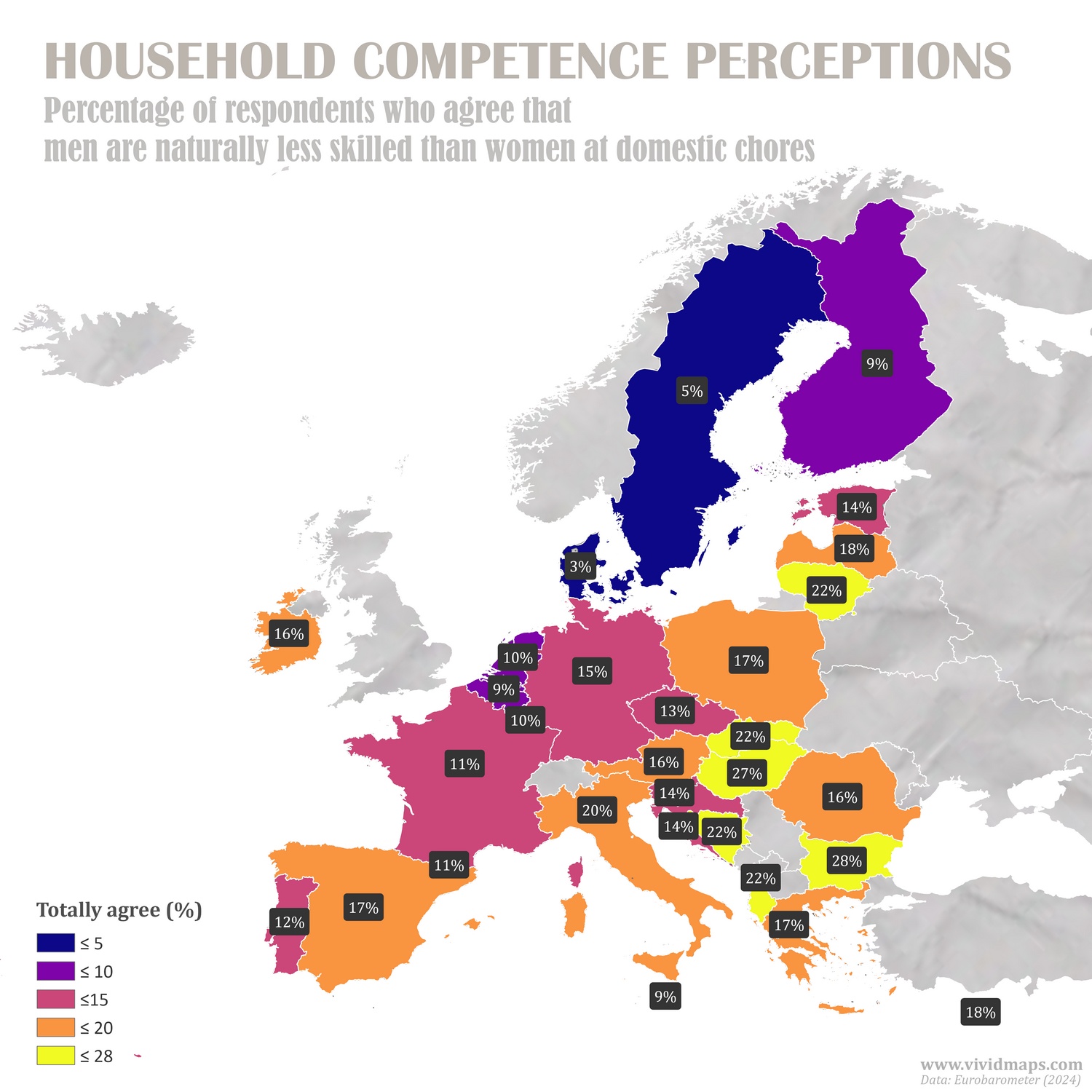
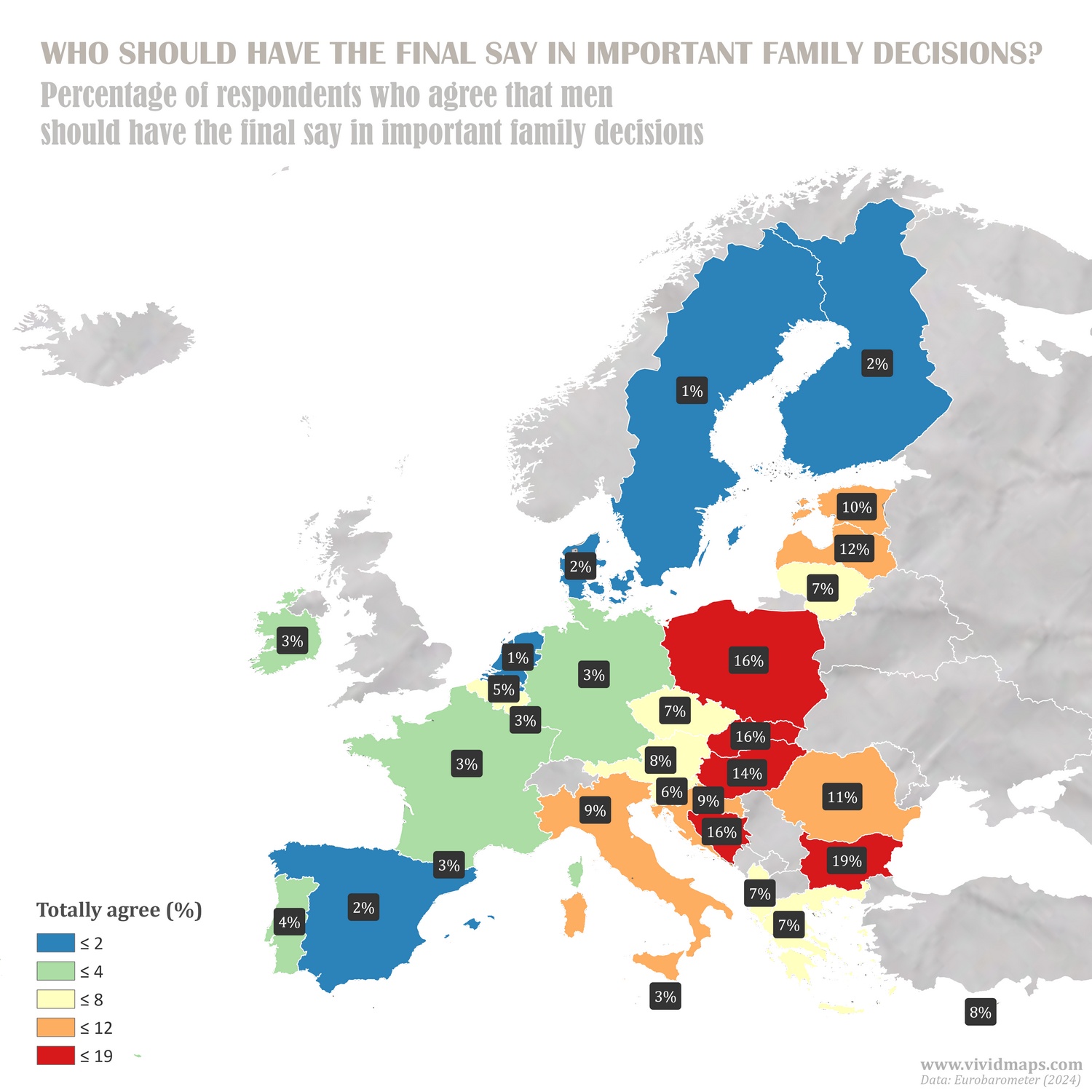
In the Netherlands, 3% see earning money as a man’s primary role and 2% see homemaking as a woman’s primary role. Bulgaria comes in at 37% and 35%. On whether men are naturally less competent at household tasks, Denmark records 3% and Bulgaria 28%.
Country
The most important role of a woman is to take care of her home and family
Overall, men are naturally less competent than women to perform household tasks
EU27
12
15
Belgium
9
9
Bulgaria
35
28
Czechia
22
13
Denmark
2
3
Germany
9
15
Estonia
20
14
Ireland
14
16
Greece
17
17
Spain
8
17
France
9
11
Croatia
16
14
Italy
12
20
Cyprus
23
18
Latvia
28
18
Lithuania
22
22
Luxembourg
7
10
Hungary
29
27
Malta
13
9
Netherlands
2
10
Austria
13
16
Poland
22
17
Portugal
5
12
Romania
26
16
Slovenia
19
14
Slovakia
25
22
Finland
6
9
Sweden
2
5
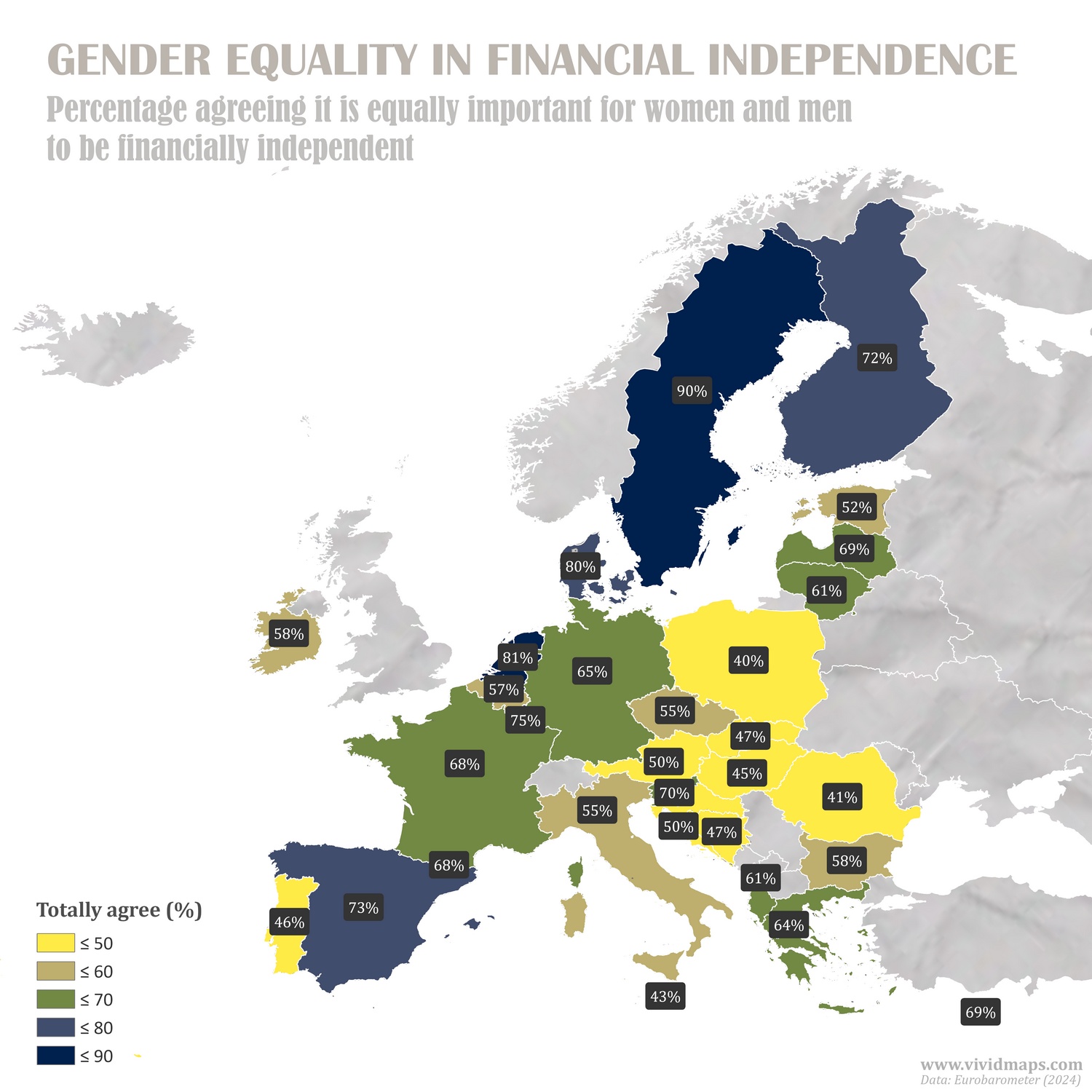
On financial independence being equally important for both sexes, Poland lands at 40% and Sweden at 90%.
Country
It is equally important for women and men to be financially independent
For important family decisions, men should have the final say
EU27
61
6
Belgium
57
5
Bulgaria
58
19
Czechia
55
7
Denmark
80
2
Germany
65
3
Estonia
52
10
Ireland
58
3
Greece
64
7
Spain
73
2
France
68
3
Croatia
50
9
Italy
55
9
Cyprus
69
8
Latvia
69
12
Lithuania
61
7
Luxembourg
75
3
Hungary
45
14
Malta
43
3
Netherlands
81
1
Austria
50
8
Poland
40
16
Portugal
46
4
Romania
41
11
Slovenia
70
6
Slovakia
47
16
Finland
72
2
Sweden
90
1
The communist period explains more of this than might initially seem obvious. Communist governments across Eastern Europe pushed women into the workforce at high rates. Female labor participation across much of the Eastern Bloc was genuinely substantial by the 1970s. But they left the household entirely alone. From the mid-1950s onward, state-ordained women’s organizations promoted a vision in which working women had to juggle their commitment to the workplace with their obligations toward the family, managing what became known as the “double burden.” The system encouraged women to hold full-time jobs while leaving domestic authority exactly where it had always been. The fall of those regimes and the economic difficulties of the 1990s did not lead to restructuring in most households.
Sweden and Denmark spent those same decades differently. Parental leave that fathers were expected to take, subsidized childcare, labor markets built around the assumption that women would work throughout their adult lives. Daily life organized that way, over enough decades, shifts what feels normal at home.
The countries on the conservative end of these maps (Bulgaria, Romania, Poland, Slovakia) also share strong Orthodox or Catholic traditions. Norris and Inglehart documented a consistent link between religious conservatism and stronger gender role distinctions in Sacred and Secular (Amazon link). Those same countries also largely overlap with the former Eastern Bloc, so working out which factor carries more weight is genuinely difficult.
Country
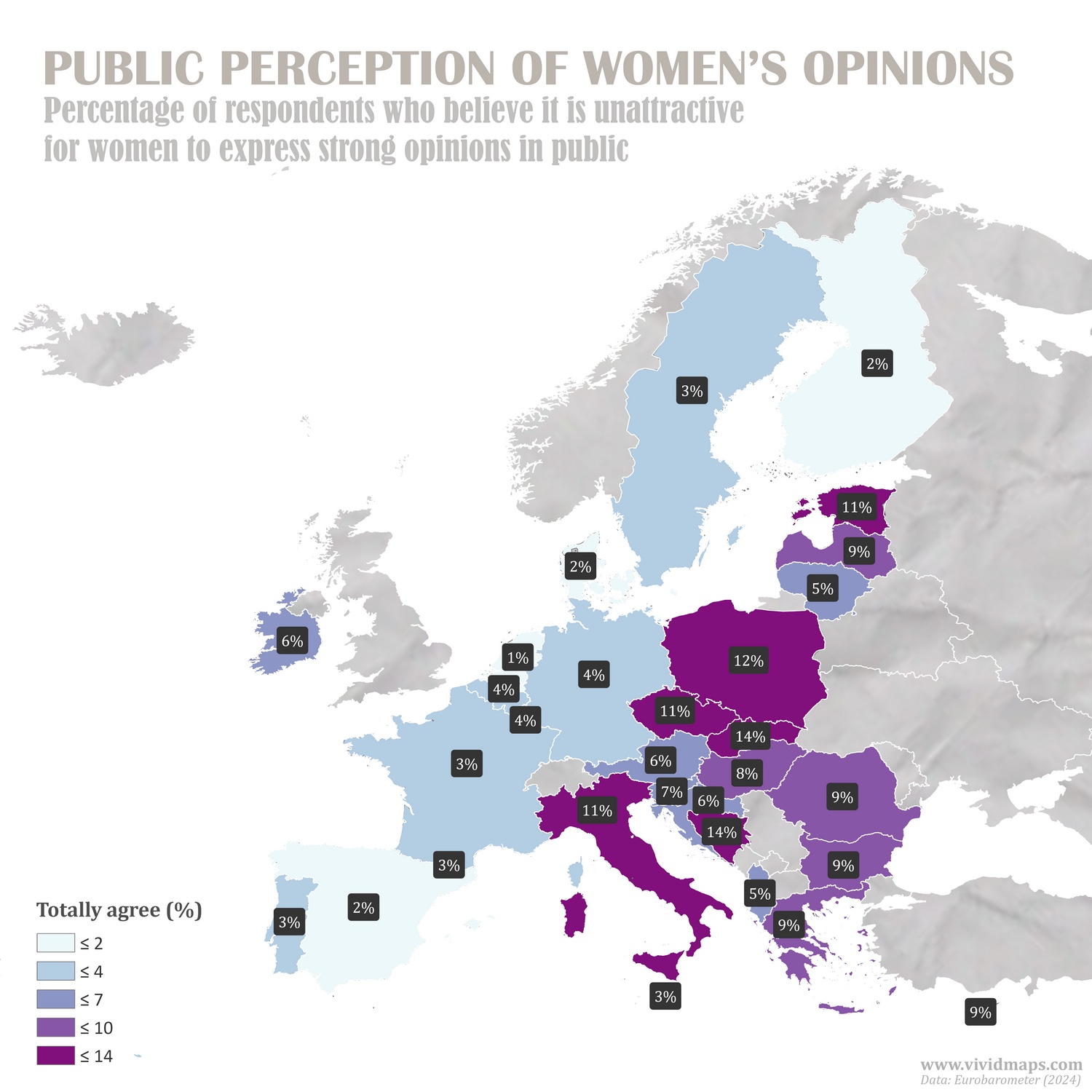
It is unattractive for women to express strong opinions in public
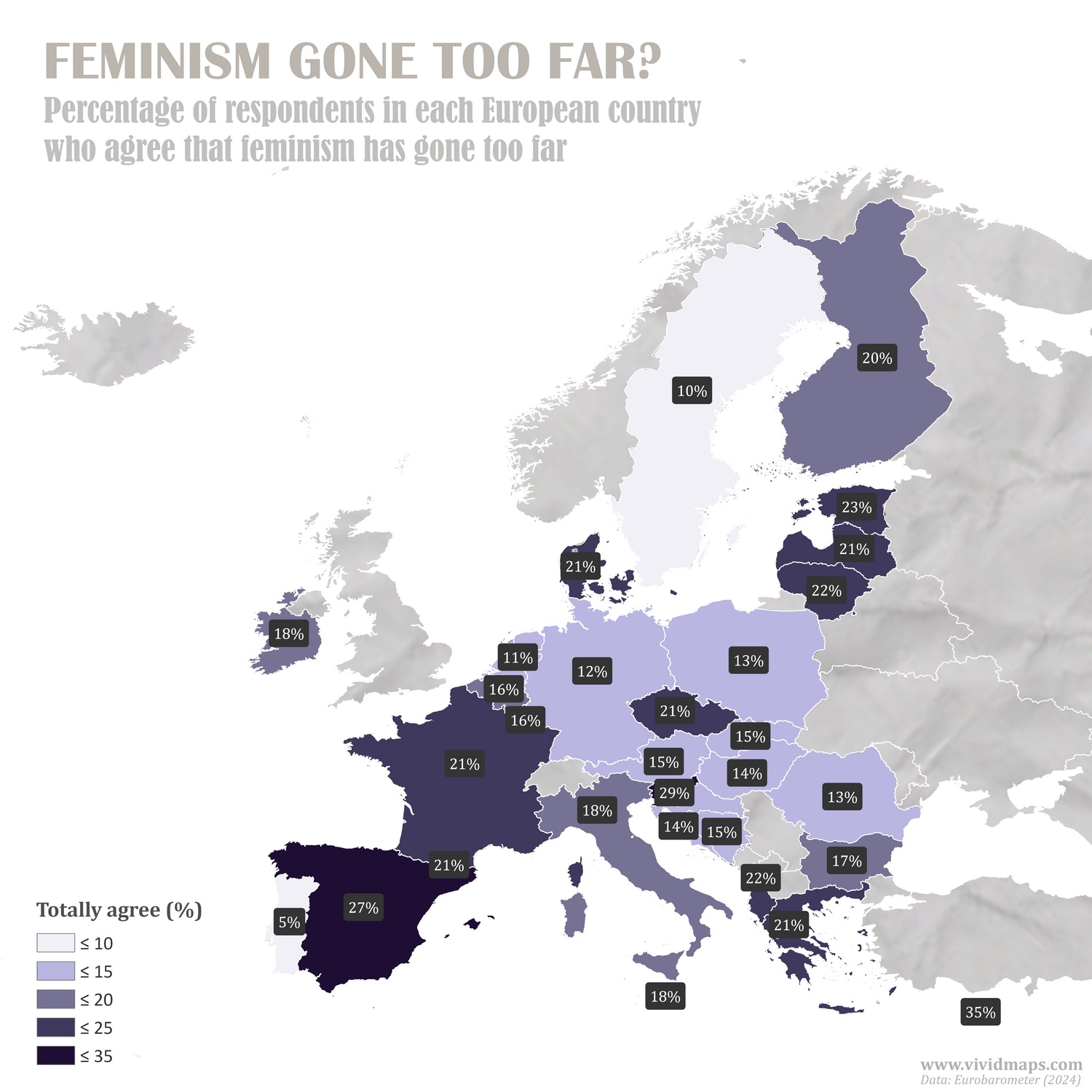
Feminism has gone too far
EU27
6
17
Belgium
4
16
Bulgaria
9
17
Czechia
11
21
Denmark
2
21
Germany
4
12
Estonia
11
23
Ireland
6
18
Greece
9
21
Spain
2
27
France
3
21
Croatia
6
14
Italy
11
18
Cyprus
9
35
Latvia
9
21
Lithuania
5
22
Luxembourg
4
16
Hungary
8
14
Malta
3
18
Netherlands
1
11
Austria
6
15
Poland
12
13
Portugal
3
5
Romania
9
13
Slovenia
7
29
Slovakia
14
15
Finland
2
20
Sweden
3
10
One question breaks from the geographic pattern. On whether feminism has gone too far, Cyprus leads at 35%, Slovenia follows at 29%, then Spain at 27%. Spain, which records some of the lowest scores in this survey on breadwinner expectations and household decision-making.
Spain is a different case. The country pushed through an unusually large amount of gender legislation in a short period, a sexual consent law in 2022, mandatory gender quotas for party lists in 2023, and various other reforms in between. Laura Nuño Gómez, a political scientist at King Juan Carlos University in Madrid, noted that in Spain “as progress has been faster, the opposition to gender equality policies has also been more intense and animated.” Vox, whose campaign was built substantially around opposing feminist policy, took 12.4% of the national vote in 2023. That political context is probably where the 27% comes from, not from the same conservatism you’d find in Bulgaria or Slovakia. Portugal, worth noting, scores conservatively on financial independence (46%) but records just 5% on this question, the lowest in the EU.