Scotland Almost Had Its Own Colonial Empire in the Americas
Before 1707, Scotland and England were separate countries with separate foreign policies and, it turns out, separate colonial ambitions. The map below shows where those Scottish ambitions landed — five settlements planted across the Americas, none of which survived.
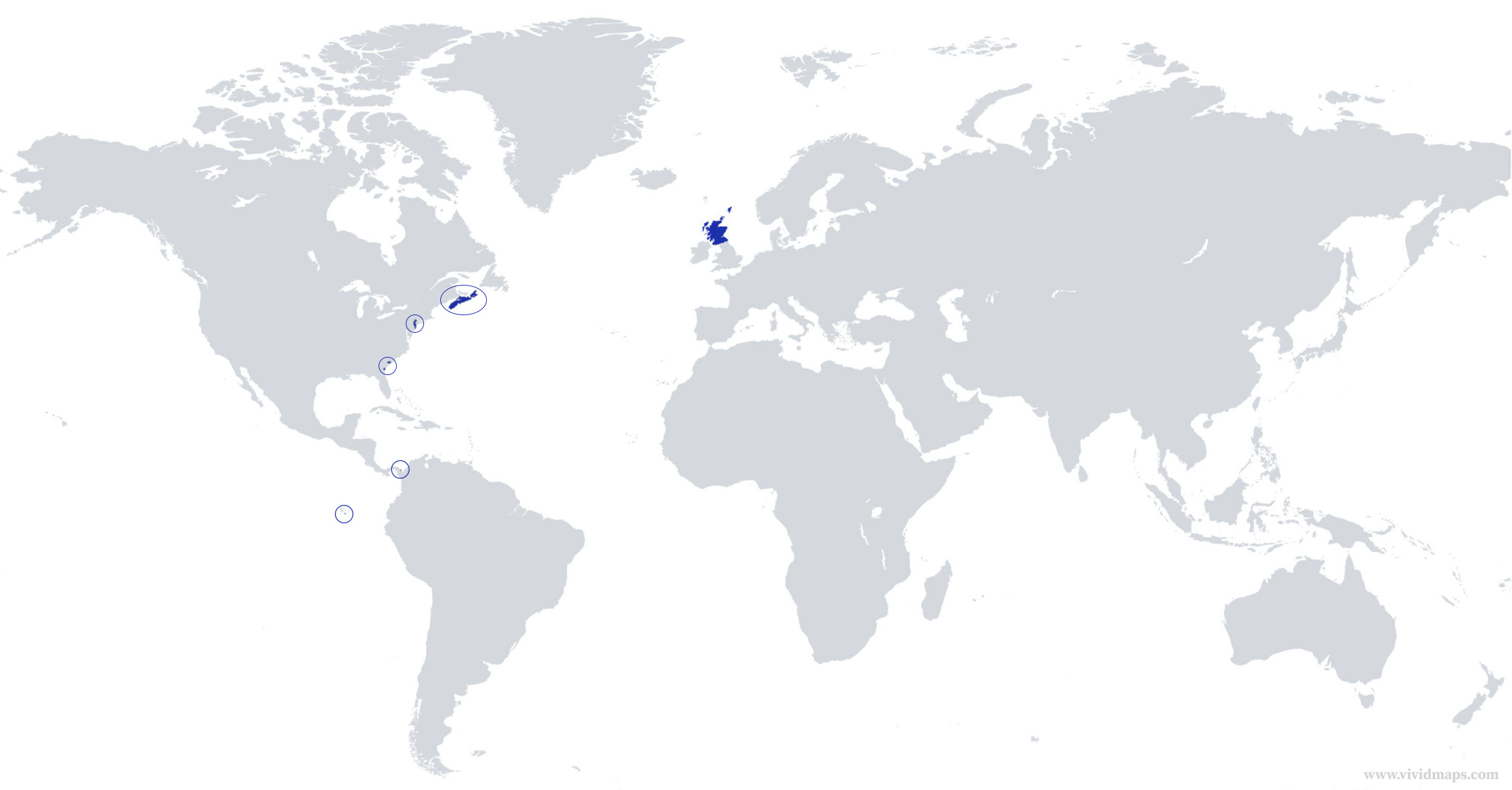
| Colony | Founded | Present-day Location |
|---|---|---|
| Nova Scotia | 1629 | Nova Scotia, Canada |
| Charles Island | 1627 | Floreana Island, Galápagos, Ecuador |
| East New Jersey | 1683 | New Jersey, USA |
| Stuarts Town | 1684 | South Carolina, USA |
| New Caledonia (Darien) | 1698 | Darién Province, Panama |
Nova Scotia was the opening move. King James VI gave Sir William Alexander a charter in 1621 to establish a colony in Atlantic Canada. Sir William spent the next six years trying — four separate expeditions, none of which produced a lasting settlement. The fifth attempt, in 1629, finally worked. It held for less than a decade before England and France reached an agreement over it. Scotland wasn’t part of those negotiations, and the settlers left with nothing to show for the effort.
Then there is Floreana Island in the Galápagos, roughly a thousand kilometres off the coast of Ecuador in the Pacific. John Gordon of Lochinvar reached it in 1627 and founded a Scottish settlement there, naming it Charles Island. Darwin was still two centuries away from making those islands famous.
East New Jersey in the 1680s was probably Scotland’s steadiest foothold anywhere in the Americas. Charles II granted the colonial charter in 1683, with twelve of the twenty-four proprietors being Scottish. Every Governor until 1697 was Scottish, and after the 1702 merger with West Jersey into a single Royal Colony, Scots still held real weight in local politics and commerce.
Stuarts Town in South Carolina had its roots in religious conflict back home. Covenanters who had been facing serious persecution in Scotland arrived at Port Royal in 1684, renamed it, and tried to build a place where they could govern themselves. In August 1686, Spanish forces came with three galleys and around 150 troops, took what they wanted, and burned the rest.
What came next was the Darien scheme, and nothing else on this map comes close to it in scale. The plan was a trading colony on the Isthmus of Panama, positioning Scotland as the commercial link between two oceans and cutting out the long route around South America. To fund it, Scottish investors raised £400,000, estimated at between a quarter and a third of the country’s entire liquid wealth. Five ships carrying 1,200 colonists left in 1698 with a year’s worth of supplies. Disease, Spanish pressure, and chronic supply failures tore it apart. A Spanish siege and naval blockade ended it in 1700, and since the Company of Scotland had drawn on roughly 20 percent of all money circulating in the country, its collapse pulled the Scottish Lowlands into serious financial ruin. Seven years later, Scotland signed the Acts of Union. Whether that was inevitable is a debate historians still have, but the Darien losses made the case for union very hard to argue against.