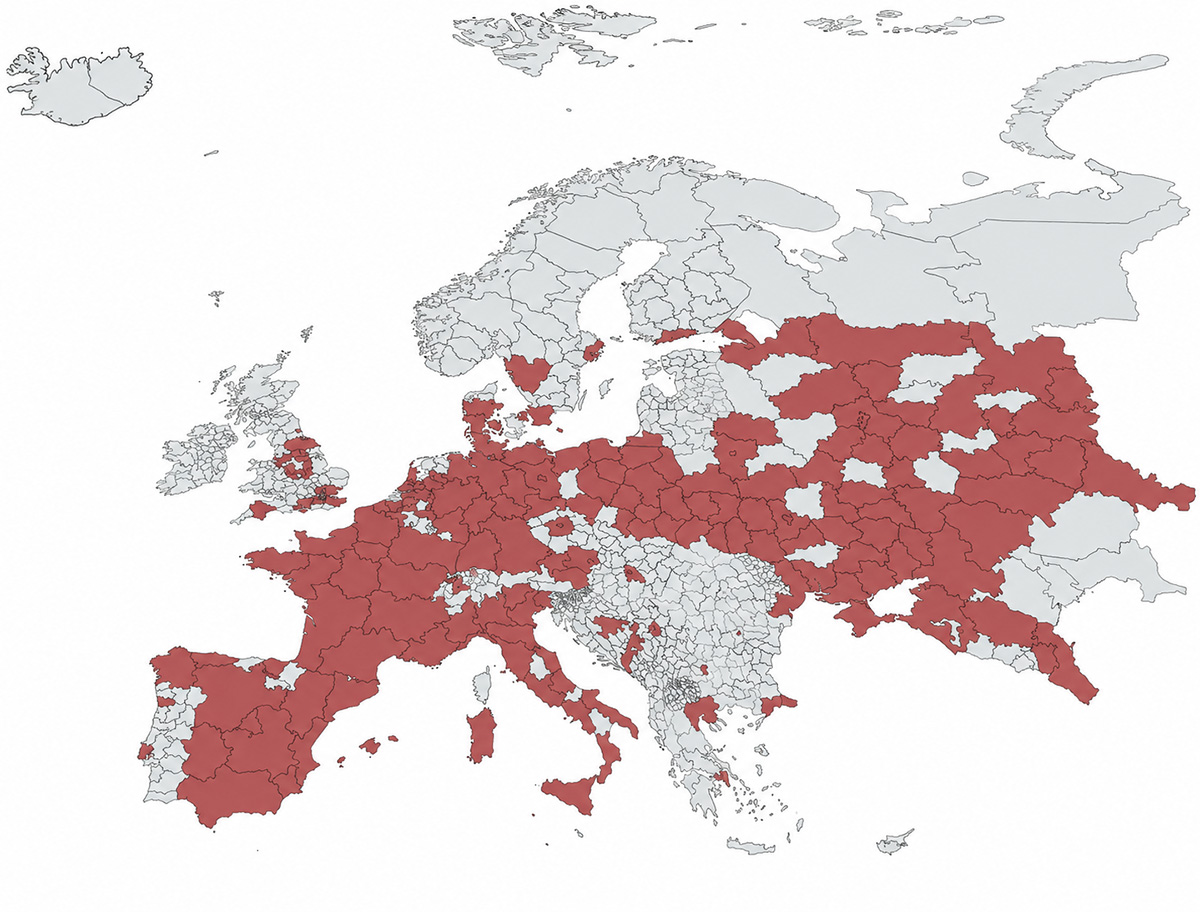
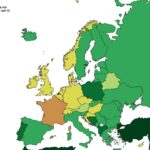
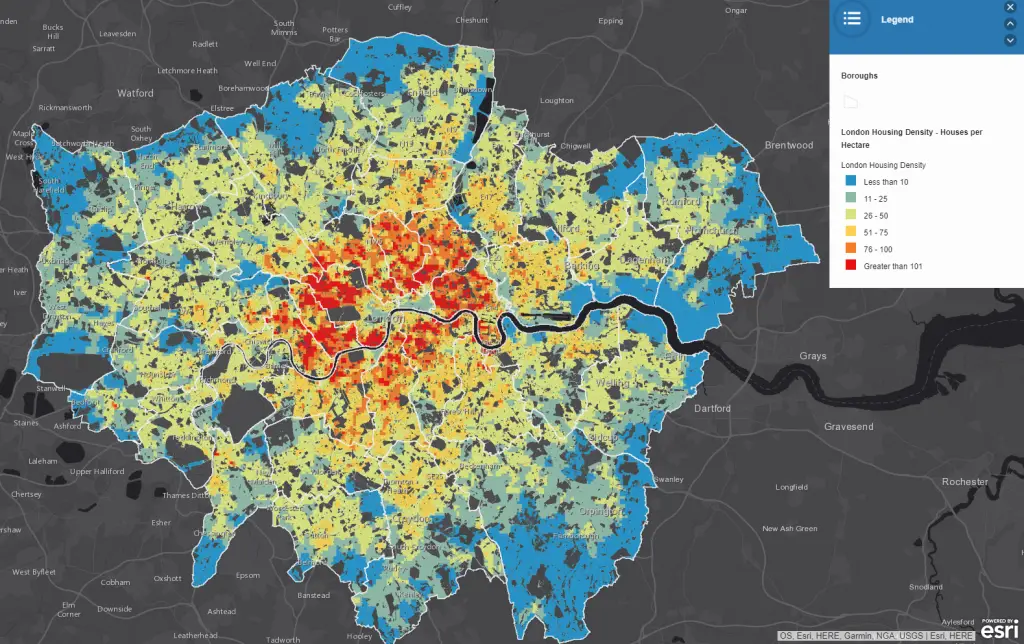
Population in Europe is far from evenly spread. Some regions hold numbers closer to entire countries, while large parts of the north and east remain genuinely sparse.
The map above marks every European region that crosses the one million resident threshold. Ile-de-France leads at 12.4 million residents, followed by Lombardia in northern Italy at 10 million and Andalucia in southern Spain at 8.6 million.
Region
Country
Population
Ile-de-France
France
~12.6 million
Lombardia
Italy
~10.1 million
Andalucia
Spain
~8.7 million
Cataluna
Spain
~8.2 million
Comunidad de Madrid
Spain
~7.2 million
Berlin urban zone
Germany
~5.5 million
Ruhrgebiet
Germany
~5.1 million
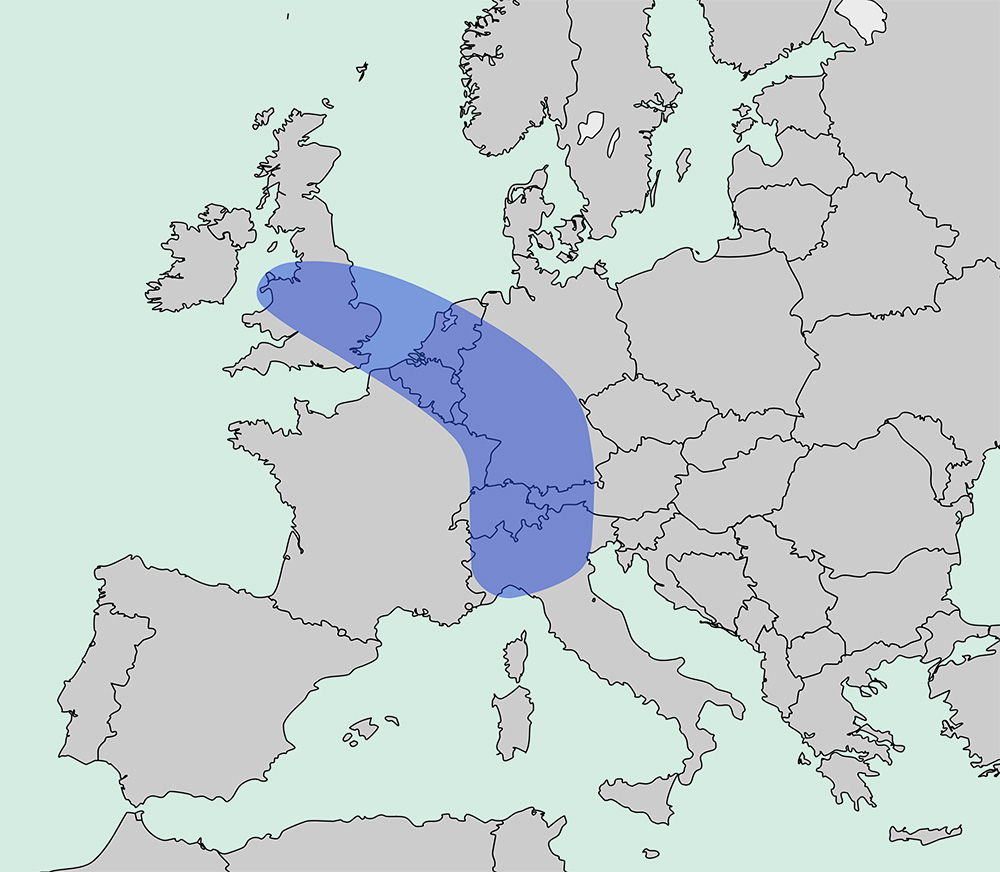
Geographers have called this arc the Blue Banana since French geographer Roger Brunet named it in 1989 – it takes in Greater London, the Benelux, Westphalia, the Rhineland, Bavaria, Austria, Switzerland and Lombardia, with roughly 100 million people concentrated in that band (rxo.com).
Across the EU, 95 out of 244 NUTS level 2 regions had populations between 1 and 2 million as of January 2024 (Eurostat) – most of them inside or adjacent to that same corridor.
The density range across the continent differs considerably, from 21,000 inhabitants per square kilometre in central Paris to 2 in Finland’s Lapland.