Europe’s Most Populated Regions
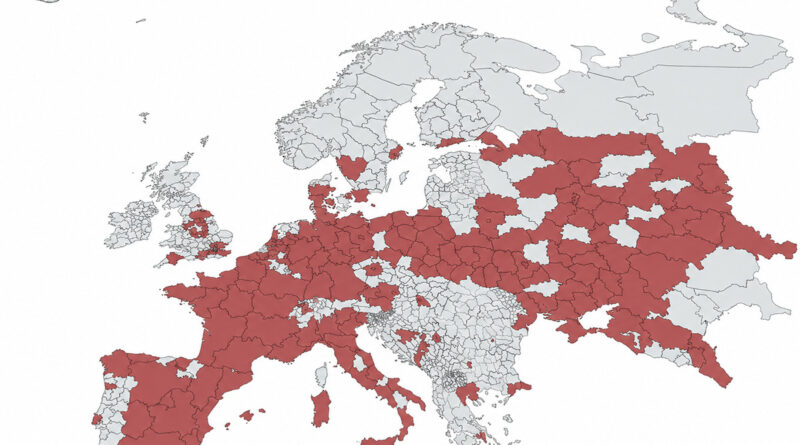
Paris, Milan and a curved arc from England to northern Italy account for a disproportionate share of Europe’s population.
Read MoreParis, Milan and a curved arc from England to northern Italy account for a disproportionate share of Europe’s population.
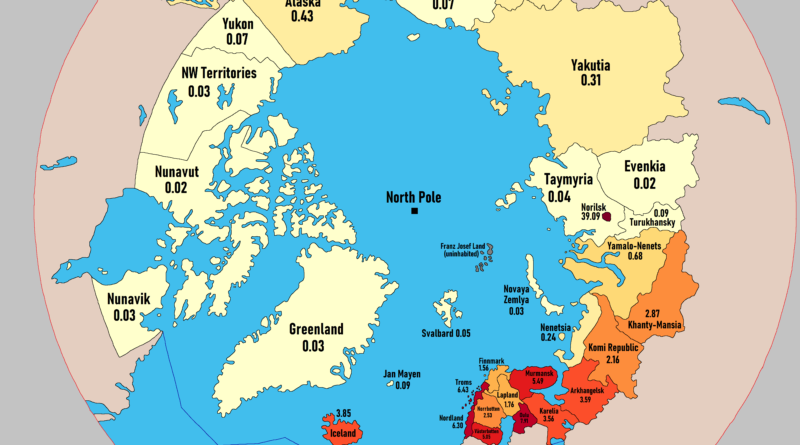
Read MoreMost countries with Arctic coastlines view them as opportunities. Russia, Canada, Greenland, the Nordic countries all have access to Arctic waters and resources. But the population density map reveals something unexpected – some countries built actual cities while others barely settled their Arctic at all.
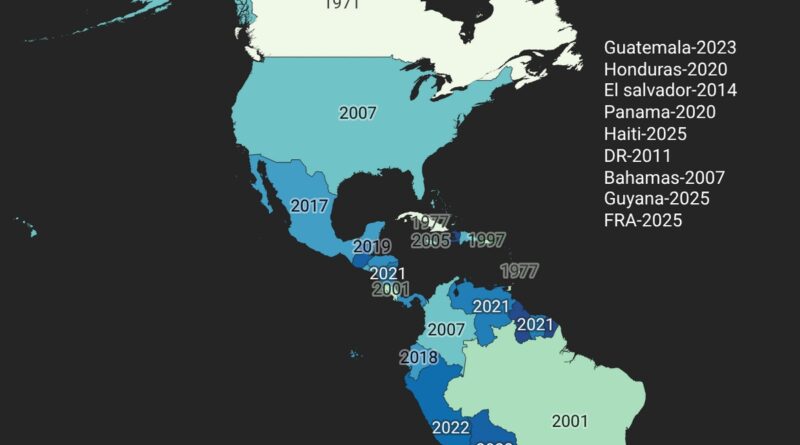
Read MoreCanada’s birth rate dropped below replacement in 1971. Colombia crossed the same line in 2007 — the same year as the US. Guatemala held on until 2023. Across the entire Americas, only Haiti, Guyana, French Guiana, and Honduras are still above that threshold today.
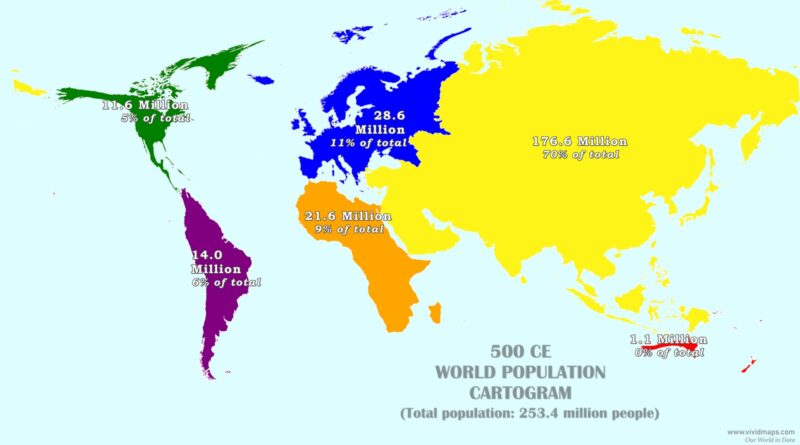
Read MoreEight billion people share the planet today, but that number has never moved in a straight line. Plagues erased tens of millions within a few years. Colonization wiped out nearly 90% of the Americas in a single century. The Industrial Revolution nearly doubled global numbers in just 100 years. A series of population cartograms maps all of this from 10,000 BCE to 2023.
Read MoreFor most of human history, having six or seven children was survival arithmetic.
Today, in more than half the world’s countries, the average is below 2.1 — and
some are at levels that would cut their populations in half within two generations.
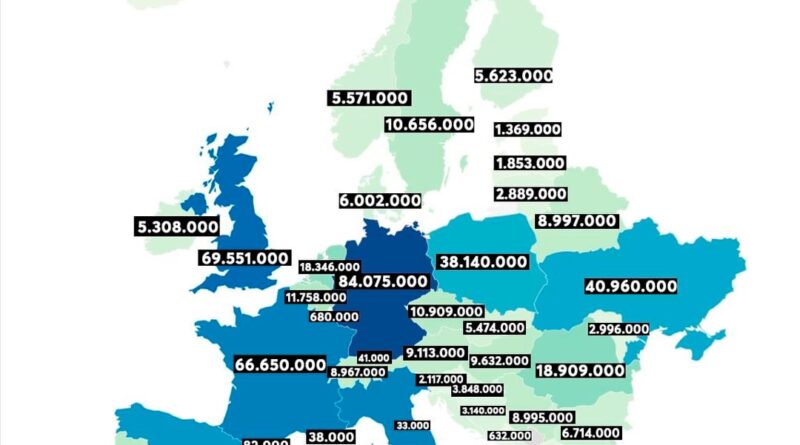
Back in 1990, UN demographers tried predicting what Europe would look like in 2025. Luxembourg almost doubled its forecast after switching from steel to banking. Poland was supposed to reach 45 million but never grew from its 1990 population of 38 million. Andorra lost half its predicted population because mountains don’t expand. Greece hit their forecast almost perfectly but through economic crisis instead of the prosperity they’d assumed. About 25 million Eastern Europeans moved west, which nobody’s model predicted.
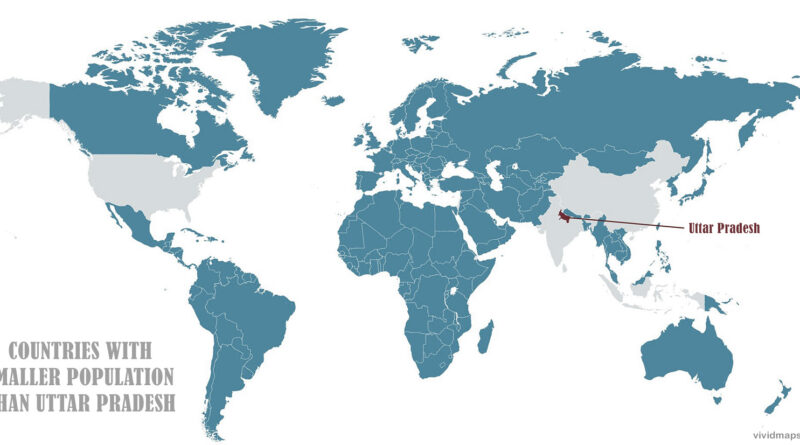
Read MoreHave you ever pictured a spot with 241 million people that isn’t even a country? That’s Uttar Pradesh in India, home to more folks than Brazil or Nigeria. If it stood on its own, it’d be the sixth biggest nation by population.
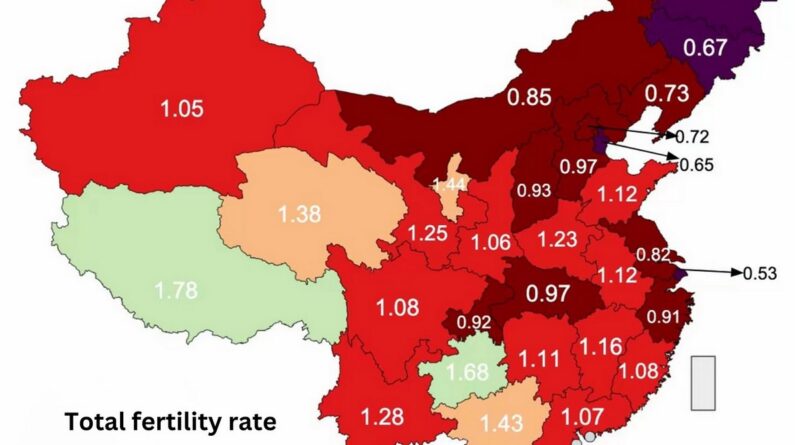
Read MoreChina’s fertility rate has plunged to 1.0 child per woman in 2023, with dramatic provincial variations from 1.68 in Guizhou to 0.52 in Heilongjiang. Housing costs, education expenses, and cultural shifts drive the decline. UN projections show China’s population falling from 1.4 billion to 633 million by 2100, while the U.S. grows to 421 million.
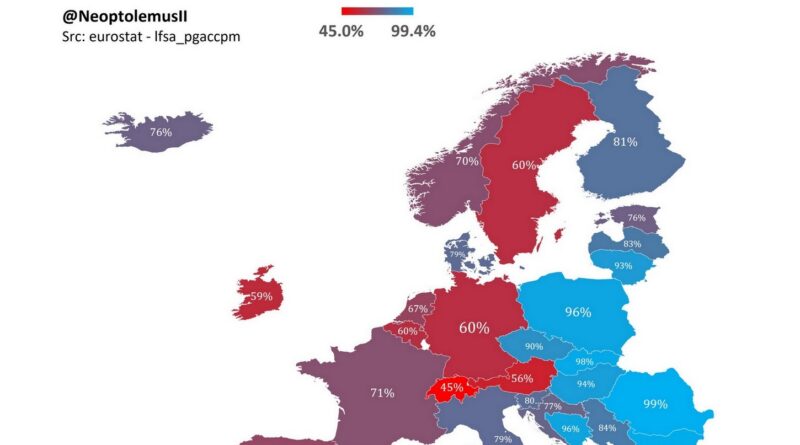
Read MoreThe Eurostat-based map highlights how migration has reshaped Europe’s families. Many Central and Eastern European countries still have over 90% of teens with two native-born parents, while Western and Northern nations show far lower shares due to long histories of immigration and mobility.
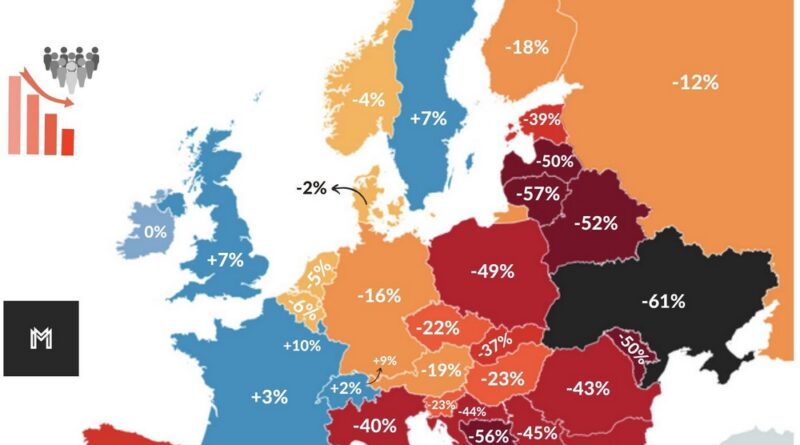
Read MoreEurope’s population landscape is heading for a dramatic transformation. While Luxembourg and the UK are set to grow, countries like Ukraine and Bosnia & Herzegovina could lose more than half their people by 2100.
Read More