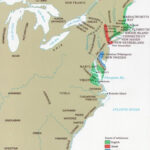
New Netherland (1624 to 1664) and New Sweden (1638 to 1655) were the two non-English colonies that once shared the Mid-Atlantic coast. The Dutch colony reached almost 9,000 colonists around the Hudson River. The Swedish one peaked at about 400 on the Delaware River, and the Dutch absorbed it in 1655.
School maps of the 1650s usually paint the Atlantic coast in English colors. The middle section was not English. For a few decades it belonged to the Dutch and, along one river, to the Swedes.
Key takeaways
New Netherland covered the Hudson Valley, Manhattan and neighboring land. It became New York in 1664.
New Sweden was tiny and lasted 17 years. Its capital fort stood where Wilmington, Delaware, is today.
The Swedish colony’s founder was a Dutchman who had worked in New Amsterdam.
Cookie, coleslaw and boss all came into English through Dutch.
What were New Netherland and New Sweden?
Two colonies, two rivers, one short overlap. The table puts them side by side.
New Netherland
New Sweden
Settled
1624
1638
Main bases
New Amsterdam (now New York City), Fort Orange (now Albany)
Fort Christina (now Wilmington, Delaware)
Present-day states
Parts of New York, New Jersey, Connecticut and, after 1655, Delaware
Parts of Delaware, Pennsylvania, New Jersey and Maryland
Peak population
Almost 9,000 (1664)
About 400 (1654 to 1655)
Ended
English seizure, September 8, 1664
Dutch conquest, 1655
How did a trading post become New Amsterdam?
A company, not a country, managed New Netherland. The Dutch West India Company received its charter in 1621. In 1624 about 30 French-speaking Protestant families from present-day Belgium landed on Governors Island, and the company soon moved them to Manhattan to build Fort Amsterdam.
Fur paid the bills. By 1664 the colony held almost 9,000 people, and only about half were Dutch. Roughly 800 were of African descent, many of them enslaved by the company itself.
Why did a Dutchman lead a Swedish colony?
Peter Minuit knew the area. He had directed New Amsterdam from 1626 and lost the post. Sweden hired him, and on March 29, 1638, his expedition built Fort Christina on the Delaware. The young Queen Christina gave it her name.
The settlers were mostly Swedes and Finns. Numbers stayed low. By 1654 only about 130 people remained, and a new ship pushed the total back up to roughly 400.
How did the Dutch end New Sweden?
By force. The Dutch built Fort Casimir a few miles from Fort Christina in 1651. Swedish governor Johan Rising seized it in 1654. Peter Stuyvesant answered in 1655 with seven ships and several hundred soldiers, and Fort Christina gave up.
New Sweden folded into New Netherland. Swedish and Finnish settlers stayed and kept local self-government. Sweden never held another American colony.
When did New Netherland become New York?
Nine years later. On September 8, 1664, Stuyvesant surrendered New Amsterdam to Colonel Richard Nicolls, who had arrived with four ships and 450 men. King Charles had granted the territory to his brother James, Duke of York. The name followed.
What did the two colonies leave behind?
Words, mostly. Cookie comes from the Dutch koekje, coleslaw from koolsla and boss from baas. The origin of “cookie” in particular is still debated.
Then there is the log cabin. Some scholars credit Finnish settlers of New Sweden with introducing it to North America. The Nothnagle Log House in Gibbstown, New Jersey, is often called the oldest surviving log cabin in the country, with a date of about 1638. Credit and dating are both argued over.
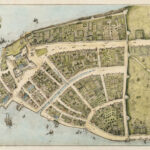
Walk the Wilmington waterfront and the Swedish landing is marked by a monument. Lower Manhattan keeps the Dutch street plan in odd bends.