Crowded or Deserted? Exploring America’s Changing Landscape
Census data from 1990 to 2022 shows how population density shifted across U.S. counties, with urban areas gaining density while many rural counties lost population.
Read More
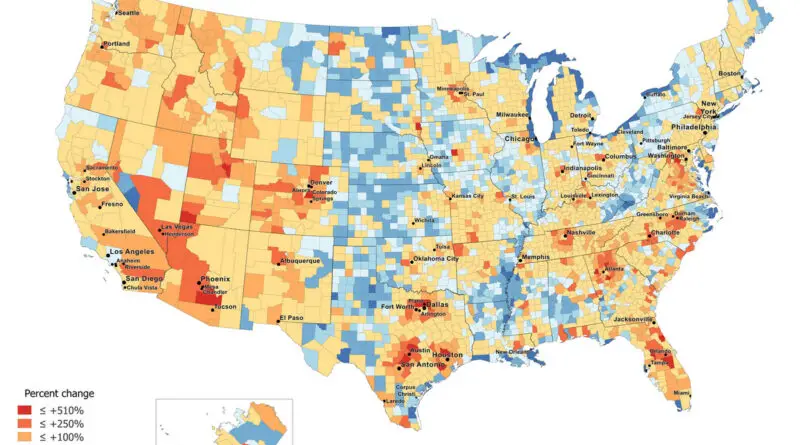
Census data from 1990 to 2022 shows how population density shifted across U.S. counties, with urban areas gaining density while many rural counties lost population.
Read More
The U.S. population distribution is uneven. This uneven distribution of the population is due to historical and geophysical factors (climate, landforms, soil conditions). Approximately 40% of the U.S. population lived in counties on the shore. Nowadays, population decline hit most nonmetro U.S. counties in the Great Plains. Speedy population increases in nonmetro counties nearest to large-sized metro areas and recreation regions with beautiful landscapes.
Read More
Today about 7.8 billion people live on our planet. But the population is extremely unevenly distributed. These maps clearly describe the uneven distribution of humans.
Read More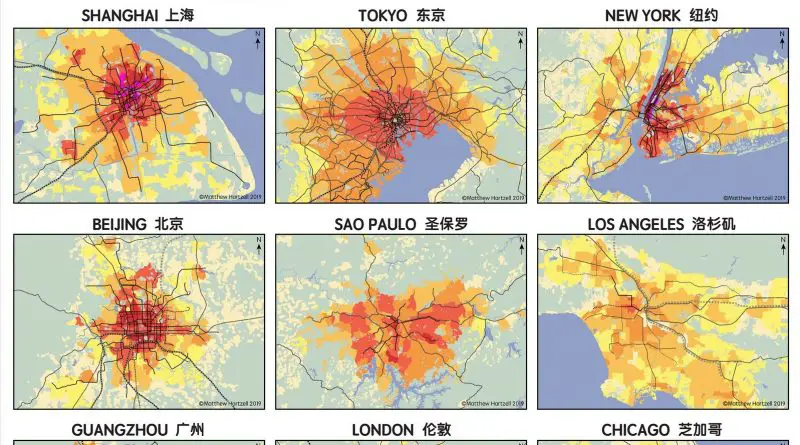
Population and transportation density identify specific cities. It is one of the most precise measures of how suburbia differs from the central city, and it depicts the most visual contrast between urban areas throughout the world. Although differences exist within the central city and suburbia, differences on a global basis between North American and European cities are even more impressive.
Read More
Population density has been monitored for more than 200 years in the U.S. During this time, the number of people living in the U.S. per square mile has grown from 4.5 in 1790 to 87.4 in 2010. Nowadays, the population density in the United States is 87 per square mile.
Read MoreDive into the intriguing world of population density with our detailed world map and analysis. Learn about the most crowded and sparsely populated countries, and how this crucial metric shapes our global landscape.
Read More
World countries Population Fitted into the United States Population density of the U.S. named for similarly dense countries in Europe
Read More
The population density in Russia is just 8.4 per sq. km (22 people per sq. mi). The population is most dense in the European part of the country, with a milder climate, centering on Moscow and Saint Petersburg.
Read More