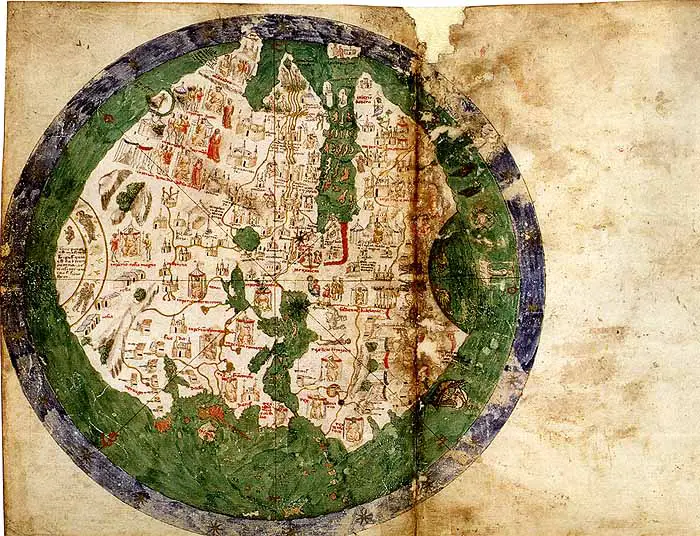
Europeans showed up in Newfoundland in the late 1400s. Over the next couple hundred years, new colonies started all along the Atlantic. Later settlements included Jamestown and St. Augustine. Those first settlements planted roots that shaped who lives where even now.
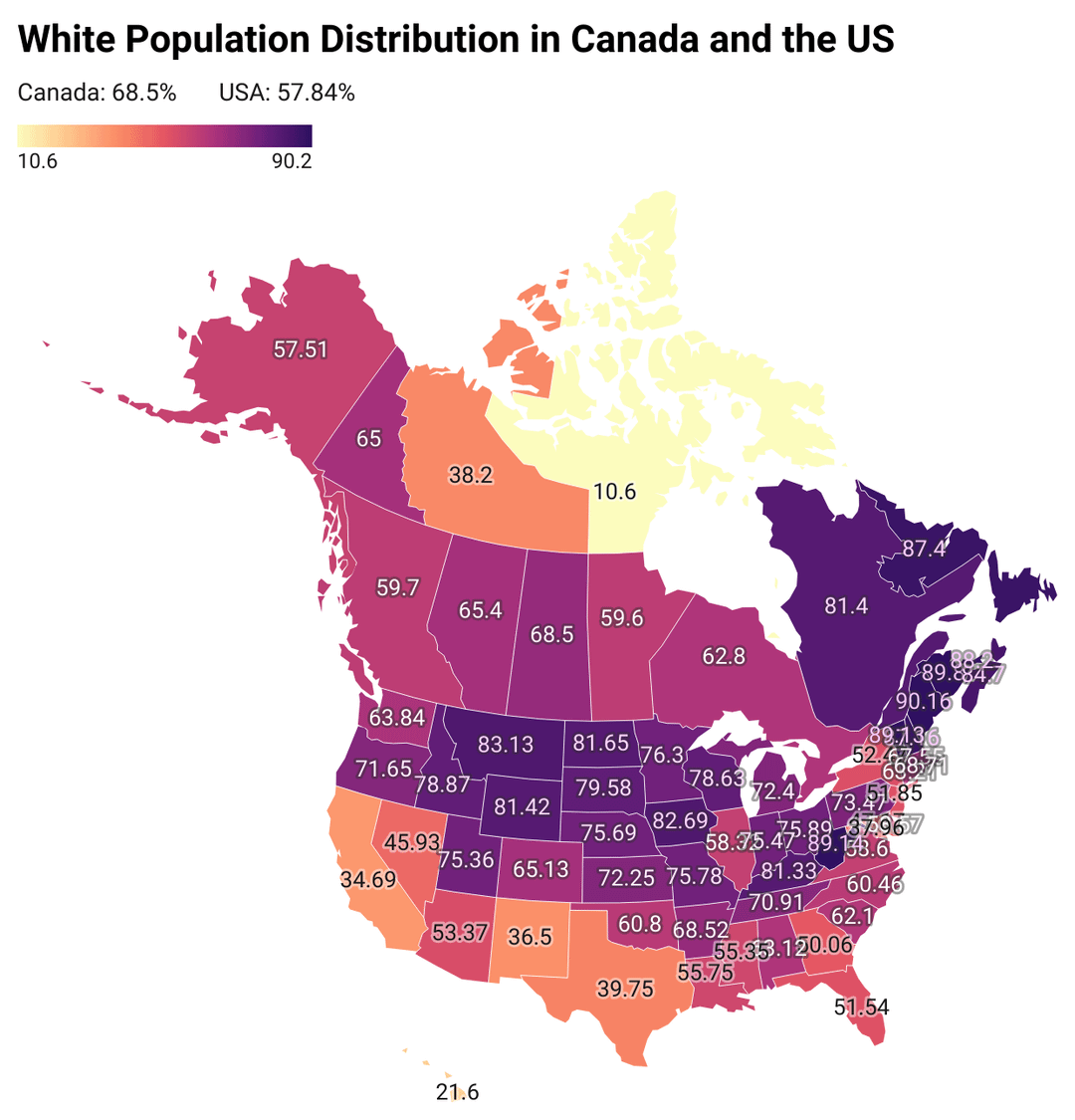
Immigration from Europe dominated for a long time. The 1970s changed that. New arrivals came from Asia, Latin America, Africa, the Middle East. They concentrated in a few major cities—Toronto got them, so did Vancouver, New York, LA, Miami. Canada’s newest census puts the white population at 70 percent. In the U.S. it’s about 59 percent (white alone, not Hispanic or Latino).
Other parts of both countries look completely different.
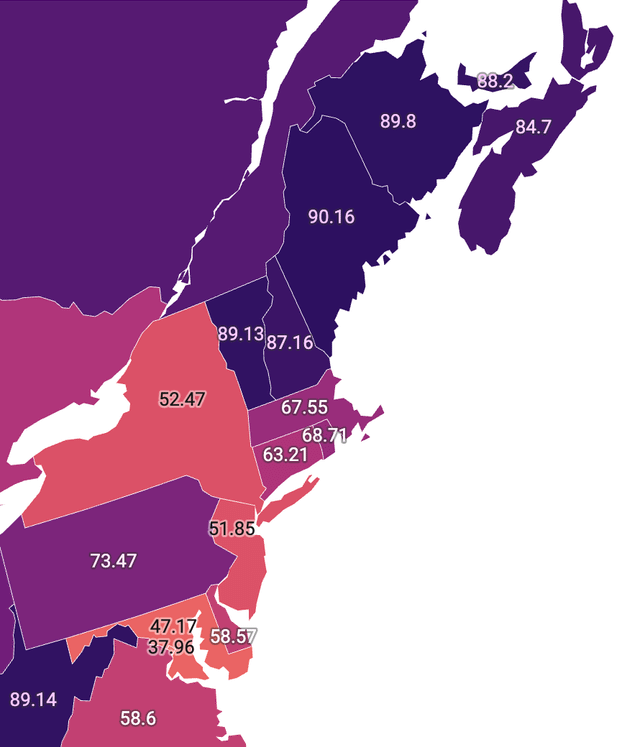
Data: Canada 2021 Census and U.S. 2020 Census data (@MongooseDear8727).
Don’t be misled by the percentages—they don’t always reflect the real numbers. For example, New Brunswick’s 90 percent may sound huge, but it actually represents just 693,000 people. California’s percentage is way smaller but represents millions more white residents.
Rank
State or Province
Country
Percentage
1
New Brunswick
Canada
90.16 %
2
Vermont
United States
89.3 %
3
West Virginia
United States
89.14 %
4
Prince Edward Island
Canada
88.2 %
5
Newfoundland and Labrador
Canada
87.4 %
6
New Hampshire
United States
87.1 %
7
Nova Scotia
Canada
84.7 %
8
Montana
United States
83.13 %
9
Iowa
United States
82.69 %
10
Wyoming
United States
81.42 %
11
Québec
Canada
81.4 %
12
Kentucky
United States
81.33 %
So why do these places dominate the top of the list? Immigration largely avoided them. Their demographics froze in place decades ago.
British, Irish, and French settlers built the population base across Atlantic Canada centuries back. As immigration increased after the 1970s, newcomers settled in places where they saw the best opportunities. Toronto had jobs. Montréal and Vancouver had established communities where newcomers could find support and familiarity. New Brunswick, PEI, Newfoundland, Nova Scotia didn’t offer those same draws.
The American states here share that same basic situation. Vermont and New Hampshire are tiny, rural, stuck up in the northern corner of New England. Nobody passes through on the way to somewhere bigger. West Virginia and Kentucky are Appalachian – mountains, valleys, small towns, not much else. Montana, Wyoming, Iowa are either mountain ranges or empty plains. These places sit far from ports, far from major cities, far from anywhere immigrants naturally cluster when they arrive.