Trade Routes of the Roman Empire
The roads and routes constructed and developed by the Roman bound all manner of peoples together, made possible the intermingling
Read More
Maps to explain economic geography.
The roads and routes constructed and developed by the Roman bound all manner of peoples together, made possible the intermingling
Read More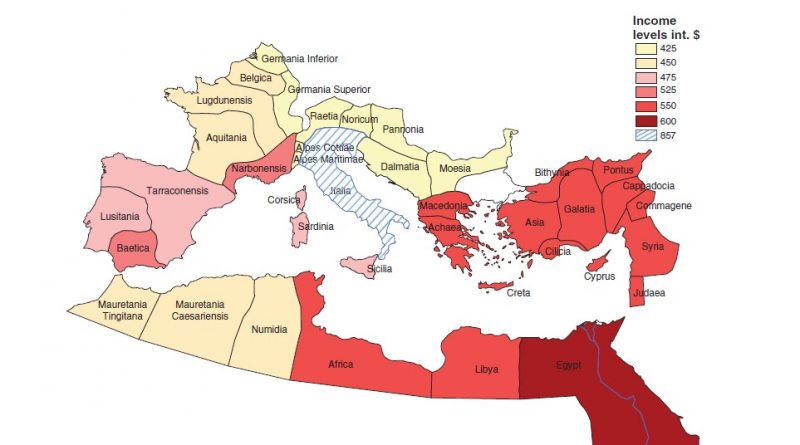
Economic historians differ in their estimates of the gross domestic product of the Roman economy. Per capita income in the provinces of the Roman Empire range from $425 to $867 (2000 US dollar). The GDP per capita of Italy is valued at approximately 50 percent higher than in the rest of the Roman Empire.
Read MoreMap showing the U.S. cities with the most jobs accessible within 30 minutes of walking or public transit.
Read MoreThe uneven spatial distribution of economic activity in the United States is a complex interplay of historical legacies, policy decisions, and global economic trends. Addressing these disparities requires multifaceted approaches, including targeted investments in infrastructure, education, and workforce development to foster more inclusive and sustainable economic growth across the nation.
Read MoreWomen and youth hit hardest by unemployment. Nearly half of all the world’s youth (621 million) are not employed, in
Read MoreRepresents the hourly wage that a household must earn (working 40 hours a week, 52 weeks a year) in order
Read MoreThe EU is the 2nd largest economy in the planet. The EU’s Gross Domestic Product was determined to be $18.8 trillion in 2018, representing 22 percent of the world economy.
Read MoreWhen compiling the rating of countries, the following indicators were used: starting a business, dealing with construction permits, getting electricity, registering property, getting credit, protecting minority investors, paying taxes, trading across borders, enforcing contracts, and resolving insolvency.
Read More
Advanced nations spend much less proportionately on food but the share of spending has been decreasing across wealthy and poor
Read MoreIncome inequality has been rising in many rich countries in recent decades. In the 1980s, the most prosperous 10 percent of the population in OECD countries earned seven times more than the poorest 10 percent. They now earn nearly ten times more.
Read More