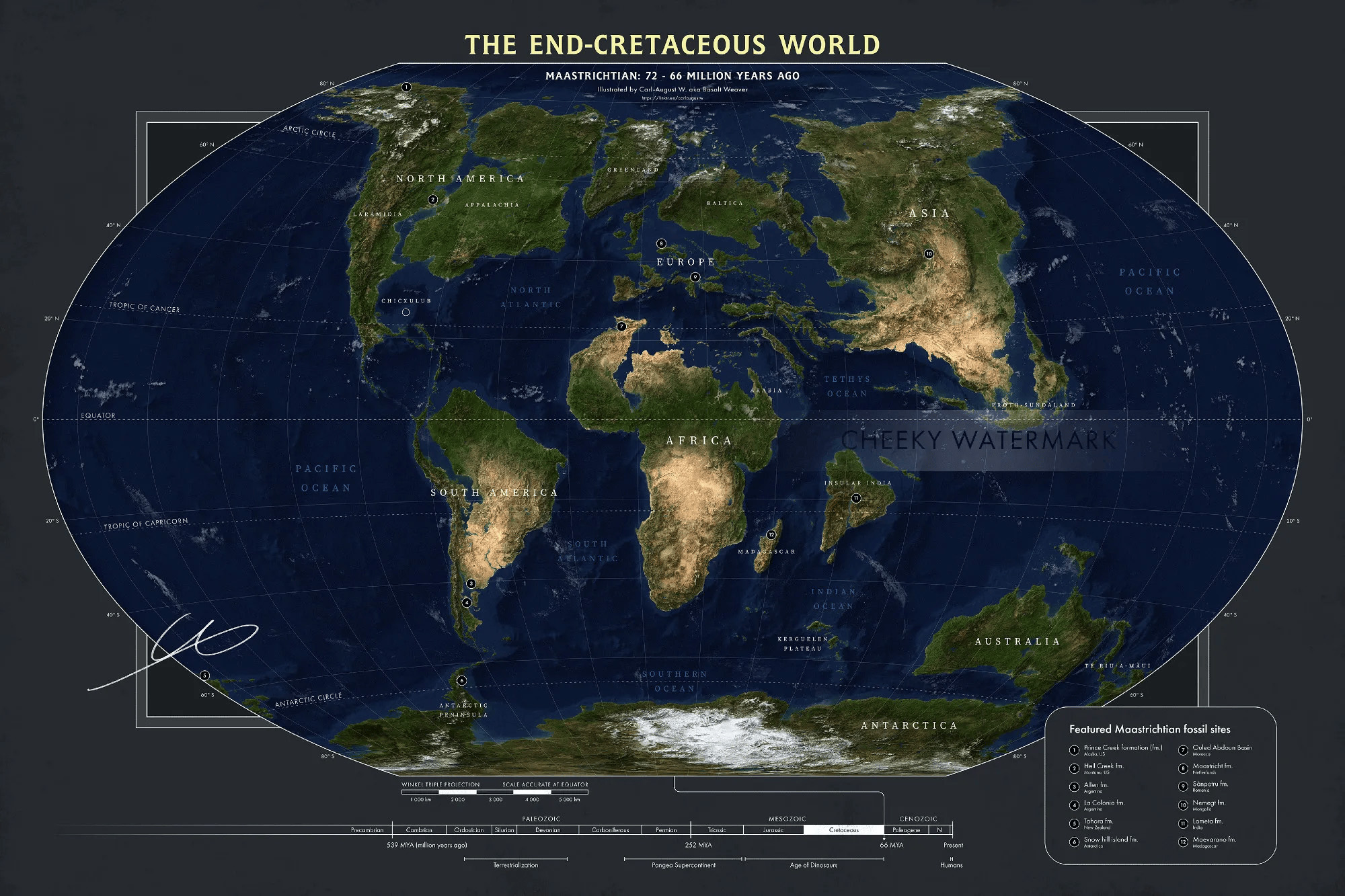
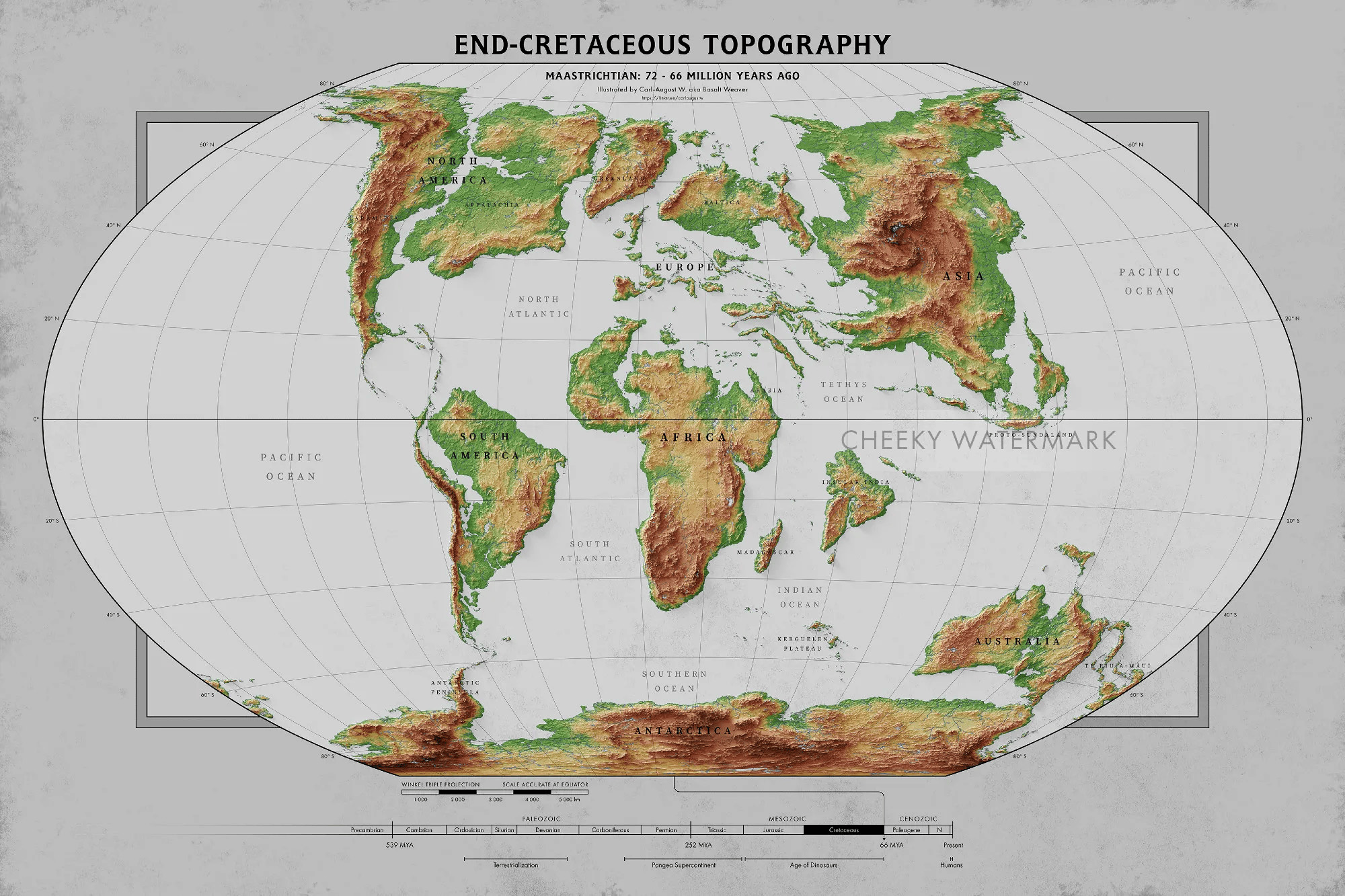
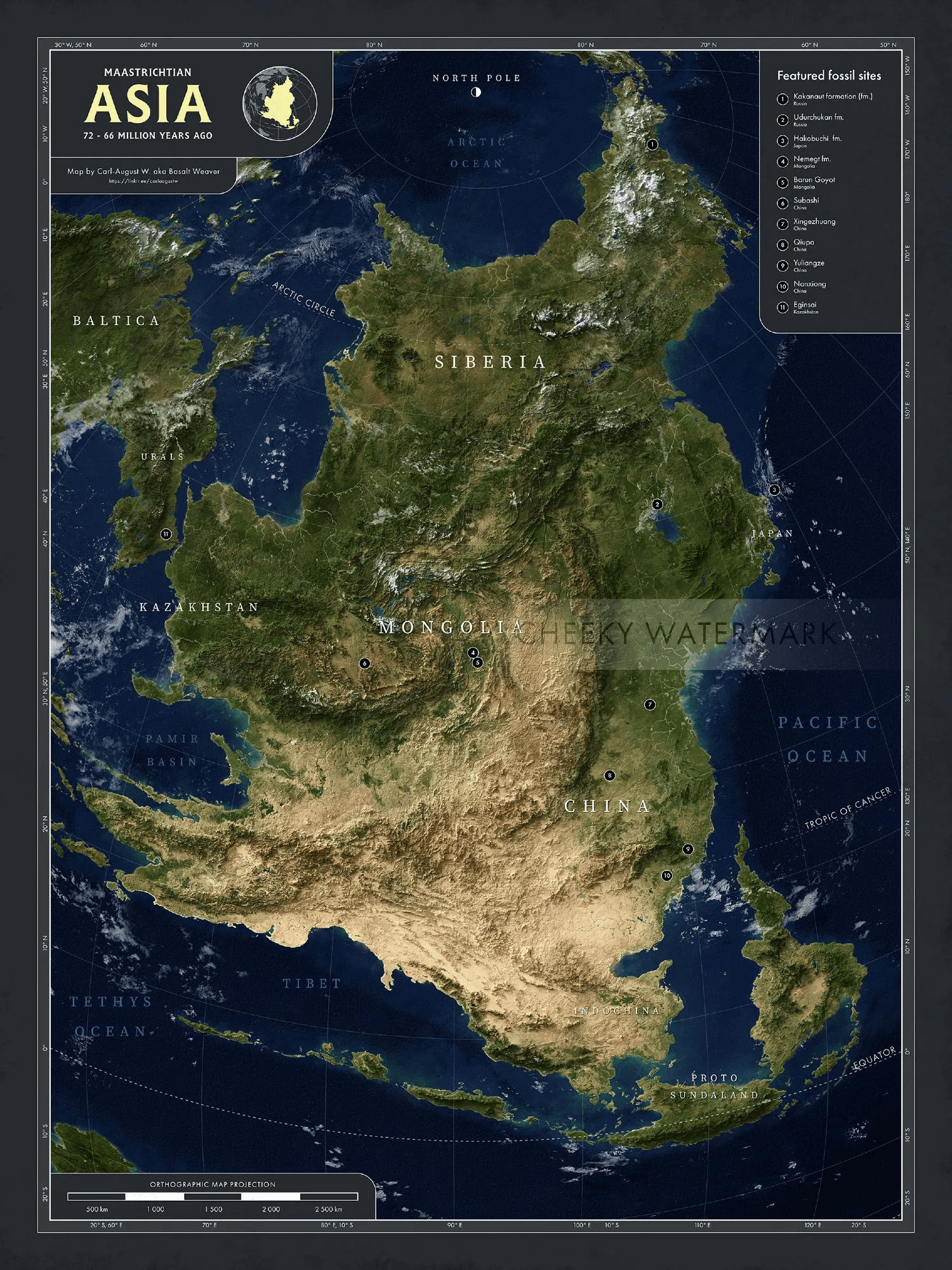
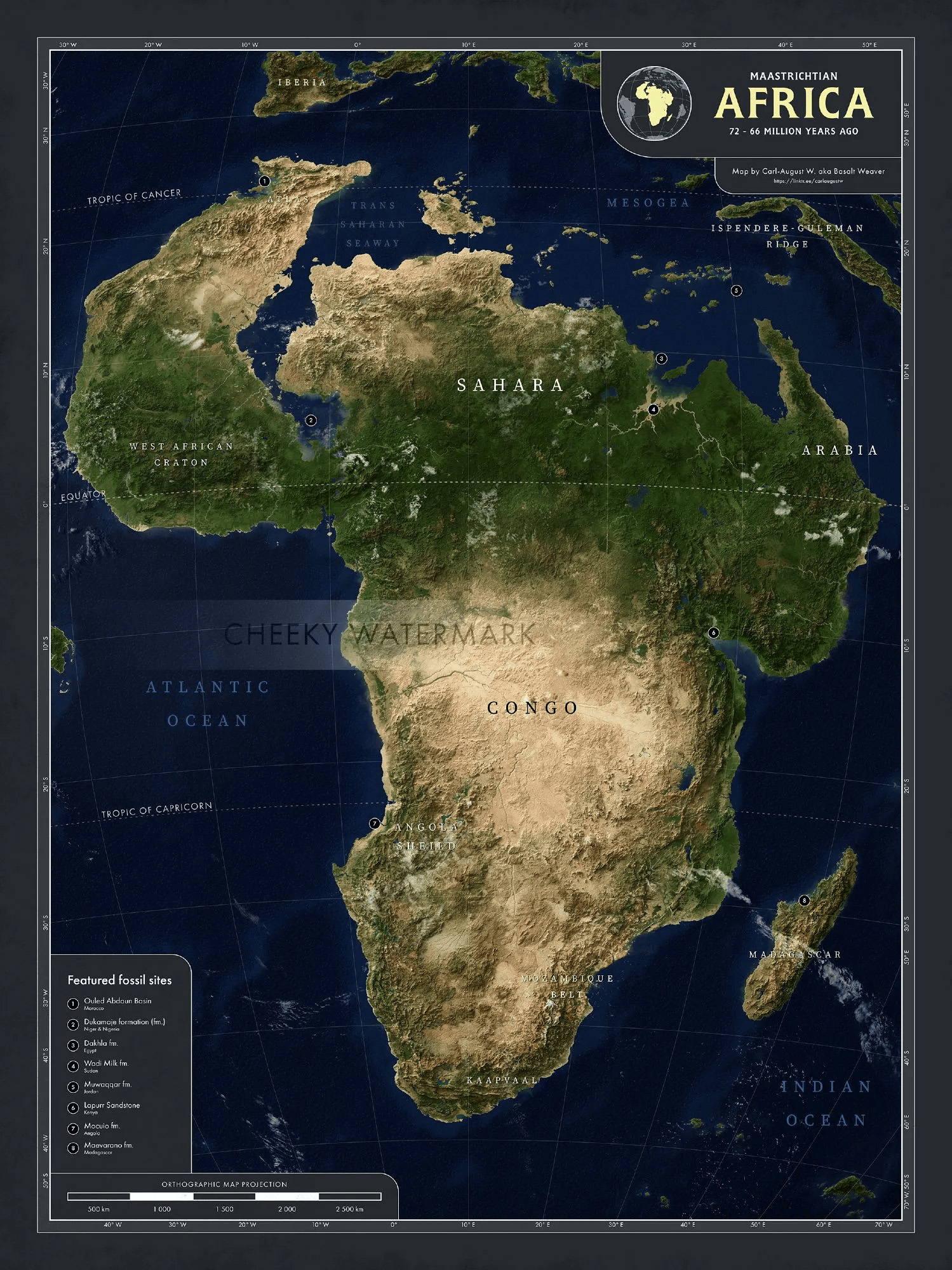
The Late Cretaceous had no permanent ice at either pole. Global temperatures ran about 5 to 8°C (9-14°F) above today’s average, sea levels somewhere around 170 meters (500 feet) above modern coastlines. That combination made the world almost unrecognizable. Most of what we call continental Europe was shallow sea. North America was cut in half. India was mid-ocean, heading north. This is the Maastrichtian, the last six million years of the Cretaceous, from 72.2 to 66 Ma.
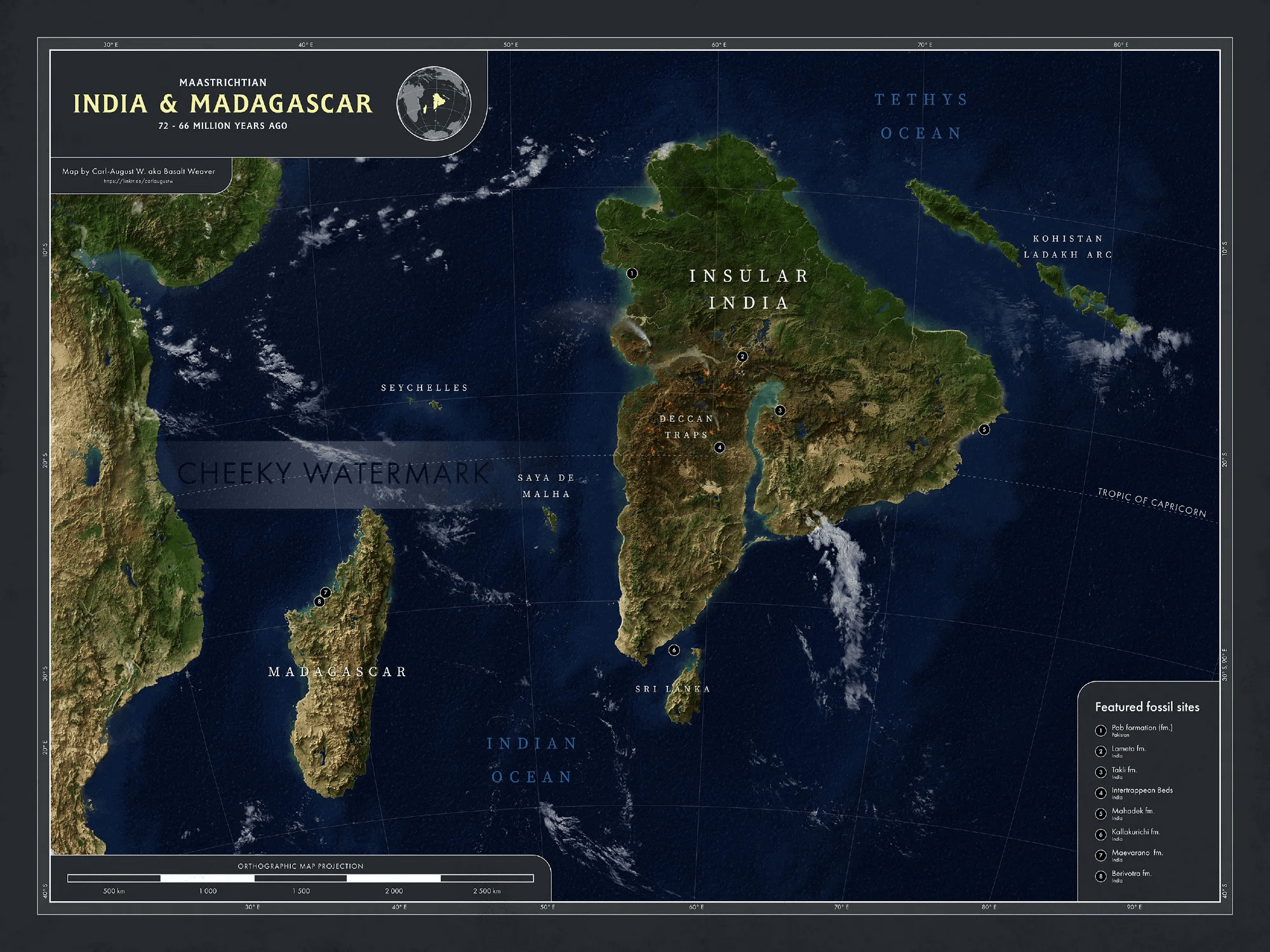
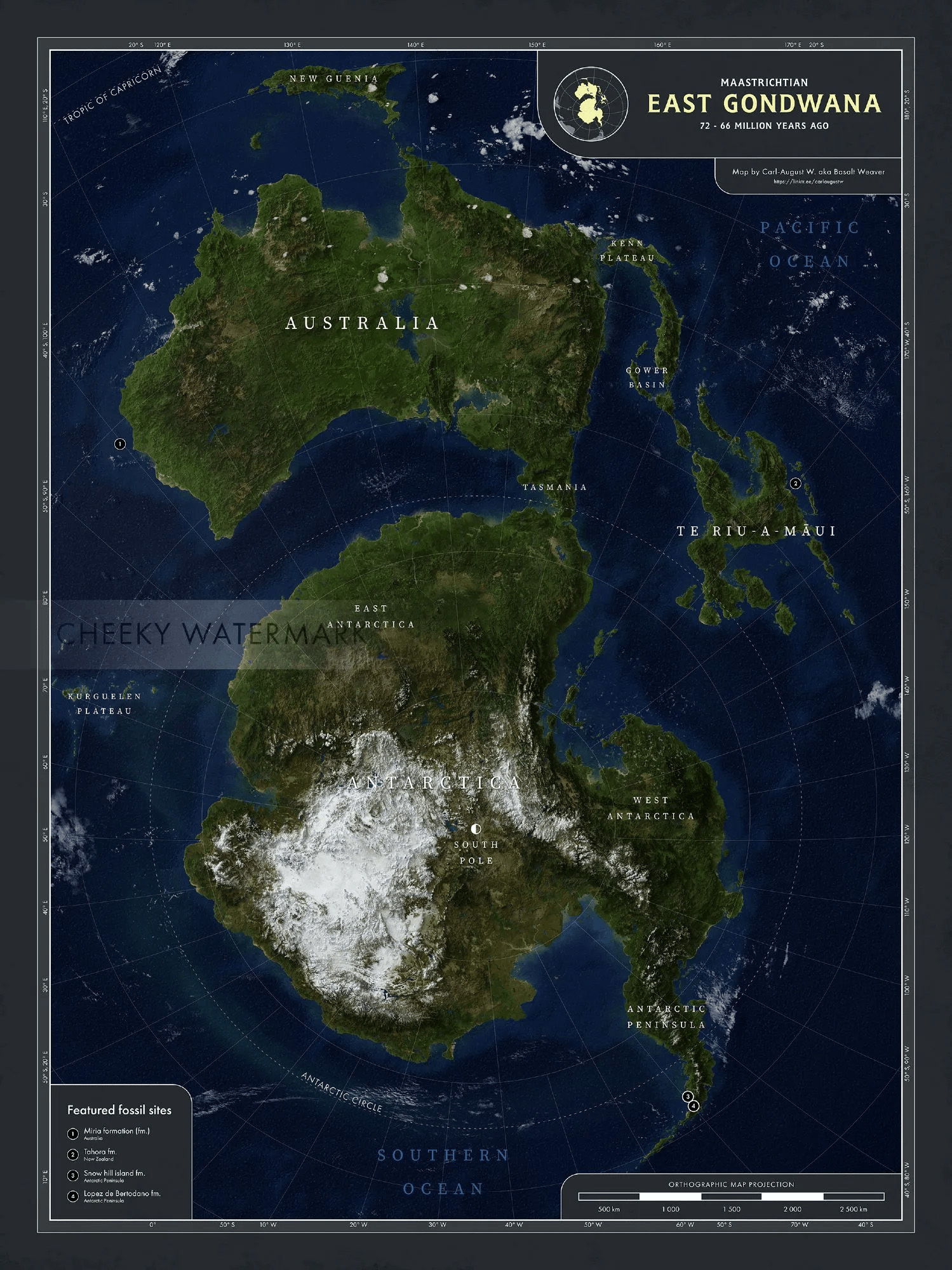
Carl-August W. built an impressive series of Late Cretaceous maps using GPlates, GProjector, ArcGIS, Photoshop, Blender, Illustrator, and GIMP.
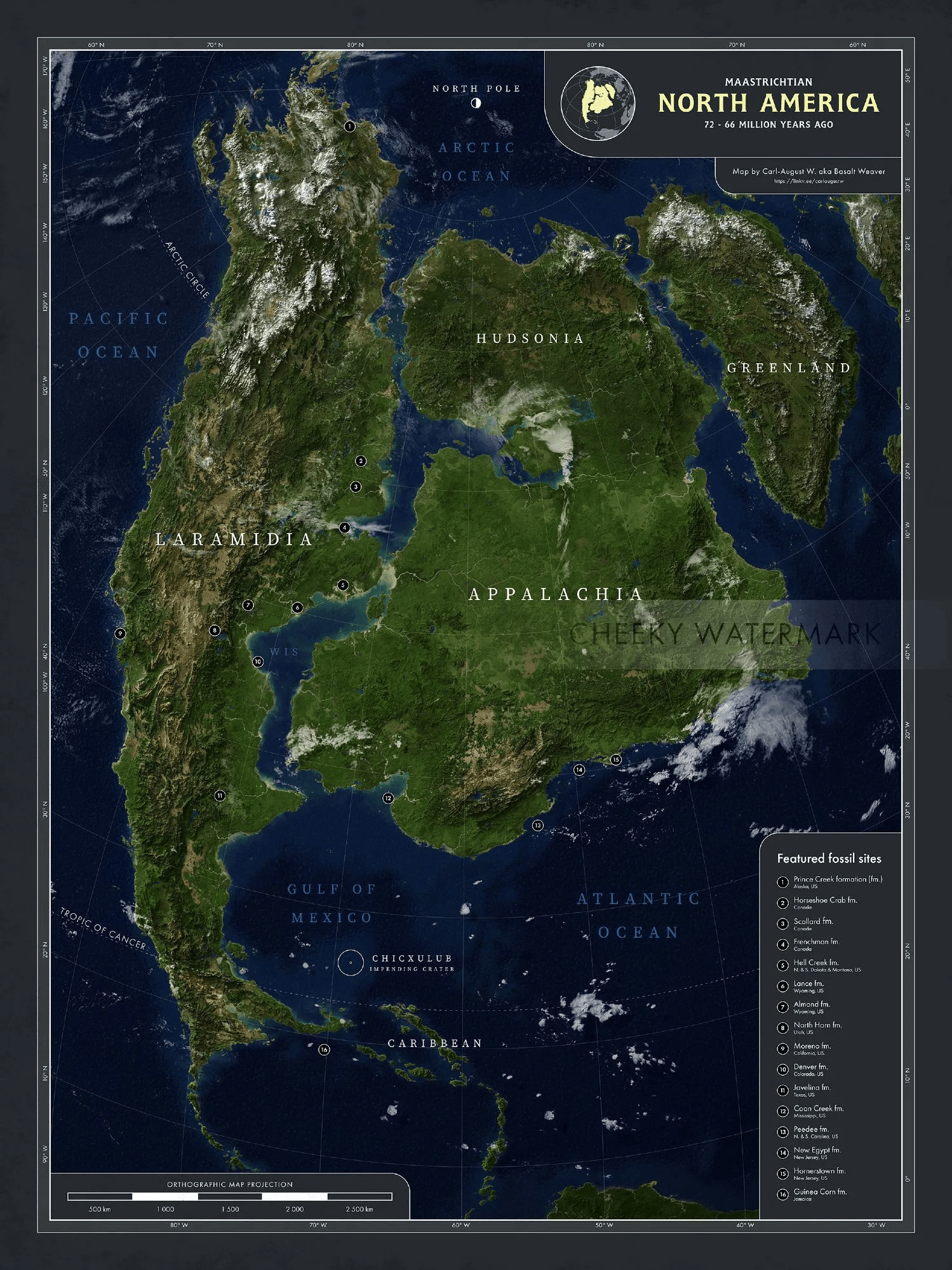
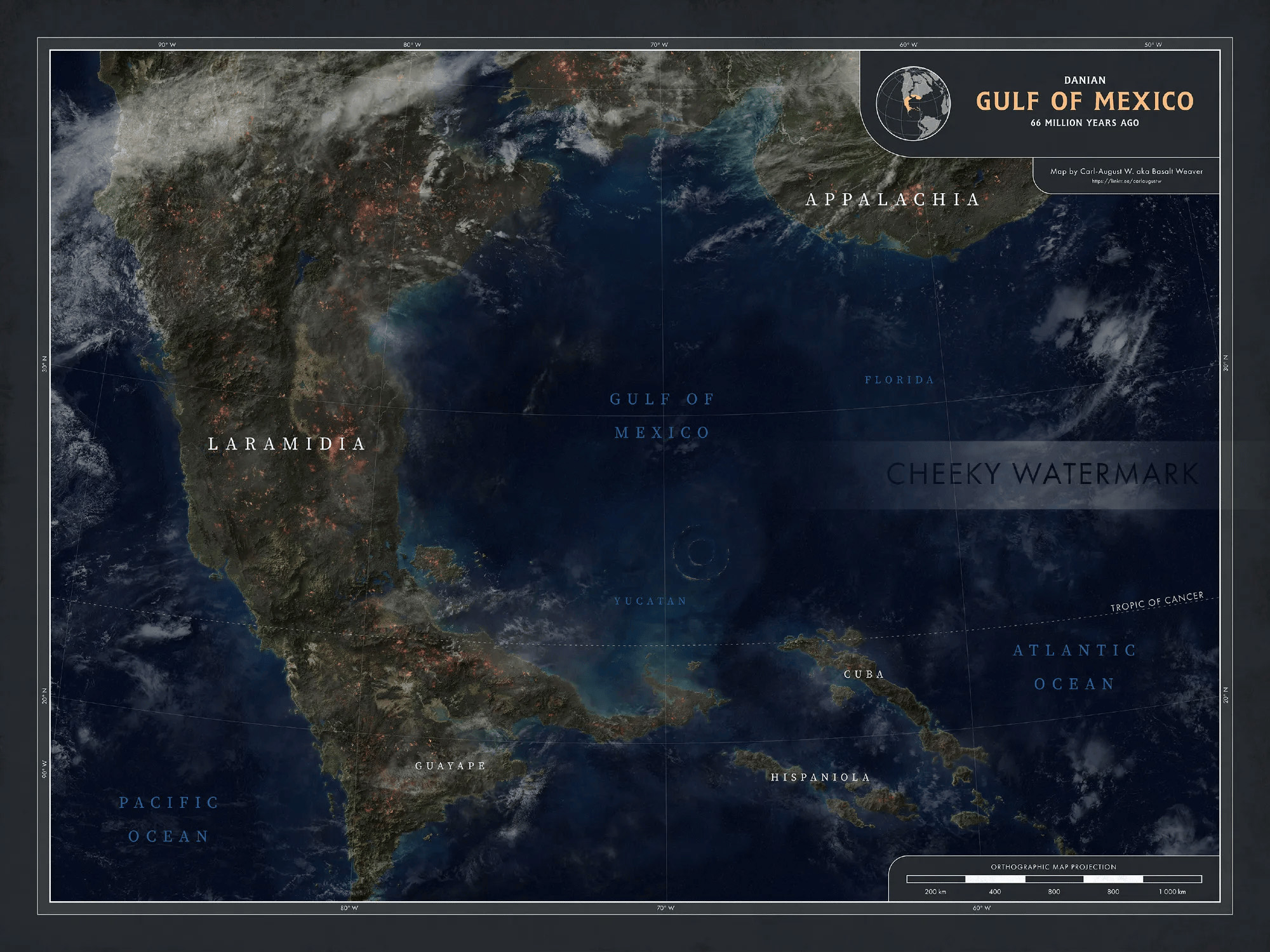
The sea that split North America stretched from the Arctic to the Gulf of Mexico, roughly a thousand kilometers across. Laramidia to the west, Appalachia to the east, and the two had been separated long enough that their dinosaur faunas went in completely different directions. In Laramidia, there were Tyrannosaurus, Triceratops, and other ceratopsids. Appalachia had Dryptosaurus as its largest predator, a more primitive tyrannosaur with proportionally longer arms, and no ceratopsids at all.
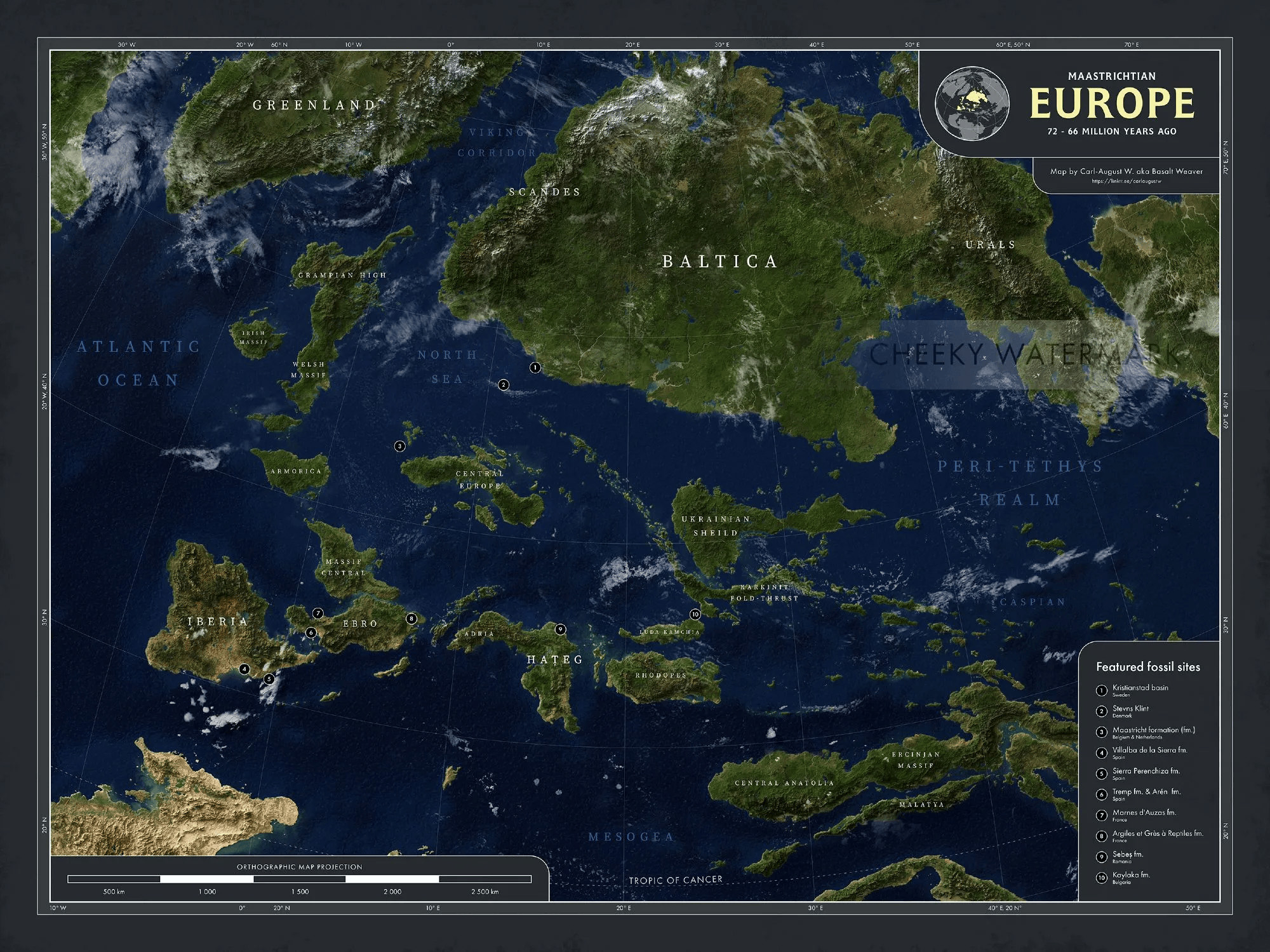
Where the European continent should be on the map, there’s a scattering of subtropical islands. The name Maastrichtian comes from Maastricht in the Netherlands, where Roman-era limestone quarries produced the first mosasaur skull in 1764. Most of what is now the Netherlands was seafloor. One of the Maastrichtian islands was near what is now Romania’s Hateg Basin. In 1895, twelve-year-old Ilona Nopcsa found bones while walking near the village of Sânpetru. Her brother Franz, eighteen at the time, brought them to Vienna and showed them to his professor of geology, Eduard Suess, who looked at them and said simply “Study them”. Nopcsa did. At twenty he published his first paper. He eventually noticed that the Hateg dinosaurs were too small (Magyarosaurus, a titanosaur sauropod, stopped at about 6 meters, while mainland relatives grew to 15-20). He proposed island dwarfism at a meeting in Vienna in November 1912. Bone histology confirmed him around 2010. He was also a spy, motorcycled across Europe, smuggled weapons into Albania, and in 1913 offered himself as a candidate for the Albanian throne.
The temperature data is more surprising at high latitudes than in the tropics. Indian Ocean surface temperatures reached 28 to 30°C (82.4 to 86°F), not dramatically different from now. At the paleolatitude of modern Antarctica, mean annual temperatures are estimated at 12 to 15°C (53.6 to 59°F). Arctic summers around 15°C (59°F). CO₂ ran somewhere between 1 and 6 times the pre-industrial 280 ppm baseline.
Parameter
Maastrichtian (72.2–66 Ma)
Today
Global mean temperature
~4–8°C (7–14°F) above present
~15°C (59°F) global avg.
Tropical SST (Indian Ocean)
~28–30°C (82–86°F)
~27–29°C (81–84°F)
N. Atlantic SST (~35°N)
~28–35°C (82–95°F)
~18–22°C (64–72°F)
Arctic summer temperature
up to ~15°C (59°F)
~0°C (32°F) mean annual
High-latitude MAT (~60°S)
~12–15°C (54–59°F)
~-10 to -5°C (14 to 23°F)
Atmospheric CO₂
~280–1,680 ppm
~280 ppm (pre-industrial)
Sea level
~85–270 m (280–885 ft) above present (best est. ~170 m / 558 ft)
baseline (0 m / 0 ft)
Polar ice
None to minimal
~30 million km² (~11.6 million mi²)
Dominant land plants
Angiosperms, ferns, conifers
Angiosperms dominant
Dominant large land animals
Non-avian dinosaurs, pterosaurs
Mammals, birds
Dominant marine reptiles
Mosasaurs, plesiosaurs
None
Flowering plants (angiosperms) were already the dominant group by species count, making up 50 to 80% of land plant genera. While flowering plants had become dominant, ferns remained a highly diverse and significant component of the understory and disturbed landscapes. Conifers, cycads, and early relatives of legumes, grasses, and proteas were all there.
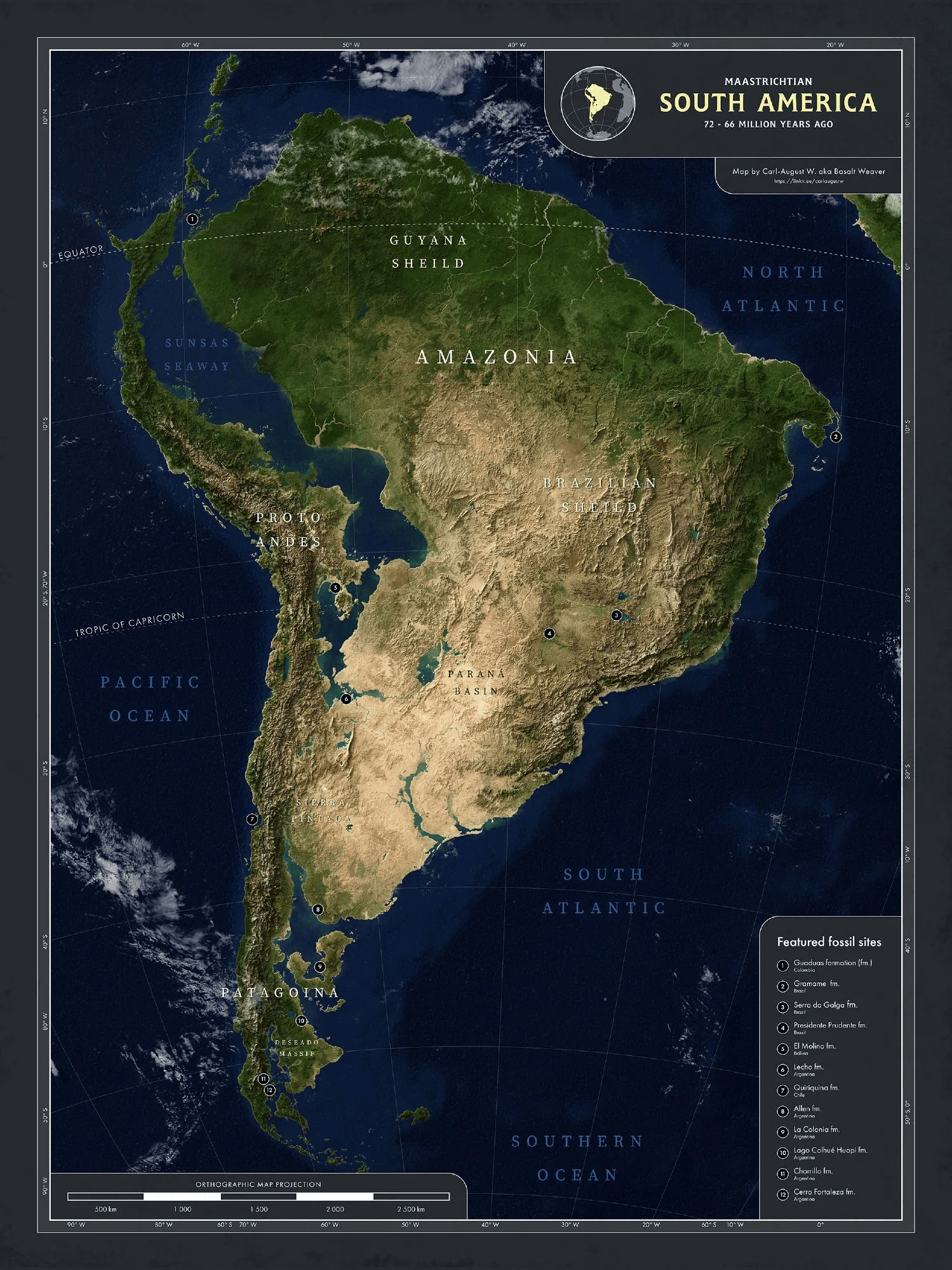
South America and Africa had abelisaurids as their dominant large predators rather than tyrannosaurs. Massive titanosaurs like Dreadnoughtus and Alamosaurus were among the largest land animals of the time, following earlier giants like Argentinosaurus. Quetzalcoatlus northropi flew with a wingspan of 10 to 11 meters (33–36 ft). Mosasaurs and plesiosaurs ruled the seas, while small birds and mammals were already widespread.
An asteroid 10 to 15 kilometers (6 to 9 miles) across hit the Yucatán Peninsula 66 million years ago, leaving the Chicxulub crater at around 180 kilometers (112 miles) in diameter. The Deccan Traps had been erupting in India for hundreds of thousands of years before that. Scientists still argue about how much each contributed. About 75% of species disappeared, every non-avian dinosaur, pterosaur, mosasaur, plesiosaur, and ammonite among them.