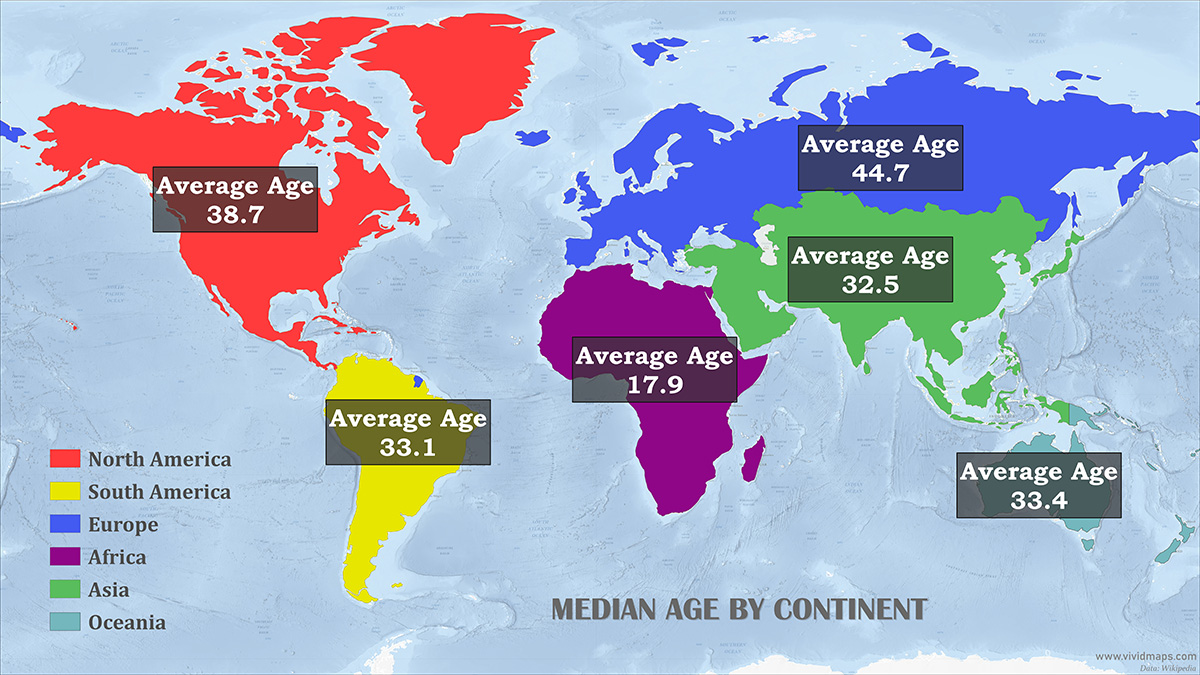
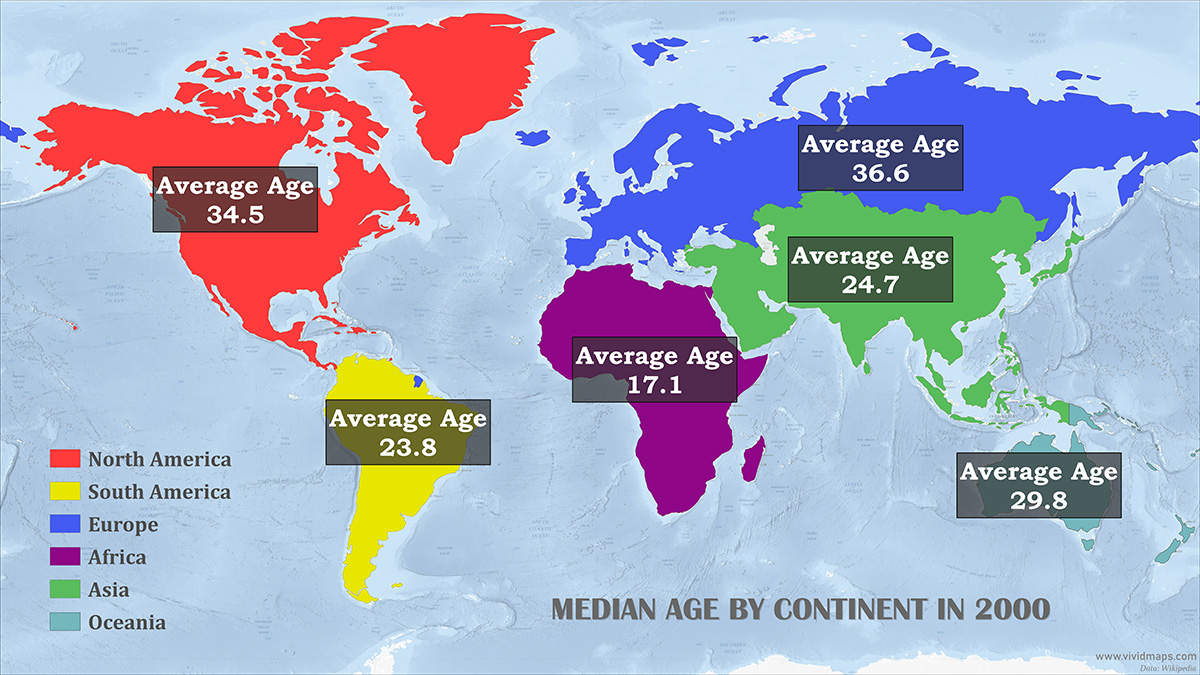
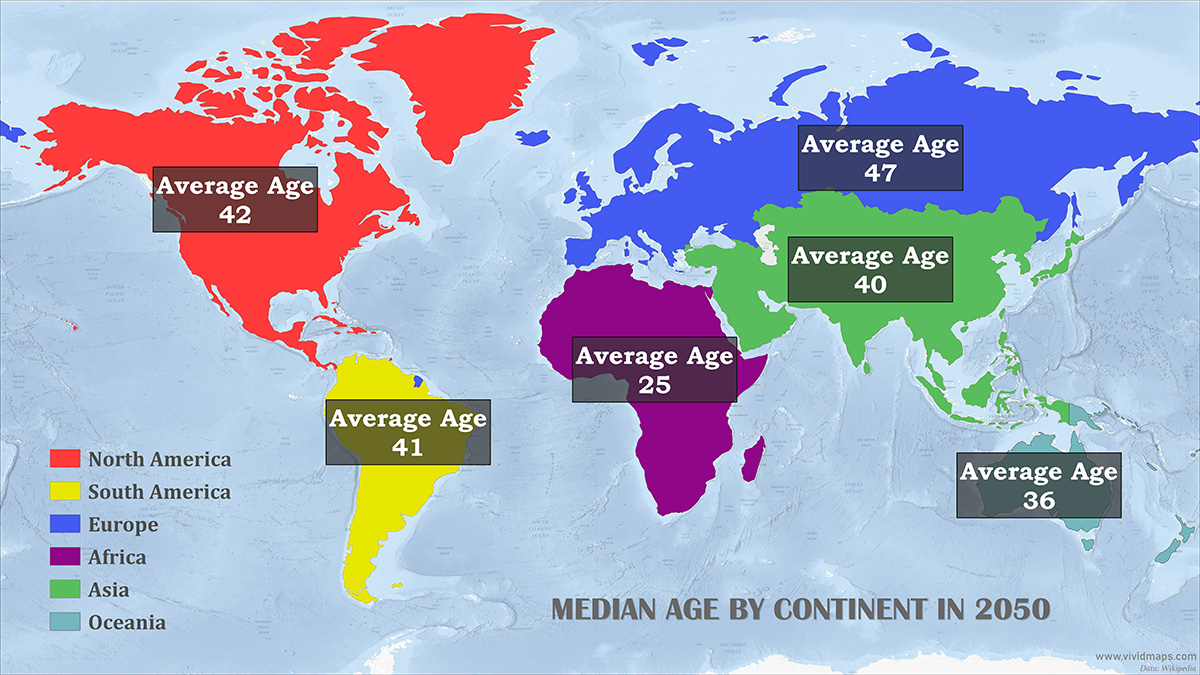
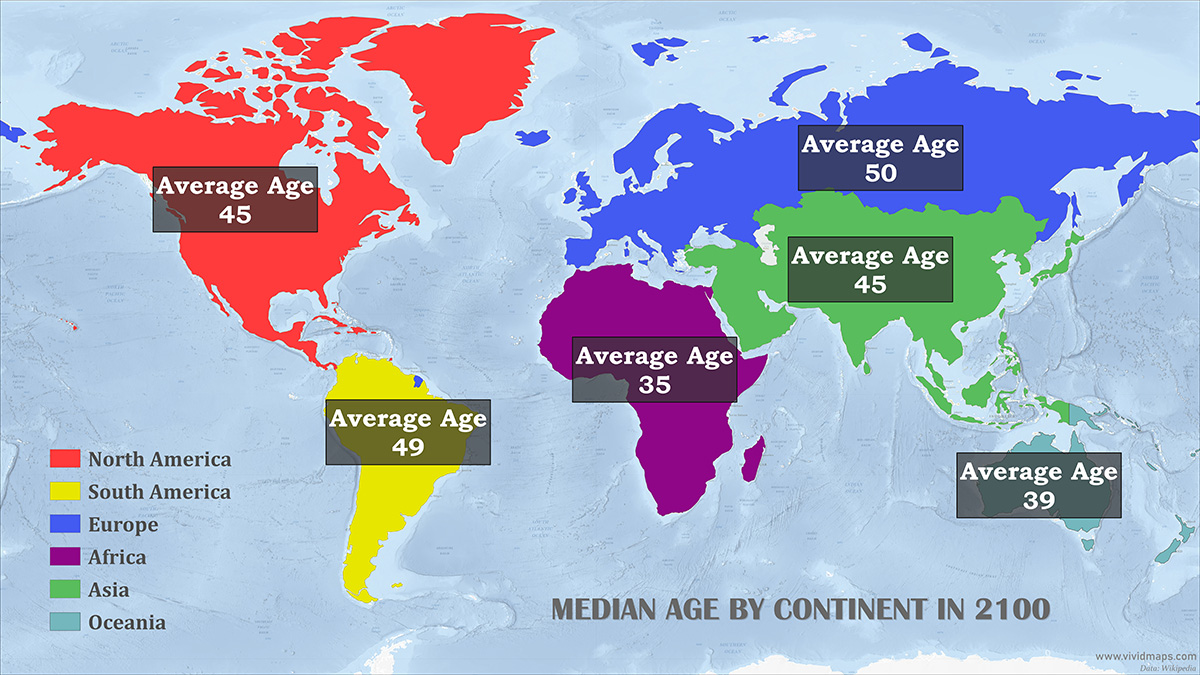
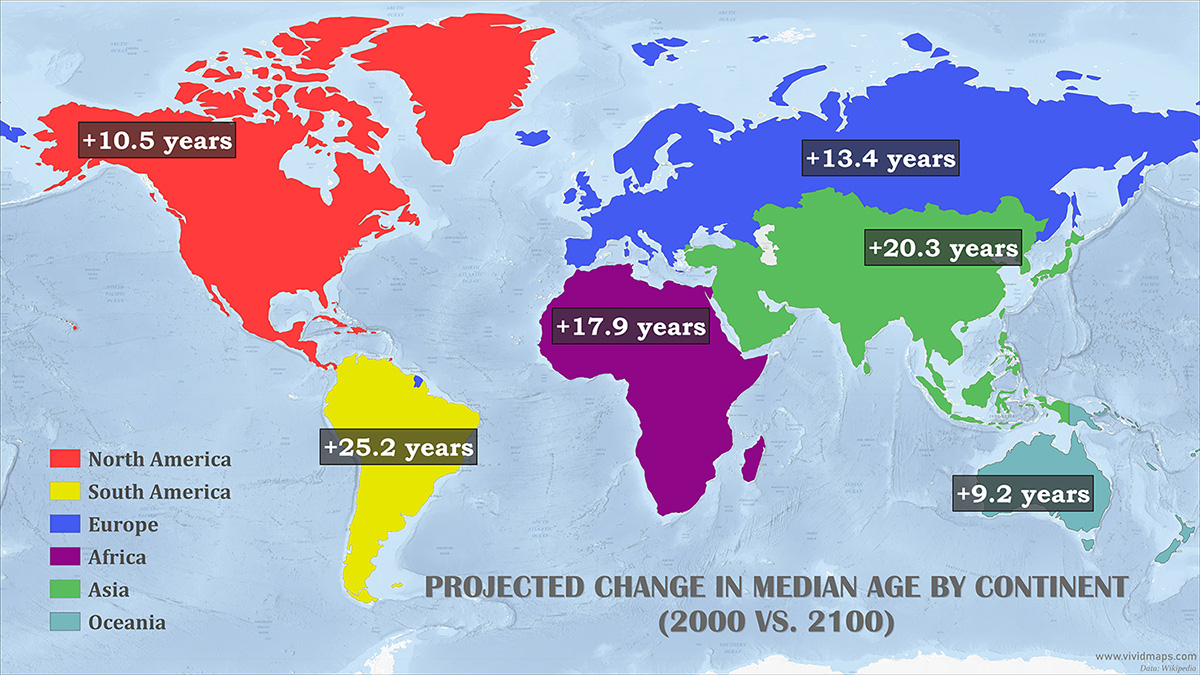
Median age, the age that splits a population exactly in half with younger people on one side and older people on the other, currently ranges from 17.9 in Africa to 44.7 in Europe. Pulled back to 2000 and forward to 2100, the numbers show South America climbing faster than any other continent, closing in on Europe by the end of the century after starting the 2000s as one of the youngest regions on the list.
Key Takeaways
Europe has the highest median age of any continent today at 44.7, and stays highest through 2050, though the gap with South America narrows to almost nothing by 2100
South America’s median age is projected to rise by roughly 25 years between 2000 and 2100, the largest full century increase of any continent on this list
Africa remains the youngest continent throughout, still projected to land at roughly 35 in 2100 while every other continent has already climbed well past 40
North America and Oceania see the smallest full century increases of the six, both adding under eleven years between 2000 and 2100
Median Age by ContinentMedian Age by Continent in 2000Median Age by Continent in 2050Median Age by Continent in 2100
Seeing South America nearly catch up with Europe by 2100 really surprised me – I always pictured it as one of the younger regions. The three maps side by side make the shift easy to follow. It also reminded me how shaky my own sense of the world map still is, so I have been brushing up with a free world map quiz: https://www.geofungames.com/games/maps/world







Seeing South America nearly catch up with Europe by 2100 really surprised me – I always pictured it as one of the younger regions. The three maps side by side make the shift easy to follow. It also reminded me how shaky my own sense of the world map still is, so I have been brushing up with a free world map quiz: https://www.geofungames.com/games/maps/world