All the places where the Centers for Disease Control says you can’t drink the water
Key facts: Only 3 percent of the Earth’s water can be used as drinking water. Less than 25 percent of
Read More
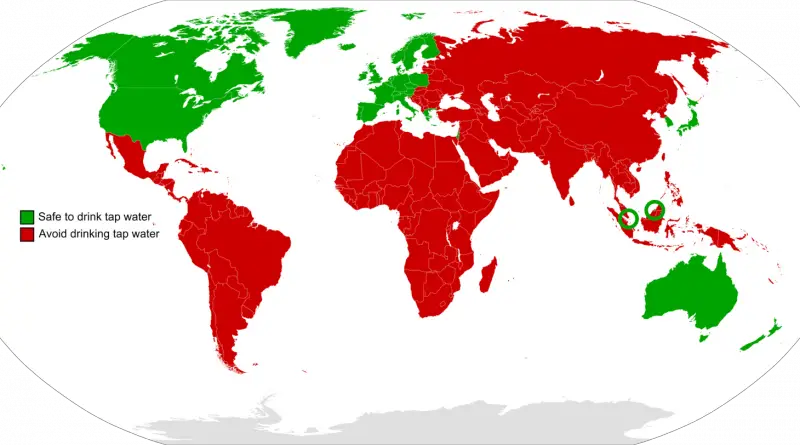
Key facts: Only 3 percent of the Earth’s water can be used as drinking water. Less than 25 percent of
Read MoreSatellites have been watching us for 40 years. Here’s what their images reveal. Since 1972, a posse of satellites has
Read MoreForests in the eastern US currently store an estimated 8.5 Pg (1 Pg (pentagram) is equivalent to 1015 g or
Read MoreWith approximately 217 million native speakers and 250 million total speakers, Portuguese is usually listed as the 6th most natively
Read More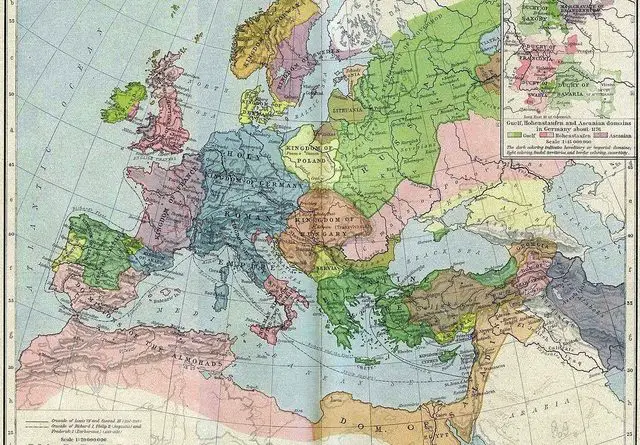
The High Middle Ages was the period of European history that commenced around 1000 and lasted until around 1250. The
Read MoreGhana has the lowest enrolment rate in secondary school (46 percent) and also the lowest eachievement levels for those 15-year-olds
Read MoreA map of the US, redrawn so each state is proportional to its population.
Read More
“Each year, (hiring October, pharmacists in Anglo-Saxon countries make a special effort to bring to the attention of the public
Read More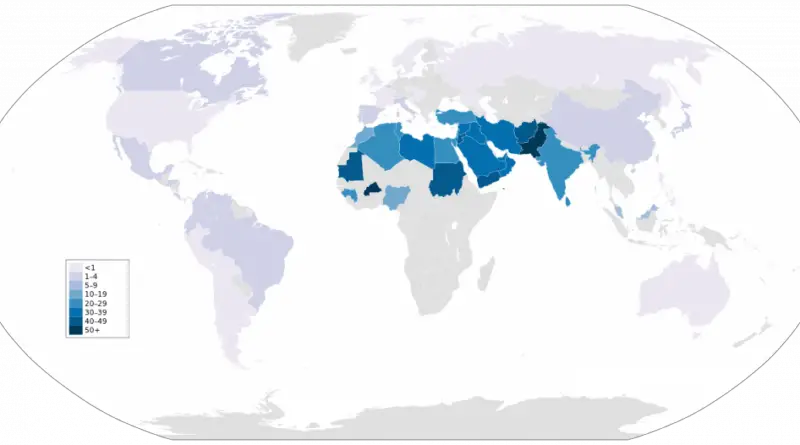
Roughly one in ten marriages globally involves first or second cousins. Pakistan has the highest rate at over 61%, followed by Kuwait and Qatar at around 54%. The practice clusters heavily across the Middle East, North Africa, and South Asia. National averages can be misleading though — in Turkey, rates vary dramatically from province to province, ranging from very high to very low depending on the region. We’ll explore why cousin marriage persists in certain areas, look at the economic and cultural factors behind it, and examine what genetics tells us about consanguinity and inherited conditions.
Read More