Water Bodies

PaleontologyWater Bodies

Lake Paratethys: The Largest Lake That Ever Existed on Earth

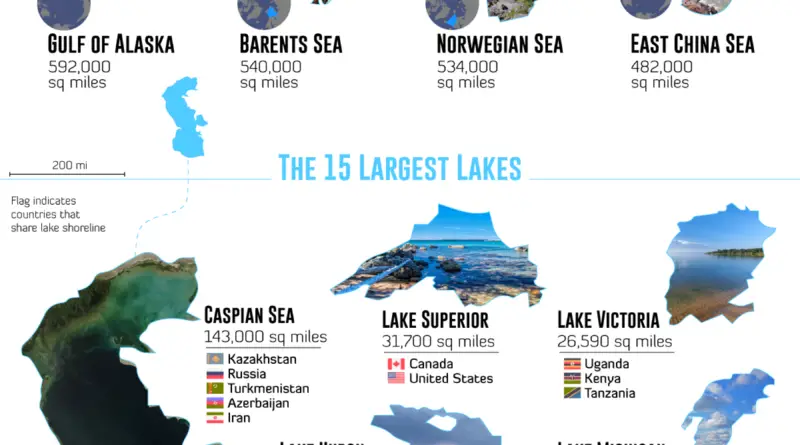
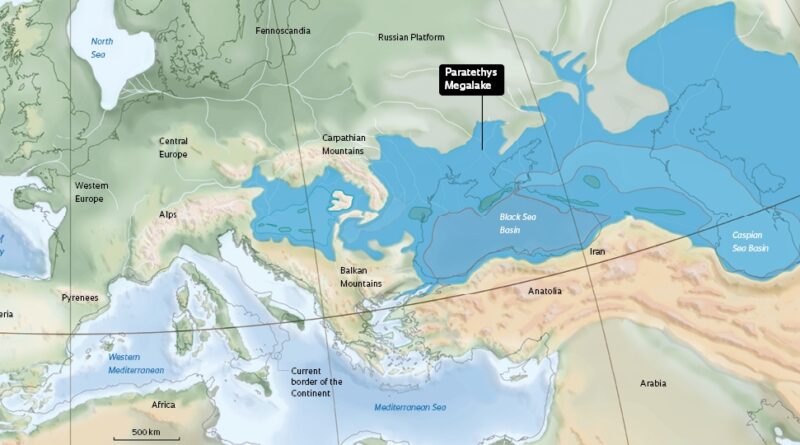
The Caspian Sea is the largest lake on Earth at 386,000 km² (149,000 mi²). Lake Paratethys, which existed twelve million years ago between the Alps and Kazakhstan, covered 2.8 million km², more than seven times that size. It held more water than every modern lake combined, had its own miniature whale species, and eventually broke apart into the Caspian, the Black Sea, and the Aral Sea.

Read more: Lake Paratethys: The Largest Lake That Ever Existed on Earth
NewsVivid mapsWater Bodies

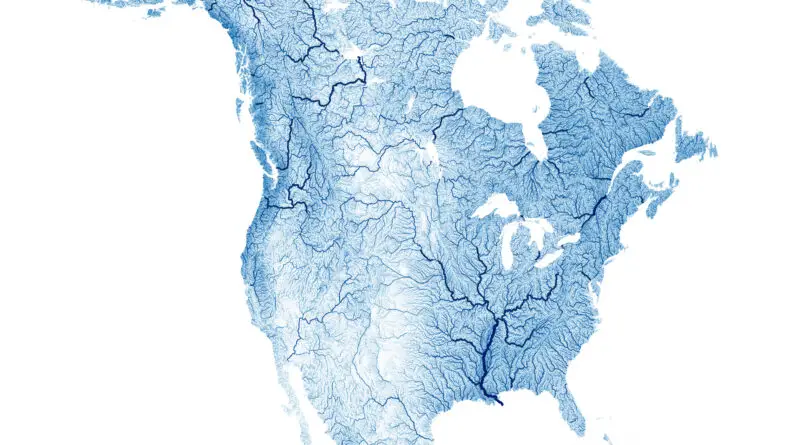
Exploring the Rivers and Basins of North America

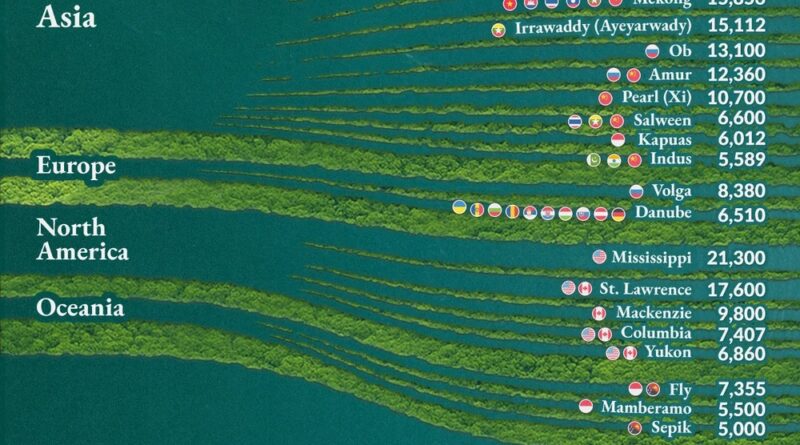
The rivers of North America are diverse and dynamic, ranging from the mighty Mississippi and its extensive basin to the vast, icy waters of the Mackenzie. They shape the continent’s landscapes, support rich ecosystems, and serve as crucial resources for human activities. These rivers vary greatly in length, flow rate, and basin size, reflecting the continent’s wide range of climates and geographies.

Read more: Exploring the Rivers and Basins of North America
NewsVivid mapsWater Bodies

Maps of the Great Lakes

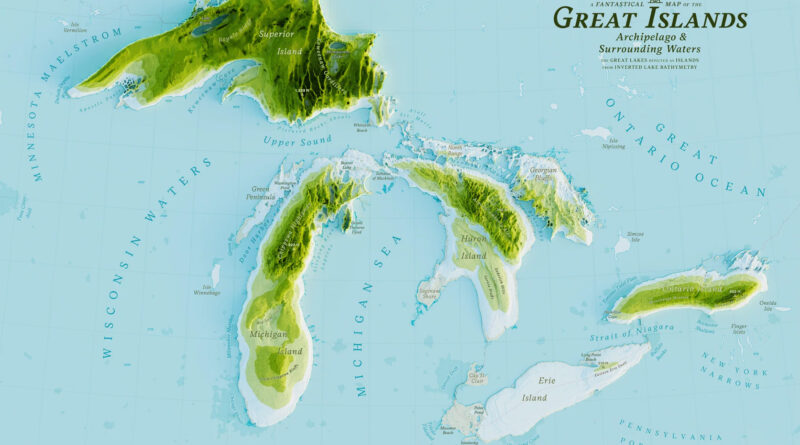
The Great Lakes are the most extensive freshwater system globally (94,600 sq mi / 244,000 sq km). The Lakes contain 5,400 cu mi (22,500 cu km) of surface freshwater on earth or 6 quadrillion gallons of freshwater (22.7 quadrillion liters), accounting for about 21% of the world’s surface freshwater or 84% of North America’s surface freshwater.

Using Digital Elevation Model data, I made the map of the Great Lakes in watercolor style.

Read more: Maps of the Great Lakes