Atmospheric moisture
The atmosphere contains an enormous amount of moisture that circulates around the globe, shown here in this imagery. However, not
Read more: Atmospheric moisture
The atmosphere contains an enormous amount of moisture that circulates around the globe, shown here in this imagery. However, not
Read more: Atmospheric moistureRelated posts: – USA Climate Comparison Maps – Places in the World whose climates match with places in Australia –
Read more: Places in the World that have similar climates to places in Canada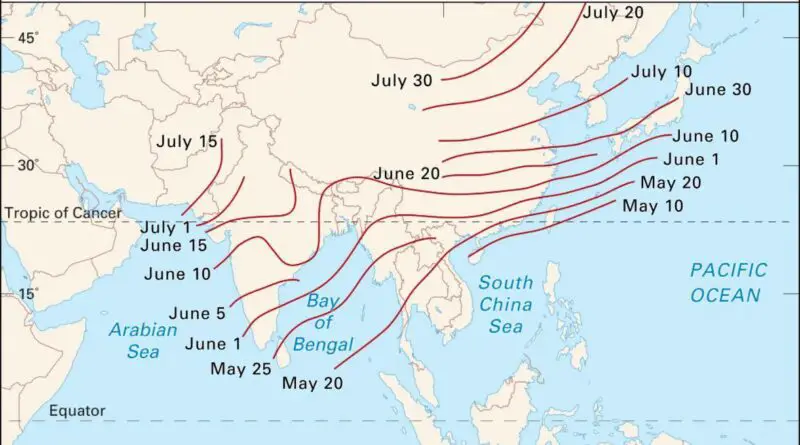
Monsoons formed on our planet due to differential heating between landmasses and oceans, coupled with the seasonal shift in wind patterns. During summer, landmasses heat up more quickly than oceans, creating low-pressure systems over land. This draws in moisture-laden winds from the oceans, resulting in heavy rainfall, while during winter, the reverse occurs, with dry winds blowing from land to sea. This cyclical pattern of seasonal winds and rainfall defines the monsoon phenomenon.
Read more: The Average Onset Date of Monsoon Across Asia MappedThis question can nowadays be answered remarkably well because precipitation figures are part of possibly the most advanced global scientific
Read more: Where does the Earth’s rain fall?The natural environment and human health, infrastructure, food security, energy production and access to fresh water are all vulnerable to
Read more: Seasonal wind predictions for the energy sector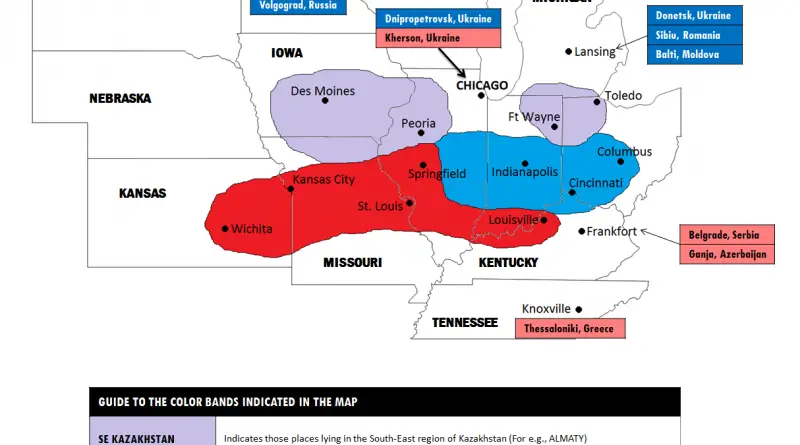
Related posts: – Places in the World that have similar climates to places in Canada –
Read more: USA Climate Comparison Maps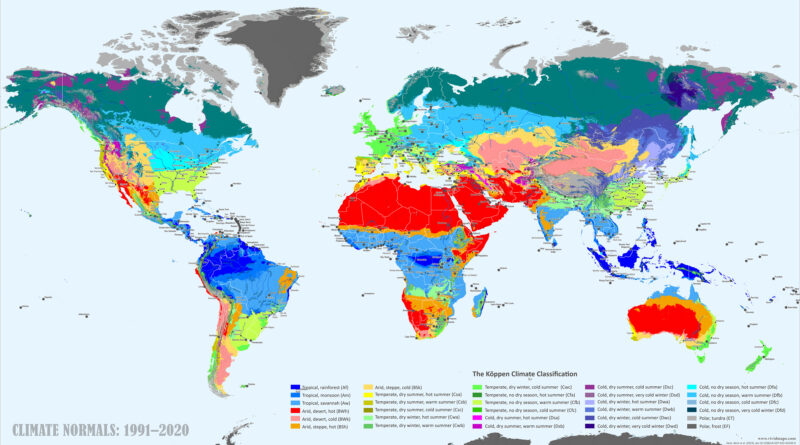
High-resolution Köppen-Geiger climate classification maps reveal Earth’s climate zones and how they’re migrating. See current global patterns (1991-2020), compare changes since 1901-1930, and explore projections through 2077-2099 under the ssp2-4.5 scenario.
Read more: World Map of Köppen-Geiger Climate ClassificationVia washingtonpost.com
Read more: Snowfall accumulation this winter