When Erik the Red arrived at this frozen island around 982 CE, he gave it probably history’s most optimistic name. Calling it “Greenland” was good marketing for attracting Norse settlers, though winters there hit -50°C and ice covers most of the land. Those Norse colonies eventually failed. Inuit peoples adapted better and became the lasting inhabitants.
Denmark got involved in 1721 through missionary Hans Egede. What started as colonization changed over centuries. Home rule came in 1979. Greenland stayed within the Danish realm but got autonomy over domestic affairs. Denmark kept defense and foreign policy.
The differences between Denmark and Greenland are substantial. Greenland is approximately 50 times larger than Denmark, yet it contains less than 1% of Denmark’s population. Despite its vast Arctic expanse, Greenland has been largely overlooked throughout much of modern history.
The Scale of Greenland
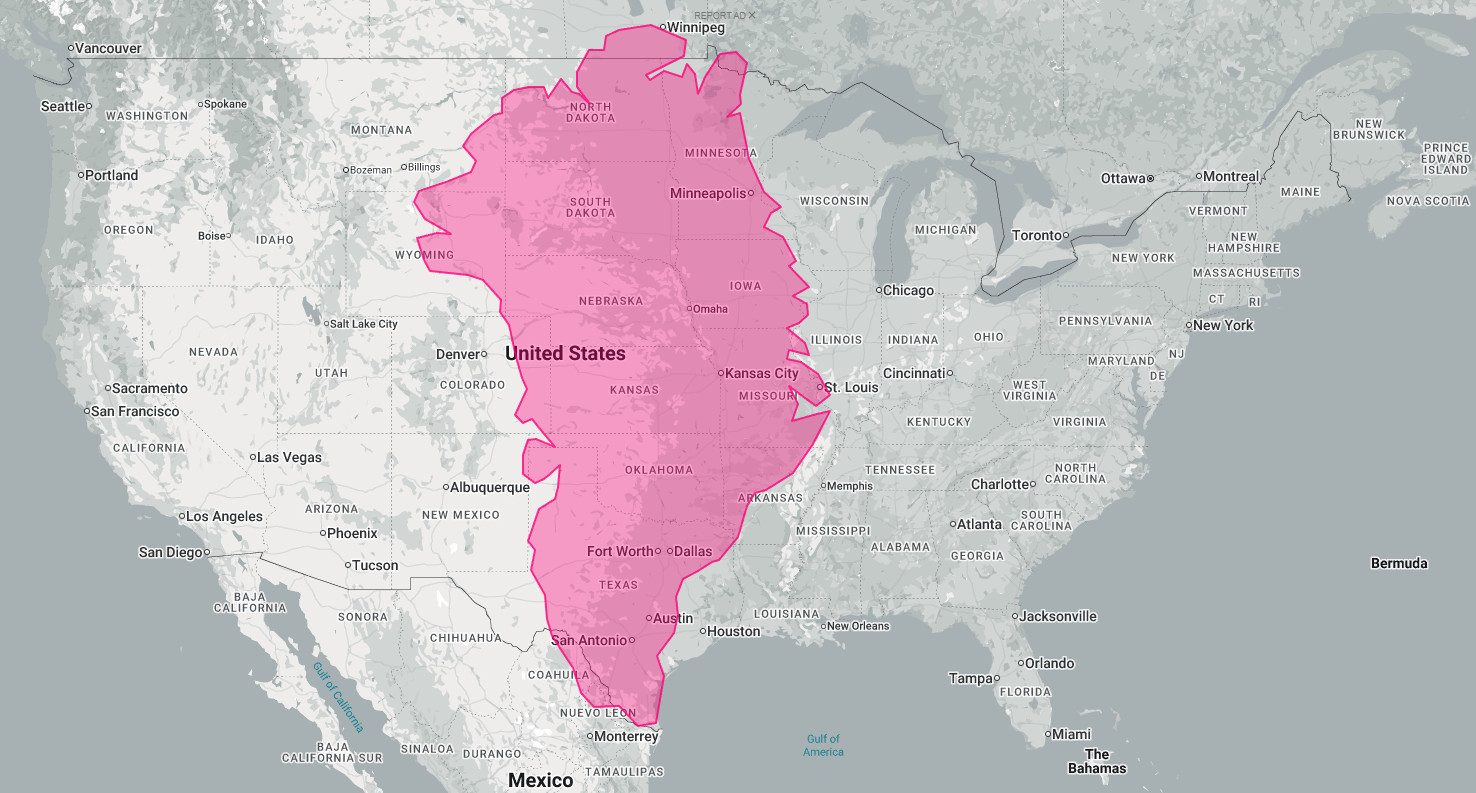
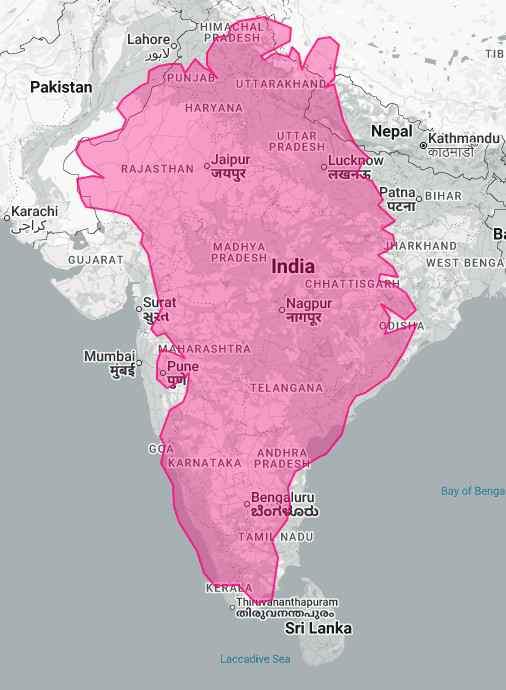
Greenland covers 2,166,086 square kilometers or 836,330 square miles.
Greenland on top of the U.S.Greenland on top of India
Countries with similar land area:
Territory
Area (km²)
Area (mi²)
Greenland
2,166,086
836,330
Saudi Arabia
2,149,690
830,000
Mexico
1,964,375
758,449
Indonesia
1,904,569
735,358
Libya
1,759,540
679,362
Iran
1,648,195
636,372
Roughly 80% of Greenland sits under an ice sheet. This isn’t seasonal snow that melts each summer. The ice averages 1,500 meters (4,921 ft) thick. In some areas it reaches 3,000 meters (9,843 ft). That immense weight has pressed underlying bedrock down over thousands of years. Complete melting would take centuries even with extreme warming. The exposed land afterward would measure around 410,000 km² (158,000 mi²). Much bedrock currently sits below sea level from compression. Post-melt Greenland would look nothing like maps show today.
Greenland under the ice
Where People Actually Live
Despite this vast area, only about 57,000 people live in Greenland. That’s the lowest population density on Earth. Everyone lives along coasts. The interior ice sheet obviously can’t support towns. Roads don’t connect settlements. Travel requires boats, planes, or helicopters.
Settlement
Population (approx.)
Nuuk
19,000
Sisimiut
5,600
Ilulissat
4,700
Qaqortoq
3,000
Aasiaat
3,000
Maniitsoq
2,500
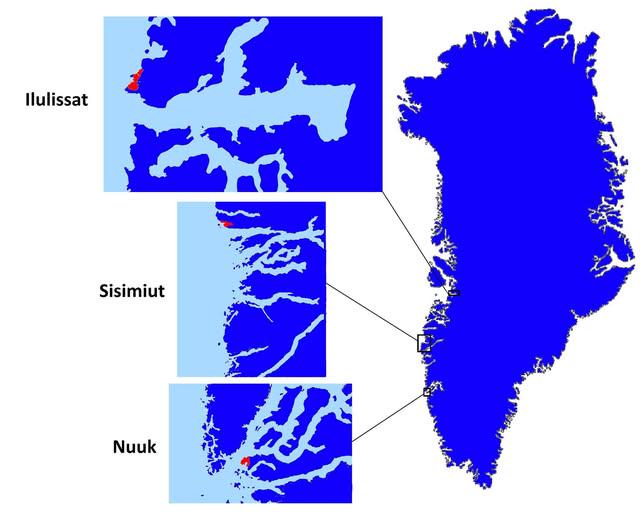
Three towns hold about half the population. Nuuk, Sisimiut, and Ilulissat are where most people live.
Greenland is divided into two regions with equal populations
The small population creates unusual dynamics. Greenland governs itself domestically but can’t independently control or develop all resources. Denmark provides massive financial support and handles international relations. Every mining contract and infrastructure project involves complicated negotiations between local interests, Danish oversight, and foreign powers seeking advantage.
What’s Buried Under the Ice
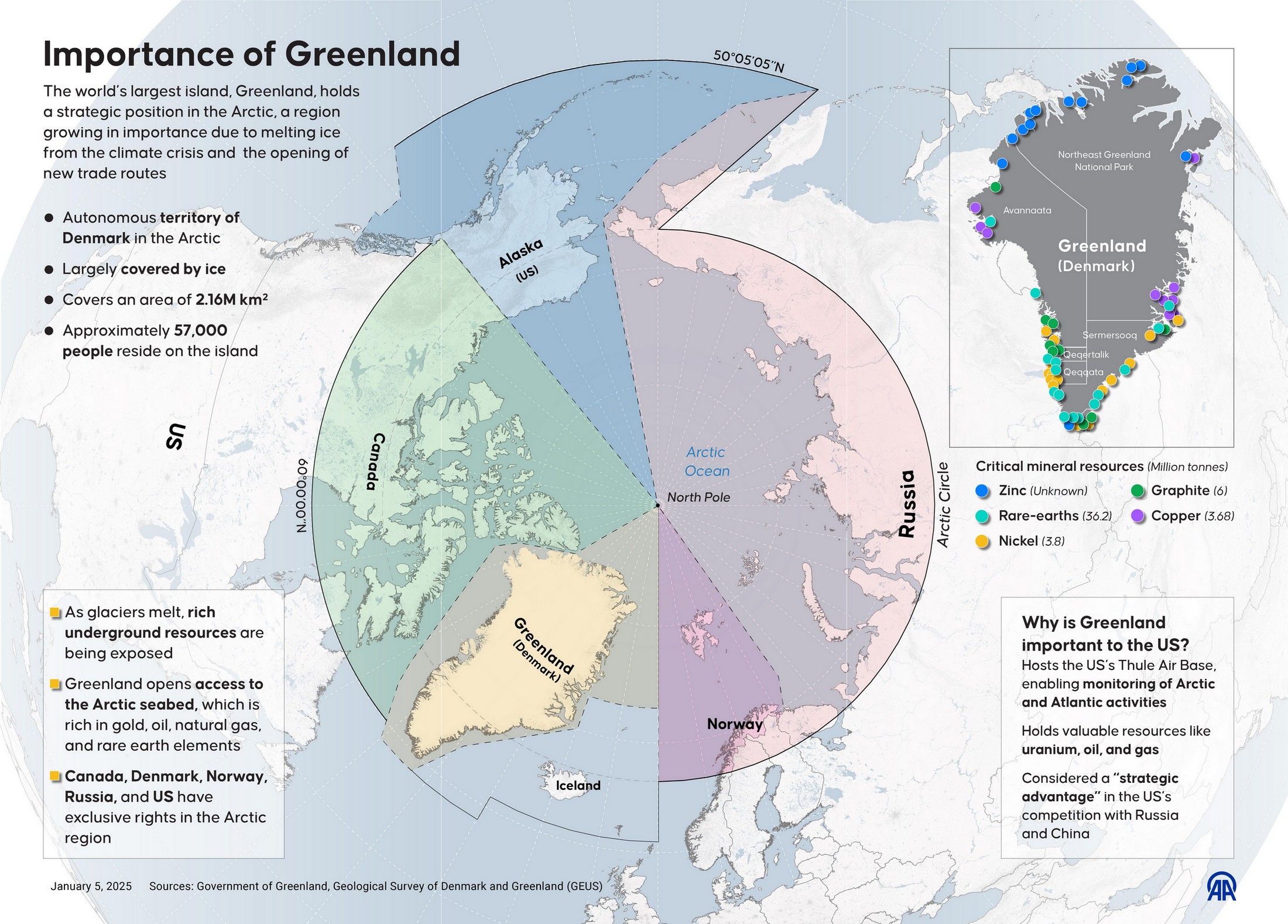
Map by AA, data from the Government of Greenland and the Geological Survey of Denmark and Greenland
Glaciers retreating across Greenland keep uncovering geology that’s been frozen for millennia:
Rare-earth elements: 36.2 million tonnes
Graphite: 6 million tonnes
Nickel: 3.8 million tonnes
Copper: 3.68 million tonnes
Zinc: substantial deposits, quantities still uncertain
The surrounding Arctic seabed likely contains oil, natural gas, and gold.
Most people never think about rare-earths, yet our technology depends entirely on them. Neodymium, dysprosium, europium and similar elements are critical for phone screens, laptop batteries, electric car motors, wind turbines, and military guidance systems. China has cornered this market, controlling roughly 70% of mining and about 90% of processing. Beijing’s leverage here is substantial. Alternative sources would reshape global manufacturing.
Sea ice keeps shrinking. New passages open through Arctic waters. Ships taking these routes shave thousands of kilometers off trips between Asia and Europe. More importantly, they skip Suez and Panama entirely. Remember when that container ship got stuck in Suez? Global trade backed up for weeks. Arctic routes sidestep that vulnerability.
The US built Thule Air Base in northwestern Greenland in 1951. The base got renamed Pituffik Space Base. It’s positioned about 1,210 kilometers (750 miles) south of the North Pole. Operations there include satellite tracking, missile launch monitoring, and watching for threats approaching North America. During the Cold War, Soviet bombers were the main worry. Now it’s ballistic missiles and hypersonic weapons.
Russia keeps rebuilding Arctic military infrastructure systematically. Old Soviet bases get renovated. New facilities appear. China announced in 2018 that it considers itself a “near-Arctic state” despite being nowhere near the Arctic geographically. Money started flowing into Greenland mining and infrastructure projects immediately after.
Five countries get exclusive economic rights in Arctic waters under international law. Canada, Denmark (via Greenland), Norway, Russia, and the US each control resources within 200 nautical miles of their coasts. Continental shelf extensions can push those boundaries out further. Claims overlap in places. Tensions keep rising as ice melts and access improves. The gap between Greenland’s enormous territory and tiny population attracts outside interest. Massive resource wealth in a strategically important location with just 57,000 people creates opportunities for external influence.