
Space
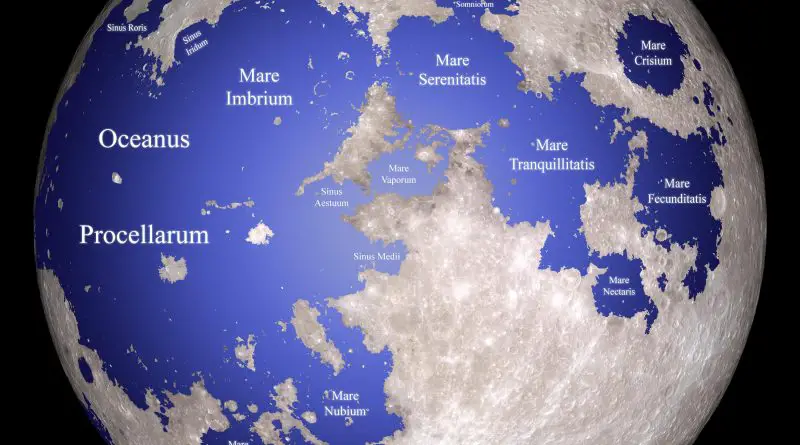
6 maps that explain the Moon
The Moon is the only natural satellite of our planet. It is the 5th-largest satellite and the 2nd-densest satellite after Jupiter’s satellite Io in the Solar System. From Earth, we only can see 15% of one side of the Moon’s surface because the Moon rotates around the Earth at the same speed as it rotates around its axis.
Read more: 6 maps that explain the Moon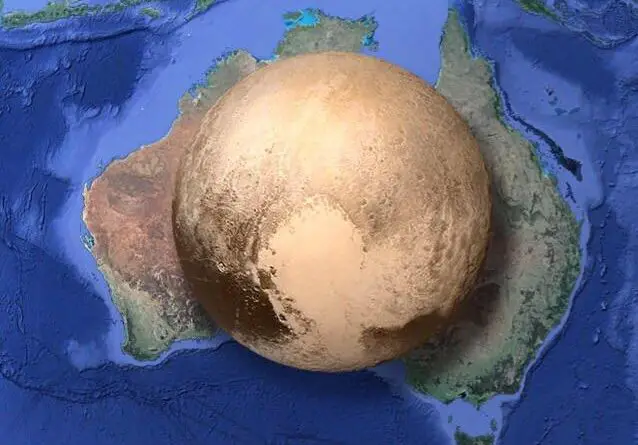
Pluto vs. Earth
Pluto is a dwarf planet beyond the orbit of Neptune. It was discovered in 1930, the first space object in the Kuiper belt. It was instantly called the 9th planet of the Solar system. Later, five moons were discovered orbiting Pluto. Then Pluto’s planetary status was doubted when it was found to be much smaller than expected. As a result, in 2006, the International Astronomical Union formally reconsidered the term planet to exclude dwarf planets such as Pluto.
Read more: Pluto vs. EarthMars Trek
Mars Trek is an application that allows you to view imagery ans perform analysis on data from the planet Mars.
Read more: Mars Trek5 human activities you can see from space
Satellites have been watching us for 40 years. Here’s what their images reveal. Since 1972, a posse of satellites has
Read more: 5 human activities you can see from spaceYou can see Berlin’s east-west divide from space
In the eastern part of the city, sodium vapor lamps with a yellower color are used. In the western part
Read more: You can see Berlin’s east-west divide from space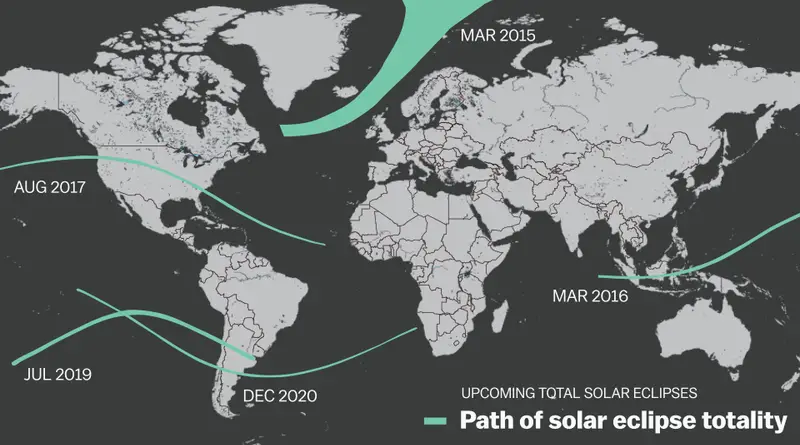
Solar Eclipses Paths Mapped
A solar eclipse happens when a part of the Earth is covered in a shadow thrown by the Moon, which entirely or partly obstructs light. Each year happens there are 2-5 solar eclipses of different types.
Read more: Solar Eclipses Paths Mapped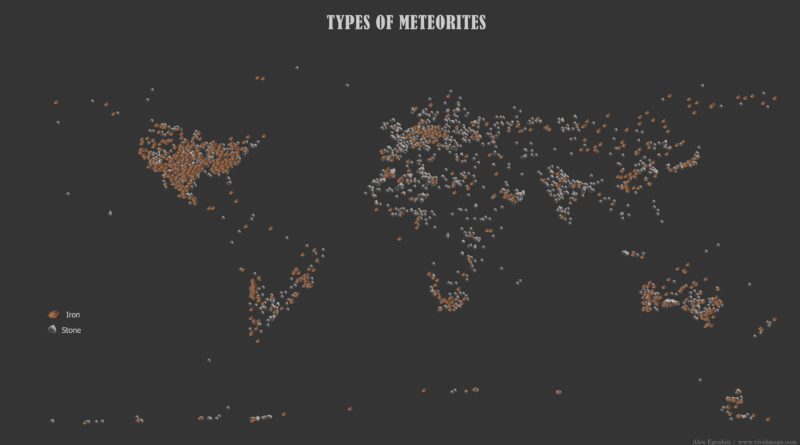
Every recorded meteorite to have struck Earth mapped
Almost 500 tonnes of meteoritic wreckage fall to the planet each day, much of it as little cosmic dust and micrometeorites that sink into the ocean. About 500 meteorites of moderate size would strike our planet’s surface each year, of which 150 would fall on the landmass, and less than ten would be found.
Read more: Every recorded meteorite to have struck Earth mapped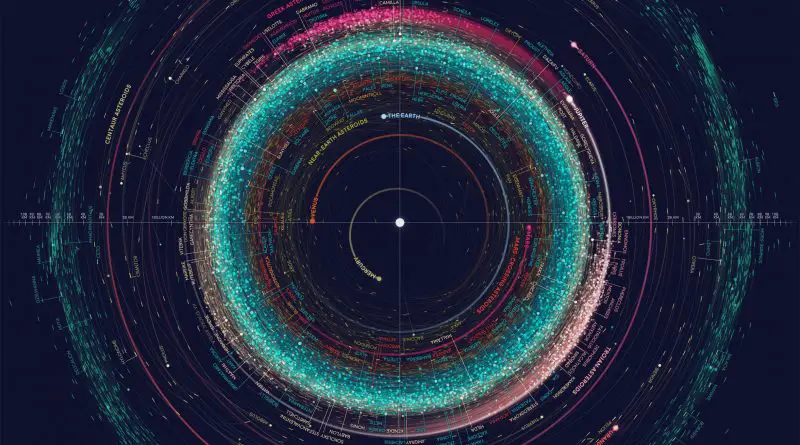
A Map of Every Object in our Solar System
Solar System appeared 4.6 billion years ago from the gravitational collapse of a giant interstellar molecular cloud. The vast bulk of the Solare system’s mass is in the Sun, with most of the remaining mass contained in Jupiter. This planet and Saturn are gas giants, mainly formed of hydrogen and helium; Uranus and Neptune are ice giants. The four smaller innermost planets, Mercury, Venus, Earth, and Mars, are terrestrial, being principally formed of rock and metal.
Read more: A Map of Every Object in our Solar System