The History of Oceania: Every Year
This video will map the entire history of Australia and the Pacific Islands, known collectively as Oceania. Due to a
Read more: The History of Oceania: Every Year
Historical maps showing territorial changes of countries and historical events of the past.
This video will map the entire history of Australia and the Pacific Islands, known collectively as Oceania. Due to a
Read more: The History of Oceania: Every Year
Related posts: – Europe during the interwar period (1923) – Europe under the French Empire (1812) – Europe in the
Read more: Europe after the formation of the North German Confederation & the Austro-Hungarian Compromise (1867)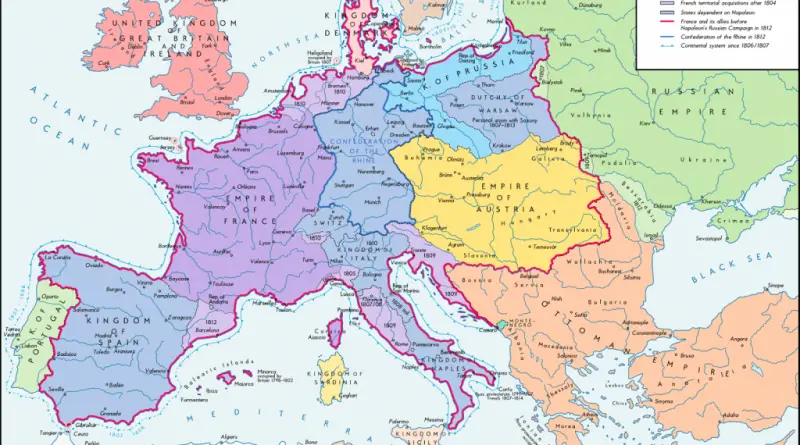
The French Empire was the Empire dictated by Napoleon Bonaparte, who established French hegemony over Europe at the beginning of the nineteenth century. At its height in 1812, the French Empire had 130 departments, ruled over 44 million people, and had a large army in Germany, Spain, Italy, and the Duchy of Warsaw.
Read more: Europe under the French EmpireKingdom of Sardinia (October, 1859 – December 17, 1860) Kingdom of Italy (February 18, 1861 – November 27, 1942) Kingdom
Read more: History of Italy (1859 – 2017)This 3D web map allows users to learn more about the Morningside Heights Historic District, which the New York City
Read more: Morningside Heights Historic District Explorer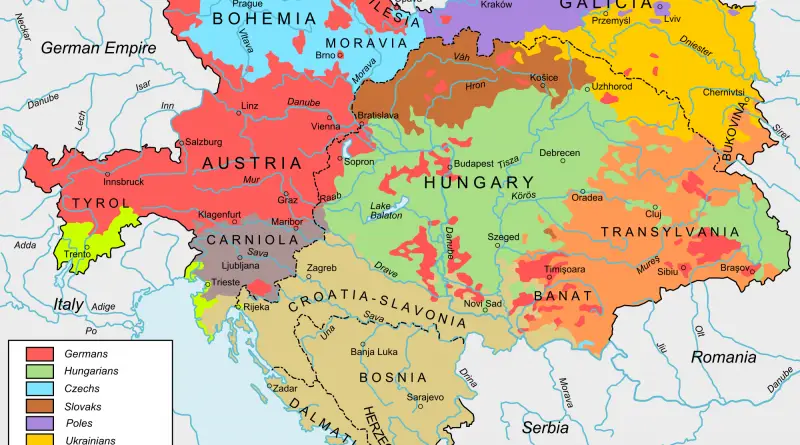
Austria-Hungary was a power that existed in the heart of Europe from 1867 to 1918. The Empire was the 2nd-largest nation in Europe after Russia and the 3d-most populous after the Russian and the German Empire.
Read more: Atlas of Austro-Hungarian EmpireNew Amsterdam was a 17th-century Dutch settlement founded at the strategic southern point of Manhattan Island that functioned as the colonial administration place in New Netherland. The fort protected the Dutch West India Company’s fur trade activity in the Hudson River.
Read more: Old maps of the New Amsterdam and New NetherlandRelated post: – United States Old Maps
Read more: Population density of the 13 colonies (1775)Source: deviantart.net Related post: – Russia in Europe (1906)
Read more: Europe during the interwar period, 1923Syphilis is a sexually transmitted infection provoked by the bacterium Treponema pallidum subspecies pallidum. But this infection may also be transmitted from mother to baby during pregnancy.
Read more: What syphilis was called before it was called syphilisWorld War II in Europe featured several pivotal battlefronts that significantly influenced the course of the conflict. The Eastern Front witnessed brutal clashes between Nazi Germany and the Soviet Union, with iconic battles like Stalingrad and Kursk shaping the war’s intensity. The Western Front, marked by the D-Day invasion in 1944, saw Allied forces establishing a second front against Nazi-occupied Europe. The Mediterranean and North African campaigns, including battles like El Alamein, played crucial roles in halting Axis advances. The diverse battlefronts collectively contributed to the eventual defeat of Nazi Germany in 1945.
Read more: The battle fronts of Europe