
Agriculture
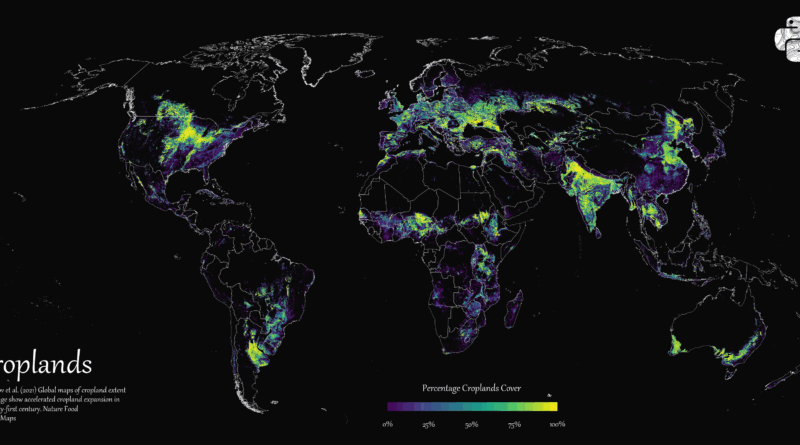
The Geography of Global Cropland Expansion
We’ve converted over 100 million hectares to cropland since 2000, but the expansion is happening in some surprising places. This map shows where agriculture is claiming the planet’s surface, and how much land different foods actually require.
Read more: The Geography of Global Cropland ExpansionMap showing areas of coffee cultivation
r – Coffea canephoram – Coffea canephora & Coffea arabicaa – Coffea arabica
Read more: Map showing areas of coffee cultivation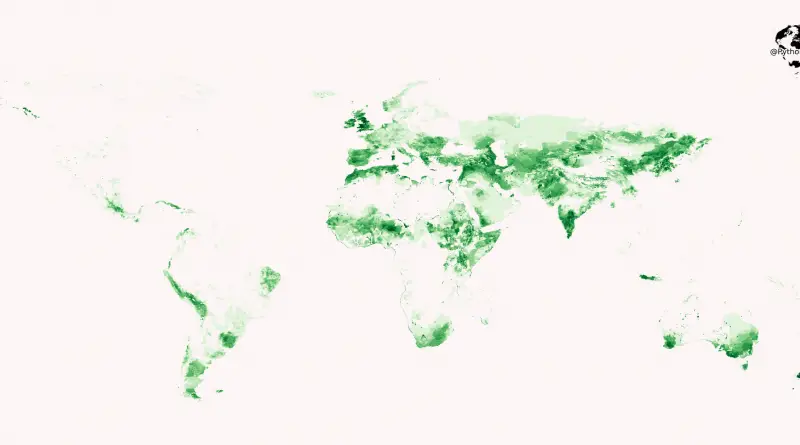
Sheep density map
Sheep are the earliest animals to be domesticated for agricultural purposes native to Iran, descended from the wild mouflon. According to the Food and Agriculture Organization here are more than 1 billion domestic sheep live on Earth.
Read more: Sheep density map
The origin of crops and domestic animals
The domestication of plants and animals was triggered by the climatic changes and environmental transformations that happened after the Last Glacial Maximum’s peak about 21 thousand years ago and which proceed to this modern day. These changes made getting food hard. The first domesticate was the wolf (Canis lupus) at least 15 thousand years ago. The Younger Dryas (about 12.9 to 11.7 thousand years BP) was a period of extreme cold and aridity that put stress on Homo sapiens to enhance their foraging approaches.
Read more: The origin of crops and domestic animalsAnimals
Population density by county.
Read more: AnimalsCorn Belt States
The corn production plays a significant role in the economy of the U.S. The United States is the biggest corn producer globally, with 96 million acres (39 million ha) of land used for corn growing. Corn growth is dominated by west and north-central Iowa and east-central Illinois. About 13 percent of its yearly yield is exported.
Read more: Corn Belt States