Alaska’s Biggest (Ice) Losers are Inland
Airborne surveys of southern Alaska have helped scientists get a better handle on where ice is being lost from this
Read more: Alaska’s Biggest (Ice) Losers are Inland
Airborne surveys of southern Alaska have helped scientists get a better handle on where ice is being lost from this
Read more: Alaska’s Biggest (Ice) Losers are Inland
The domestication of plants and animals was triggered by the climatic changes and environmental transformations that happened after the Last Glacial Maximum’s peak about 21 thousand years ago and which proceed to this modern day. These changes made getting food hard. The first domesticate was the wolf (Canis lupus) at least 15 thousand years ago. The Younger Dryas (about 12.9 to 11.7 thousand years BP) was a period of extreme cold and aridity that put stress on Homo sapiens to enhance their foraging approaches.
Read more: The origin of crops and domestic animalsHuman embryo and fetus development from fertilization to birth.
Read more: How To Build A Human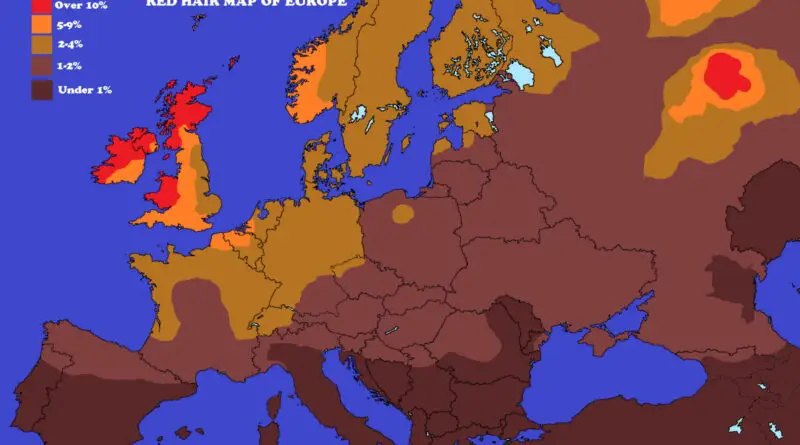
Check out this map showing where red hair is most common across Europe – it reveals some surprising patterns in different regions and tells us a lot about genetic history.
Read more: Where Are Europe’s Redheads? A Look at the Red Hair Map of EuropeThe CORINE land cover map 2012 for the UK. Reds indicate artificial surfaces, yellows are agricultural land, greens are forests,
Read more: UK land becoming more urban