Second and Third Most Practiced Religions Across Canada
From Sikhism in British Columbia to Buddhism in Nova Scotia, explore how different faiths create unique religious patterns across Canada’s regions, based on latest Census data.
Read More
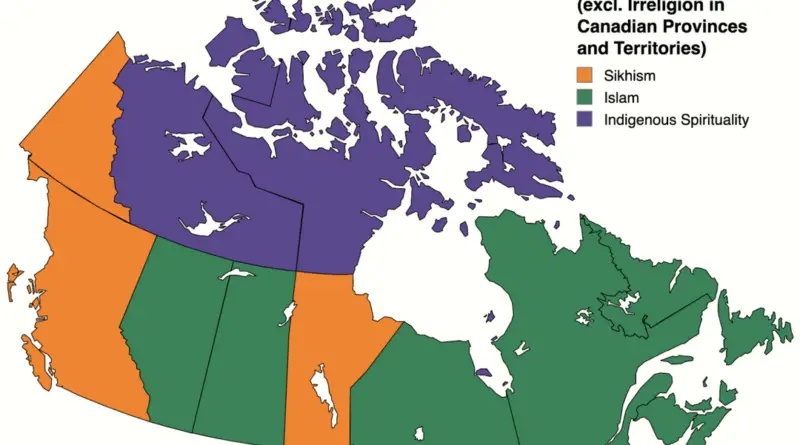
From Sikhism in British Columbia to Buddhism in Nova Scotia, explore how different faiths create unique religious patterns across Canada’s regions, based on latest Census data.
Read More
After decades of social evolution and improvements to work-life balance, contradicting pressures are fragmenting the work world’s method of paid leave. Companies struggling to attract talent are paying employees more, leaving businesses understaffed but with a steep payroll to meet and an unwillingness to give time off. In 2022, only 35 percent of American companies offer paid maternity leave–a shocking drop from 53 percent just 2 years ago, according to a study from the Society for Human Resource Management (SHRM). For paid paternity leave, the drop is from 44 to 27 percent in the same period.
Read More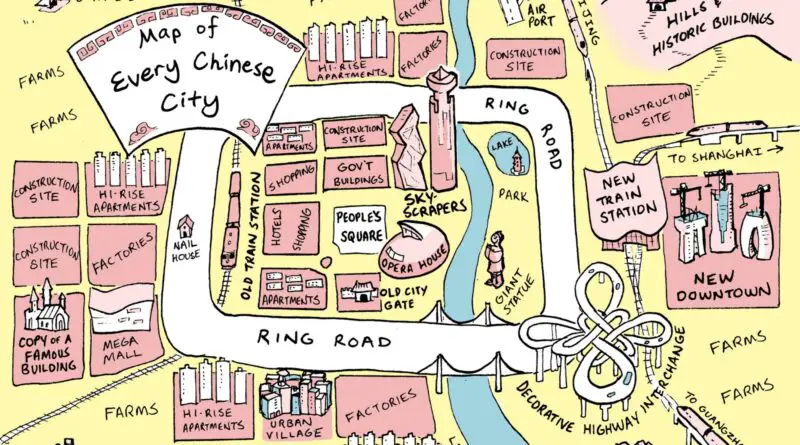
China’s urban planning philosophies and approaches have experienced many transitions because of governance and economic structure shifts throughout the country’s extensive history. The establishment of the People’s Republic of China in 1949 denotes the start of three recent historical phases of urban planning that express a divergence from traditional Chinese urban planning morphologies, broadly categorized as a socialist, hybrid, and global cities.
Read More
Sitting down to binge on a box set or get lost in the latest Hollywood hit movie has never been more effortless. Gone are the daytimes of exploring the TV guide or heading out on a pilgrimage to Blockbuster. Today, audiences have to sit back, select their go-to streaming service, and gorge on the hours of entertainment available at their fingertips. Streaming platforms have begun to hoard new and old content in a try to lure and keep subscribers. But as the competition amplifies between streaming platforms to keep viewers coming back for more, the essential for new and exclusive content becomes ever more apparent.
Read More
You can travel our entire world, and infinite others, through books. Better still, an excellent novel supplies an erudite tour guide and a caravan of colorful characters to accompany you along the way. Apply this theory to your hometown, and you can delve even more profound. Peel back the layers of what could or what absolutely shouldn’t happen behind the closed doors of your neighbors, and you’ll see, hear, and smell your neighborhood anew.
Read More
Travel is a subjective art. While the majority may be disappointed by an attraction or think it is overrated, others may still love it–putting it at the top of their itinerary. As the world’s third-most famous country for international travelers, the U.S. has an enormous variety of tourist destinations.
Read More
Early in 1902, the Chinese government began to enumerate the Empire’s population for taxation purposes. The population of the eighteen provinces of China proper was 407,734,330. Even back then, China was the most populous country. The British Empire had almost a similar population.
Read More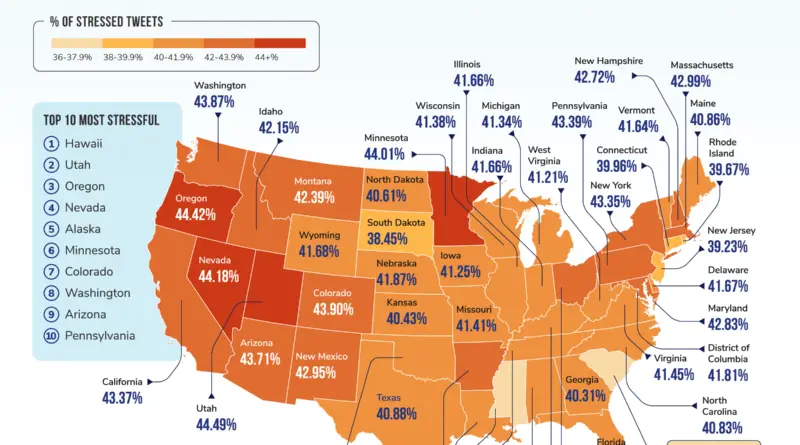
The American Psychological Association declared that 41 percent of American adults say their stress levels have risen since the beginning of the Coronavirus pandemic 2 years earlier. Post-pandemic economic consequences and the invasion of Ukraine are among the factors affecting a population still sensitive from years of living in “survival mode.”
Read More
European scientists interested in population studies have been more concerned with fertility trends, especially its tendency to stabilize well below-replacement level. Today in many European countries, fertility is not only low but also very low, reaching the mark of 1.5 children per woman and, in some, even the lowest low.
Read More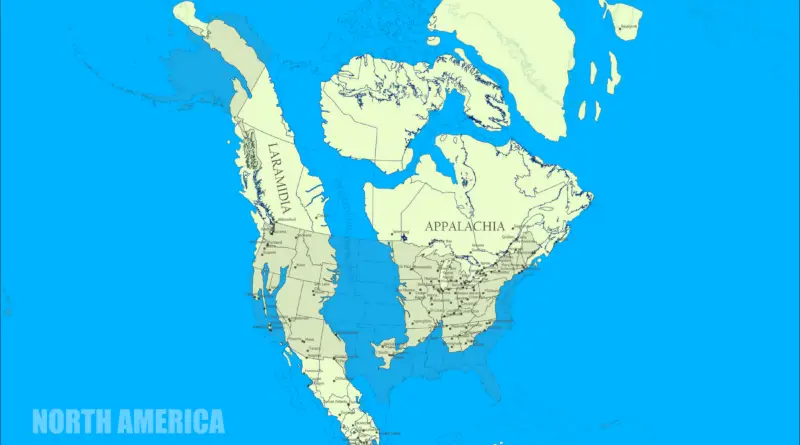
The Cretaceous is the 3rd and final period of the Mesozoic Era geological period that continued from about 145 to 66 million years ago. It was a geologic period with a comparatively warm climate, resulting in high eustatic sea levels that shaped many shallow inland water bodies.In the Late Cretaceous, the many contemporary U.S. states were beneath the waves of the Western Interior Seaway.
Read More