Most and least trusted media source in Europe
The Radio is most trusted media source in the Europe Union, while the social media was the least trusted source.
Read more: Most and least trusted media source in Europe

The Radio is most trusted media source in the Europe Union, while the social media was the least trusted source.
Read more: Most and least trusted media source in Europe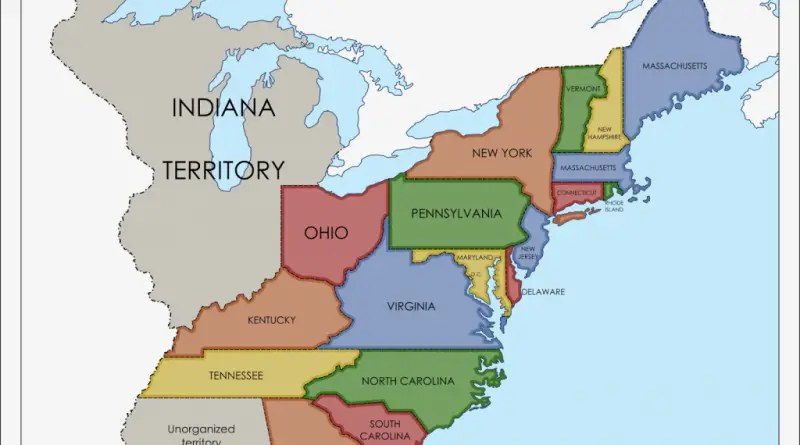
The Louisiana Purchase was the purchase of the territory of Louisiana by the U.S. from France in 1803. In return for 15 million dollars (~$18 per square mile), the U.S.obtained 828 thousand square miles or 2.14 million square kilometers. But, in reality, before purchase France only controlled a small part of this territory, mostly inhabited by Native Americans.
Read more: Louisiana purchase mappedIn less than a century, the United States transformed from a small coastal republic into a continental nation. Through the Louisiana Purchase, annexations, treaties, and wars, it gained territories stretching from the Atlantic to the Pacific by 1853.
Read more: Growth of United States (1776 – 1853)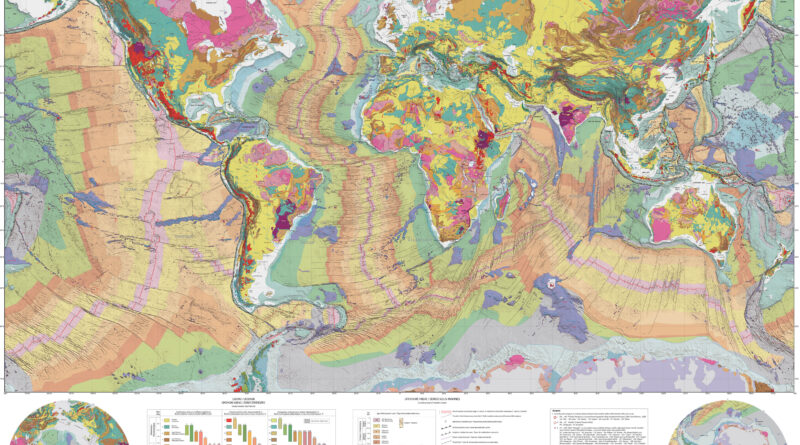
Looking at a rock means looking at time itself. Every stone formation around us formed through billions of years of pressure, heat, and transformation. Three remarkable global geological maps let you explore this planetary memory, from the depths of ocean trenches to the highest mountain ranges.
Read more: Three Global Geological Maps That Show 4 Billion Years of Earth’s History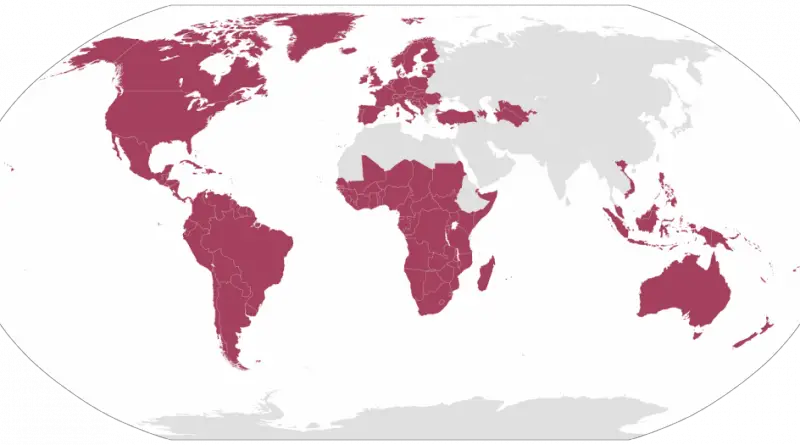
The Latin script, also known as the Roman script, is the writing system originally developed by the ancient Romans to write the Latin language. It has since become the most widely used writing system in the world, employed for various languages, in
Read more: Countries that use the Latin script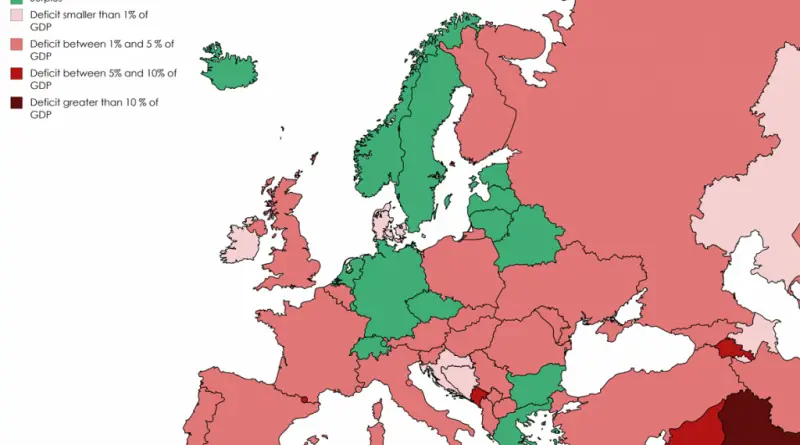
The difference between national government revenues and expenditures expressed as a percent of the Gross Domestic Product. A positive number
Read more: Budget surplus or deficit in European countries (2016)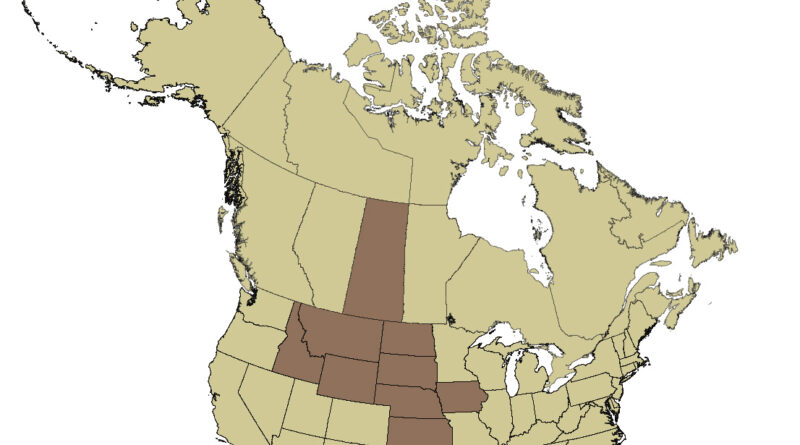
In South Dakota, there are nearly four cattle for every person. Nebraska supports over six million head of cattle with just two million residents. Across the Great Plains and Prairie Provinces, a geographic belt exists where bovines genuinely outnumber humans.
Read more: Where Cattle Outnumber PeopleFive large carnivore species still hunt in Europe’s forests and mountains. About 17,000 brown bears live mostly in Scandinavia and the Carpathians, with Romania alone hosting over 6,000. Wolves have reclaimed territory across 31 countries, numbering around 19,000. The two lynx species occupy different niches. Around 9,000 Eurasian lynx inhabit northern and eastern forests, while 1,600 Iberian lynx recovered from near-extinction in Spain and Portugal. Wolverines remain the rarest, with just 1,250 individuals in Scandinavia’s remote north.
Read more: Large carnivores of Europe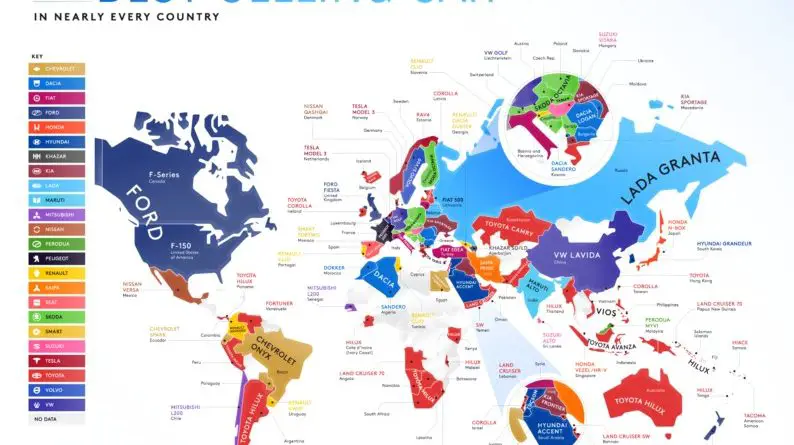
While the Ford F-150 pickup truck has been the top-selling vehicle in the U.S. since 1981, Toyota is the most-sold vehicle for the 15th year in a row. Toyota is the most-sold car in 41 nations.
Read more: The World’s Top-selling Cars Mapped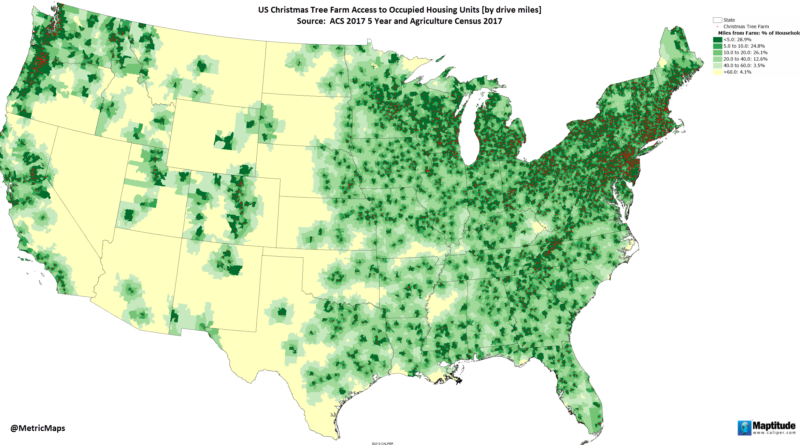
wo states grow nearly two-thirds of America’s Christmas trees, but the geography gets even more specific than that. When you zoom into county-level data, a handful of places emerge as the real centers of this seasonal industry.
Read more: Where America’s Christmas Trees Actually Grow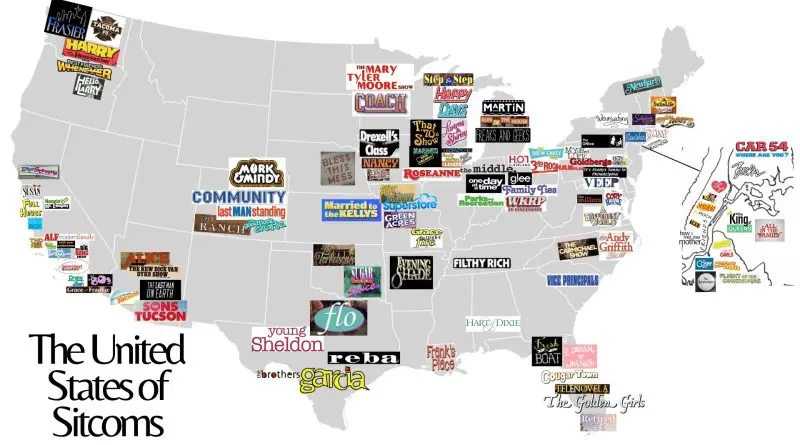
A sitcom or situational comedy is a genre centered on a bounded group of characters who mainly carry over from episode to episode. Sitcoms originated in radio but nowadays are found predominantly on television as one of its prevalent narrative forms.
Read more: The United States of Sitcoms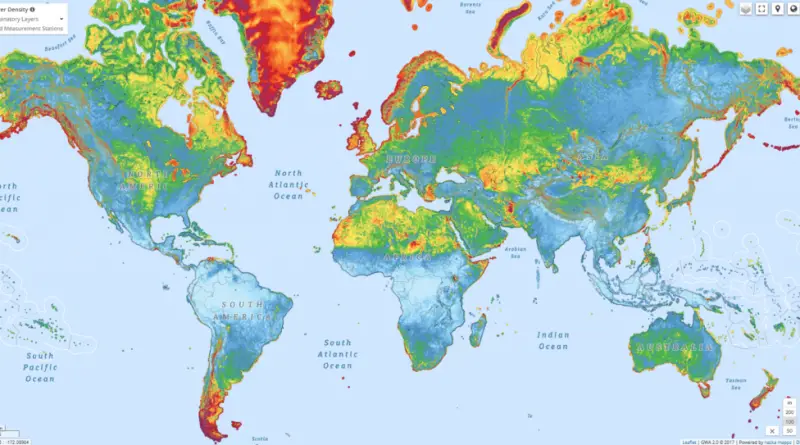
The Global Wind Atlas maps wind power density across the world. See where atmospheric currents race at 50 mph (80.47 km/h) every single day, and where air barely whispers at 3.5 mph (5.63 km/h).
Read more: Global Wind Atlas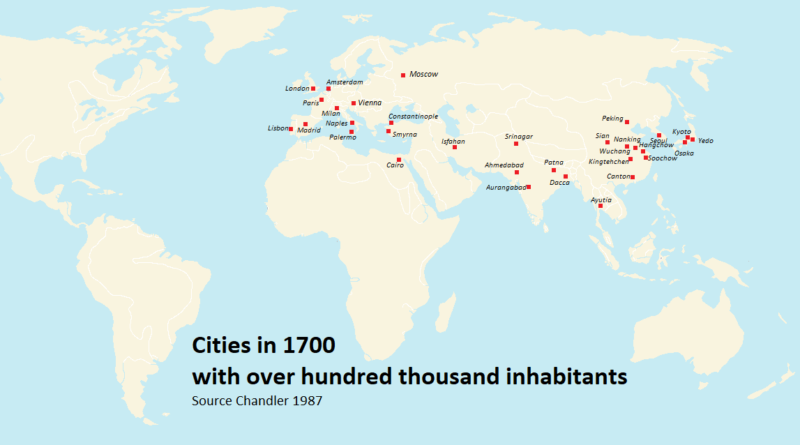
Where do 42 million people live together? The answer might surprise you. Today’s largest city isn’t where most people expect, and the journey from ancient Mesopotamia to modern megacities shows how empires, trade routes, and industrial revolutions reshaped where humans chose to live.
Read more: Largest Cities Throughout History