The nearest foreign nation at any point on land
The maps below show the nearest foreign country to any location on earth.
Read More
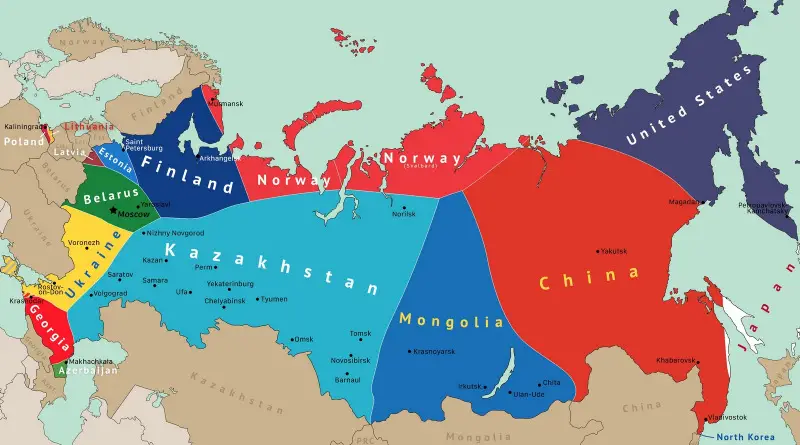
The maps below show the nearest foreign country to any location on earth.
Read More
Maps have been one of the most significant human creativity for millenary. People have invented and used maps to describe, clarify, and navigate their route within the world. Here is an atlas of the most famous maps, from the prehistoric period to modern times.
Read More
The term “big cat” is are commonly used to relate to any of the five species of the genus Panthera: lion, tiger, jaguar, leopard, and snow leopard. Except for the snow leopard, these big cat species can roar. A more broad interpretation of the term covers species outside of Panthera including the cougar, clouded leopard, Sunda clouded leopard, cheetah and even the several lynxes species. However, these added species also do not roar.
Read More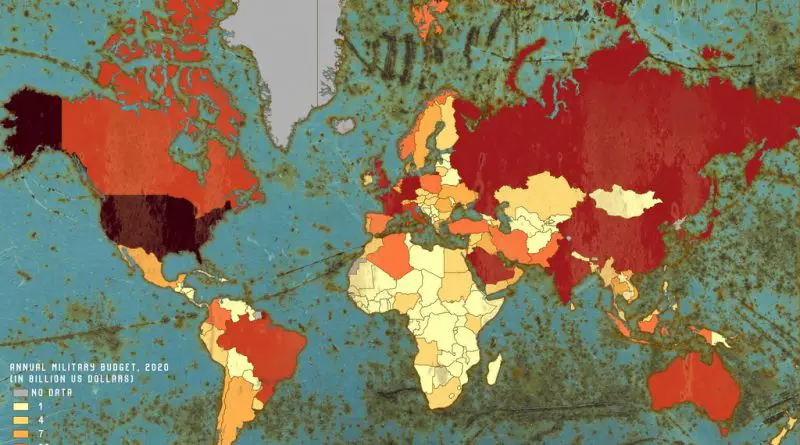
World military expenditure is measured to have been nearly $2 trillion in 2019, the highest level since 1988, and it continues to grow. Global military spending increased in each of the five years from 2015, has declined firmly from 2011 until 2014 following the world financial crisis.
Read More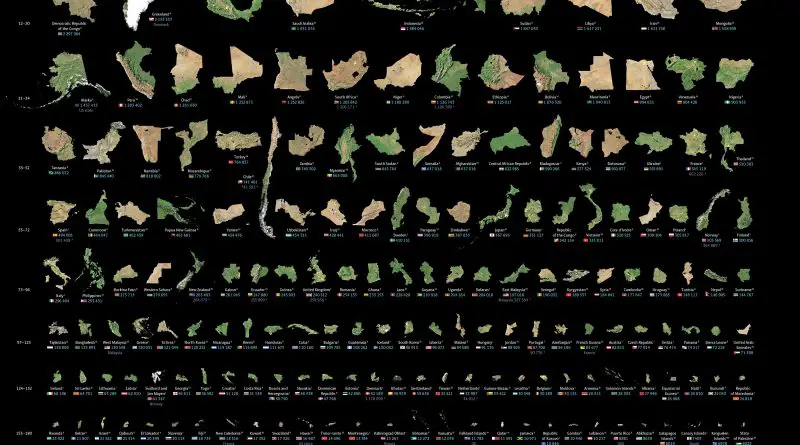
One of the most significant disadvantages of the Mercator projection is that it distorts the actual sizes of territories. The atlas below shows the actual size of all countries and dependencies by area.
Read More
Happiness connects with many life factors: GDP per capita, social support, healthy life expectancy, freedom to make life choices, generosity, and the absence of corruption. Which country is the happiest?
Read More
Goat is domesticated from the wild goat of Southwest Asia and Eastern Europe. According to archaeological data, the earliest domestication happened in Iran 10 thousand years ago. Nowadays, there are about 1,100 different breeds in the world, and about 1 billion goats live on Earth.
Read More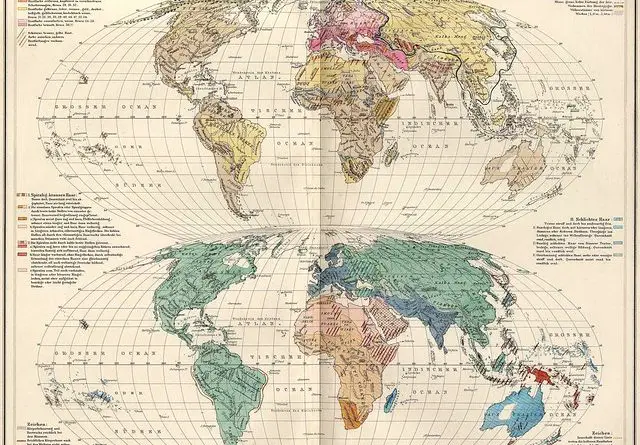
The idea of race as a rough classification of anatomically modern humans has a problematic history. Before the 19th centuries, the word ‘race’ was used in the sense of “ethnic group” and got its contemporary meaning in the area of anthropology only from the mid-nineteenth century.
Read More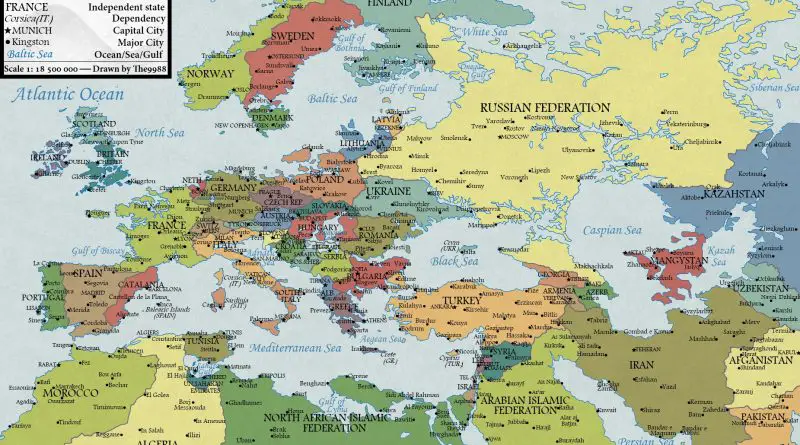
The global sea-level rise started around the beginning of the 20th century. From 1900 to 2016, the average sea level on the planet rose by 16–21 centimeters or 6.3–8.3 inches. According to the extreme scenario, an increase in sea level can be presumed as 189 centimeters (6.2 feet) by 2100.
Read MoreThis map of comparing climates of the cities has been created using Global environmental stratification. The Global environmental stratification (GEnS) is based on statistical clustering of bioclimate data (WorldClim). GEnS consists of 125 strata, which have been aggregated into 18 global environmental zones (labeled A to R) based on the dendrogram
Read More