Physical maps

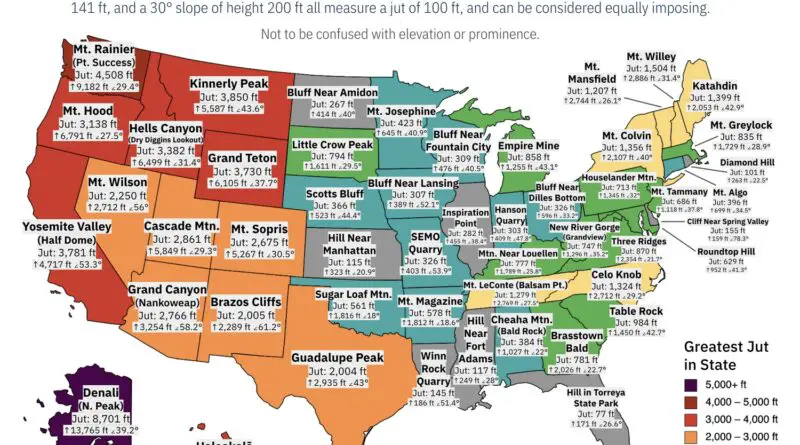
Most Impressive Landforms in Each U.S. state

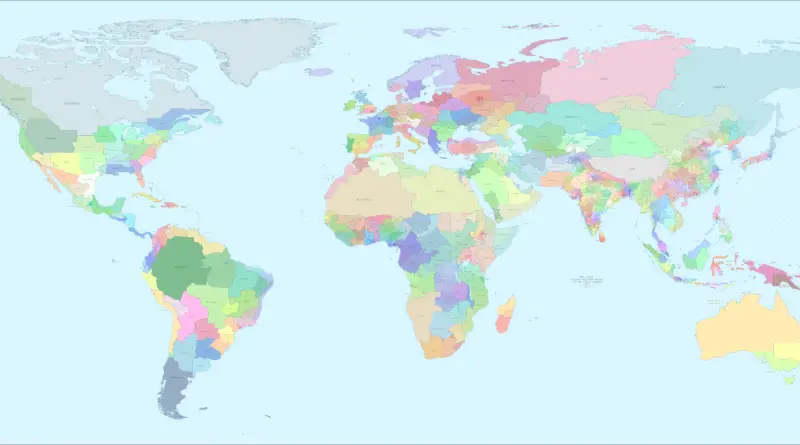
The impressiveness of mountains and other landforms is inherently subjective. Regardless, two factors that universally contribute to the perceived impressiveness of a landform are its height and steepness. Height is a significant factor in defining impressiveness, but it’s not the only factor. For example, even though Mt. Elbert in Colorado (elevation: 4,399 meters or 14,432 ft) has a higher elevation than Grand Teton in Wyoming (elevation: 4199 meters or 13,776 ft), mountaineers can attest to Grand Teton looking considerably more impressive, as it rises much more steeply over the local landscape.

Read more: Most Impressive Landforms in Each U.S. state
Political maps

Departments of France Mapped

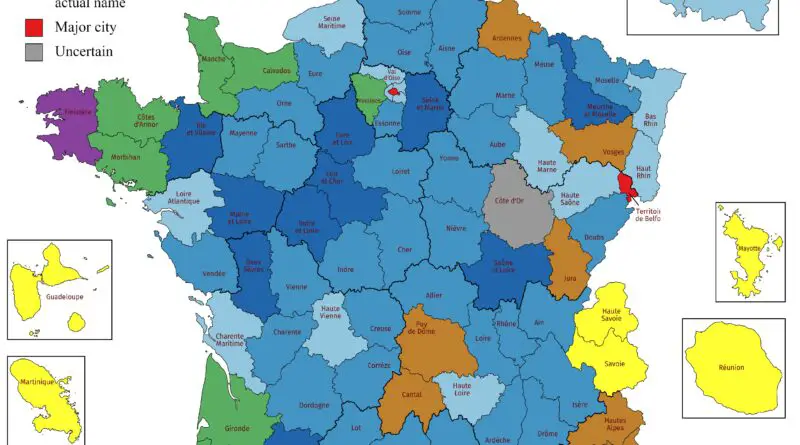
There are 101 departments in mainland France. These departments are administrative divisions that serve as the primary subdivisions of the country. Each department is assigned a number and a name. Additionally, there are five overseas departments (French Guiana, Guadeloupe, Martinique, Mayotte, and Réunion) and one overseas collectivity (French Polynesia), making a total of 107 departments and collectivities in France.

Read more: Departments of France Mapped
ClimateNewsVivid maps

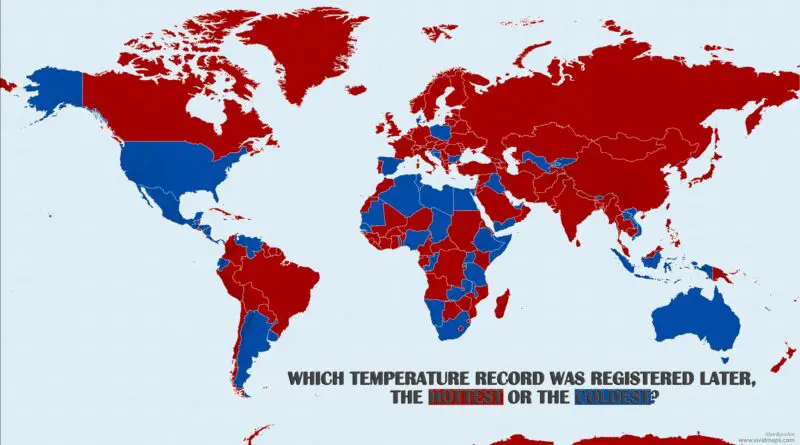
The Hottest Temperatures Around The World Mapped

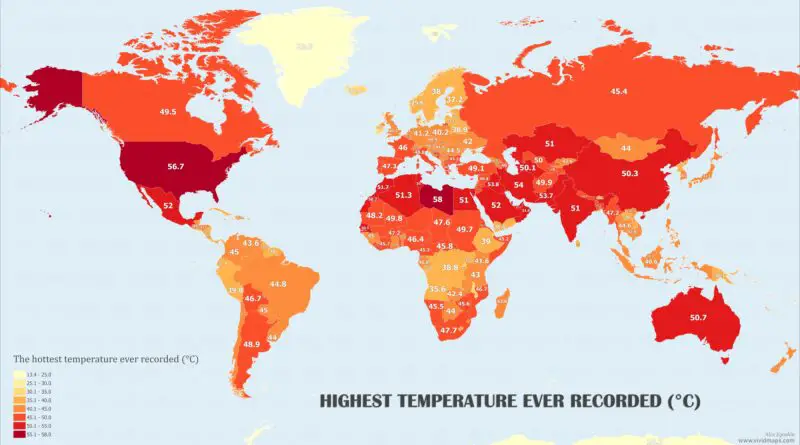
In many parts of the world (except some countries in the southern hemisphere), the summer season is considered the peak vacation period. Summer vacations are popular because they often coincide with school holidays, making it easier for families to plan trips. But summer is not only associated with warm and pleasant temperatures, but also with extremely hot temperatures in many places. So, I decided to create a world map that charts the highest temperatures ever recorded in different countries worldwide throughout the recorded history of weather observation.

Read more: The Hottest Temperatures Around The World Mapped
Climate

The Warmest Day of the Year in The United States

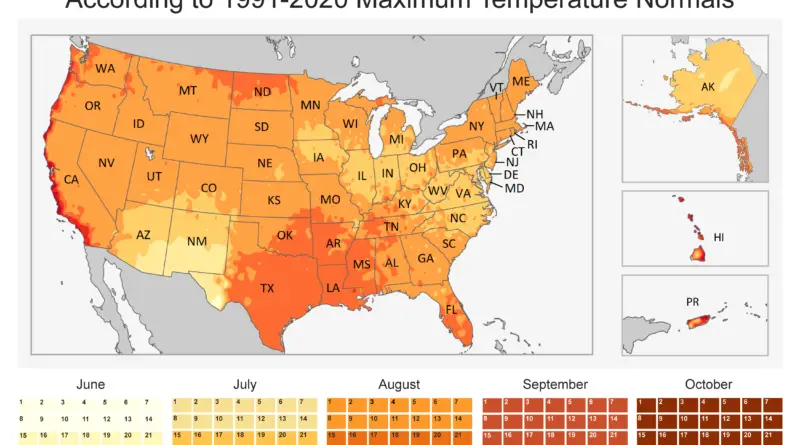
We tend to connect “summer” with “hot” due to obvious reasons. For most of the U.S., the warmest conditions during the meteorological summer months in the Northern Hemisphere (June, July, and August) are observed. However, it is worth noting that the “hottest day of the year” from a climatological perspective differs significantly throughout the United States. Its occurrence can range from early June in certain regions to as late as September and October in others!

Read more: The Warmest Day of the Year in The United States