Remoteness
The road system of the U.S. surpasses four million miles in combined length, plus numerous public line roads (8.3 million miles), other service roads, and off-road driving trails.
Read more: Remoteness

The road system of the U.S. surpasses four million miles in combined length, plus numerous public line roads (8.3 million miles), other service roads, and off-road driving trails.
Read more: Remoteness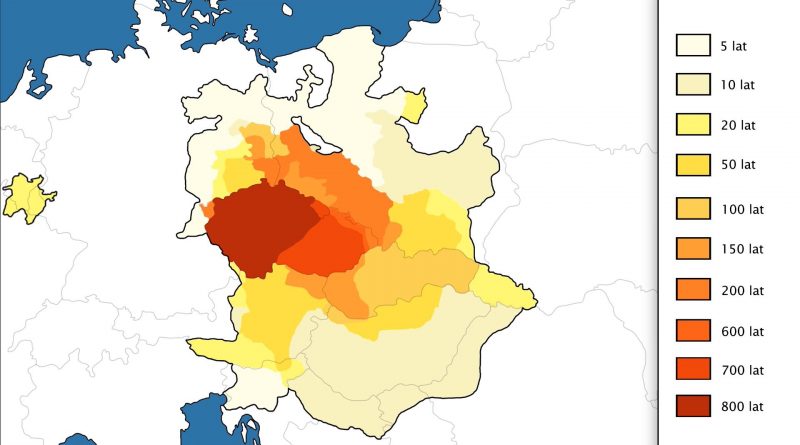
The territory of each country is changing through times. Each state in the world has reached its territorial peak, which then ends.
Read more: Maps showing how many years each territory was ruled by the country
Due to the Coriolis effect, the dominant ocean currents in the North Atlantic move in a circle clockwise, delivering warm water from the Caribbean Sea to Europe, making Europe temperate instead of frozen like the same latitudes in North America. What would Earth look like if it rotated backward?
Read more: What Earth would look like if it rotated backward
Autumn foliage is a phenomenon that changes the green leaves of deciduous trees. By the end of October, yellow, orange, red, and brown varieties dominate, showing the coming of peak fall foliage in the western and northern U.S. When it comes to the end of November, all except the southern counties of the U.S. are past the peak point.
Read more: Autumn foliage colors mapped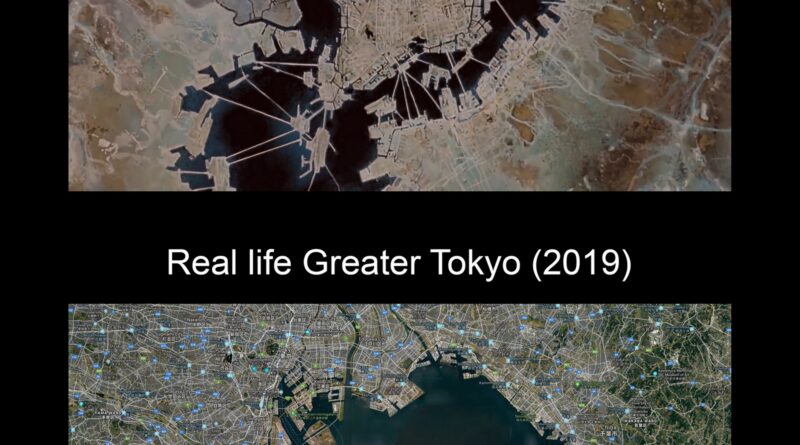
For Akira fans, this map puts Neo-Tokyo’s big artificial islands right next to real Tokyo Bay from 2019. It points out land that’s been built up since 1988, and compares things like area, people, skyscrapers, and the day-to-day mess in the film versus the real place.
Read more: Mapping Akira’s Neo-Tokyo Against Real Tokyo Bay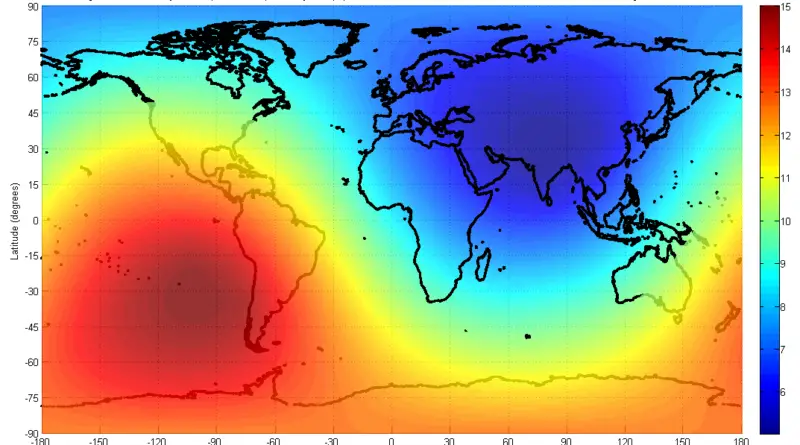
In demographics, the center of population is a geographical spot representing a center point of the region’s population. On average, the point nearest to everyone on our planet is in the north of South Asia, with a mean distance of 5,000 kilometers or 3,000 miles.
Read more: Centre of the population for each country in the world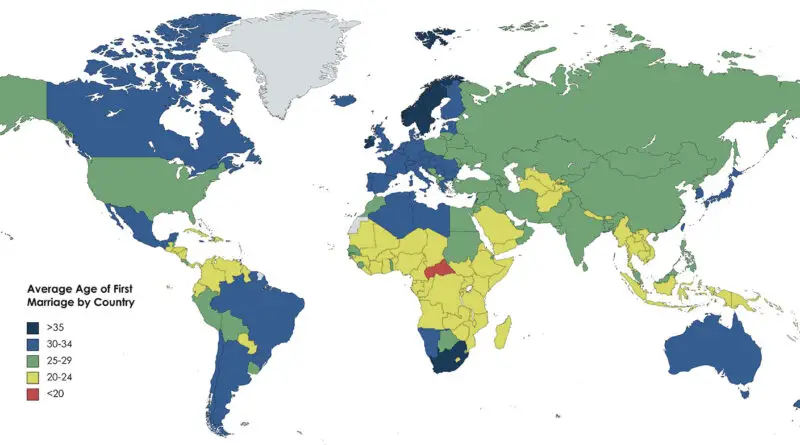
The average age of first marriage varies significantly from country to country. Cultural, social, and economic factors greatly determine when people choose to get married. In many Western nations, there has been a trend of people delaying marriage until later in life.
Read more: Average Age of First Marriage by Country Mapped
Many of the world’s cities will face sharply different climates by 2050. I tried to visualize how climate change will affect 6,000 world cities. London could feel as hot as Paris by 2050, with Paris’s climate more like San Francisco. San Francisco feels like Melbourne and New York City like Bologna (Italy). The climate of Moscow will be similar to that of Boston.
Read more: How hot cities could be in 2050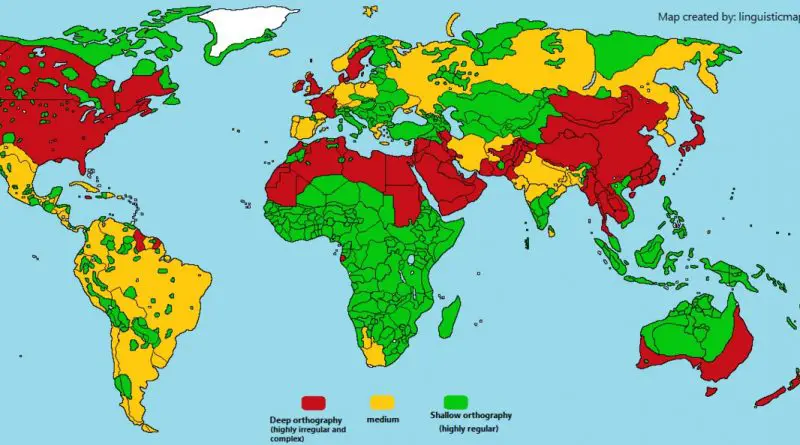
Languages have various levels of orthographic depth, which means that a language’s orthography can vary in a spectrum of a very irregular and difficult orthography (deep orthography) to a quite regular and simple one (shallow orthography).
Read more: Orthographic depth of different languages
Europe has seen a drop in the intentional homicide rate by 63% since 2002 and by 38% since 1990. Russia and Ukraine reported the highest number of intentional homicide victims per 100 000 inhabitants. The lowest number of intentional homicide victims was recorded in Norway, Italy, and Spain.
Read more: Intentional Homicide Rate in Europe
Around the world import a total of $19.87 trillion in goods and services every year. The United States is the world’s biggest importer, while China is the biggest exporter in the world.
Read more: Who Are the Biggest Importers and Exporters in 2018?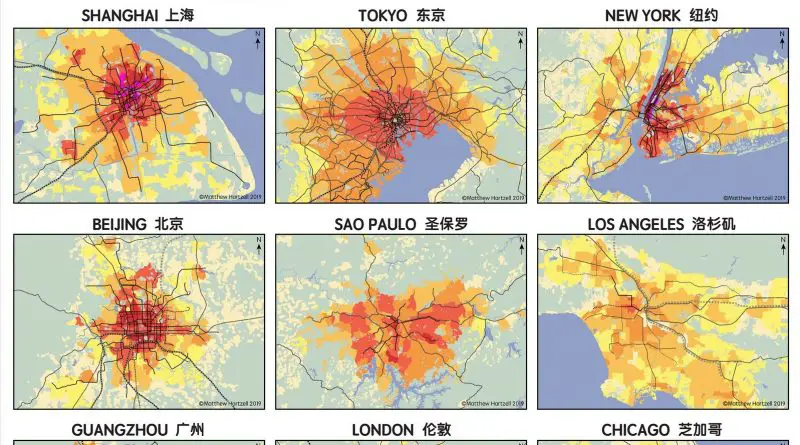
Population and transportation density identify specific cities. It is one of the most precise measures of how suburbia differs from the central city, and it depicts the most visual contrast between urban areas throughout the world. Although differences exist within the central city and suburbia, differences on a global basis between North American and European cities are even more impressive.
Read more: Population Density and Urban Transit In Large World Cities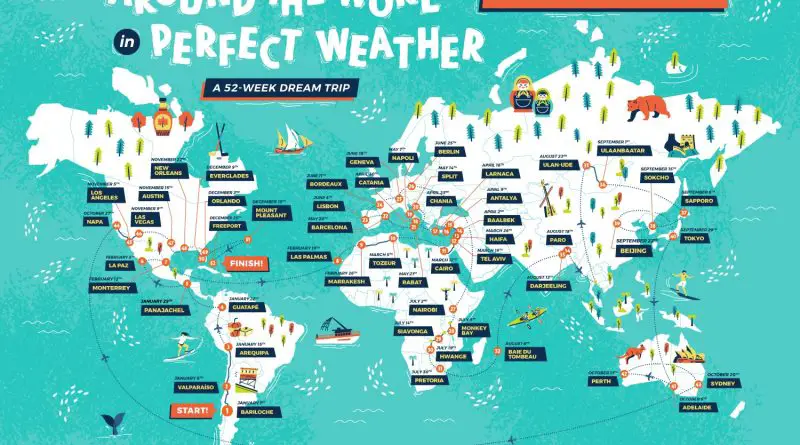
An around-the-world journey sounds like an out-of-reach, bucket list experience. But it’s achievable, and many people have done it – some in only eighty days. A map below shows a 52-week dream journey in perfect weather, between 70-75 °F, or 21-24 °C. It’s a comfort temperature amongst the majority of people.
Read more: Around the world in perfect weather