How the national economies of the world compare to US states
Reddit user: FSMPBUH
Read more: How the national economies of the world compare to US states
Maps depicting environmental degradation across planet.
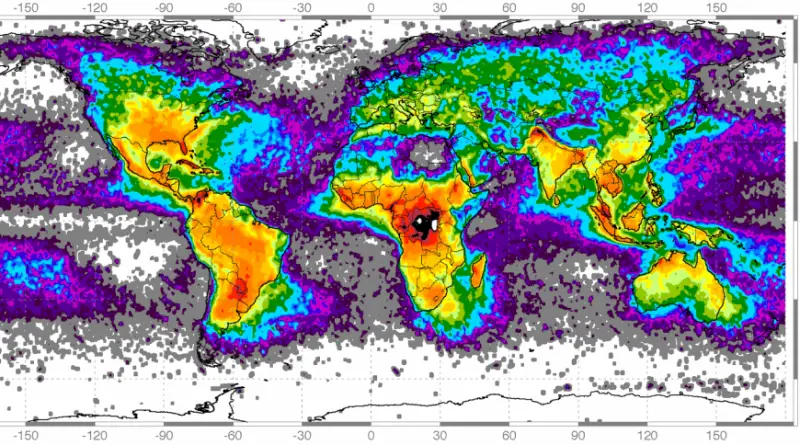
Global frequency of Lighting strikes U.S. frequency of Lighting strikes Lightning density map showing total lightning from 2015-2019. The National
Read more: Frequency of Lighting strikesJapanese map published early in the 19th century depicting an enormous archipelago representing Japan at the center of the world.
Read more: People of Many Nations: Japanese map published in the 19th centurySummer highs in New York City could be more like Juarez (Mexico) by 2100 without emissions cuts. Los Angeles ->
Read more: How Hot Will Summers Be By 2100?Minerals on the ocean floor and the genetic and chemical wealth of marine life provide a number of opportunities for
Read more: Future ocean resources mapMore than 24 million Americans suffer from asthma. Nearly 127 million Americans is threatened by both smog pollution and ragweed pollen.
Read more: U.S. counties most affected by unhealthy air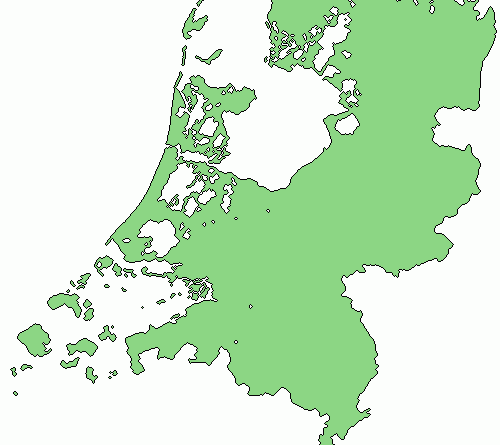
About 17% of the total land area of the Netherlands has been reclaimed from the sea. As a result, approximately 65% of the nation would be underwater at high tide without dams and pumps. Land reclamation in the 20th century added 1,650 sq km or 640 sq mi to the nation’s land area. Today 21% of the Netherlands ‘ population dwells in 26% of the land below mean sea level.
Read more: Dutch land reclamation effortsThe researchers estimate that the nation could face damages worth 0.7 percent of gross domestic product per year by the
Read more: As climate changes, southern states will suffer more than others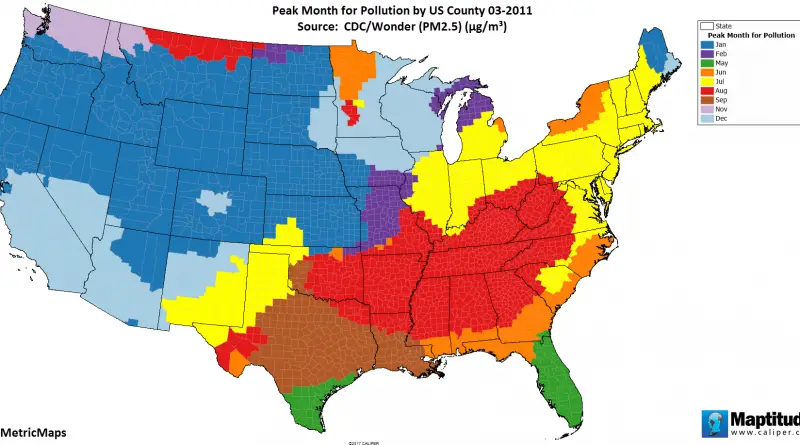
Source: www.metricmaps.org/2017/06/23/peak-month-for-air-pollution-by-us-county
Read more: Peak month for pollution by U.S. countyThe New York seascape – 16,000 square miles of ocean from Montauk, New York, to Cape May, New Jersey –
Read more: New York Seascape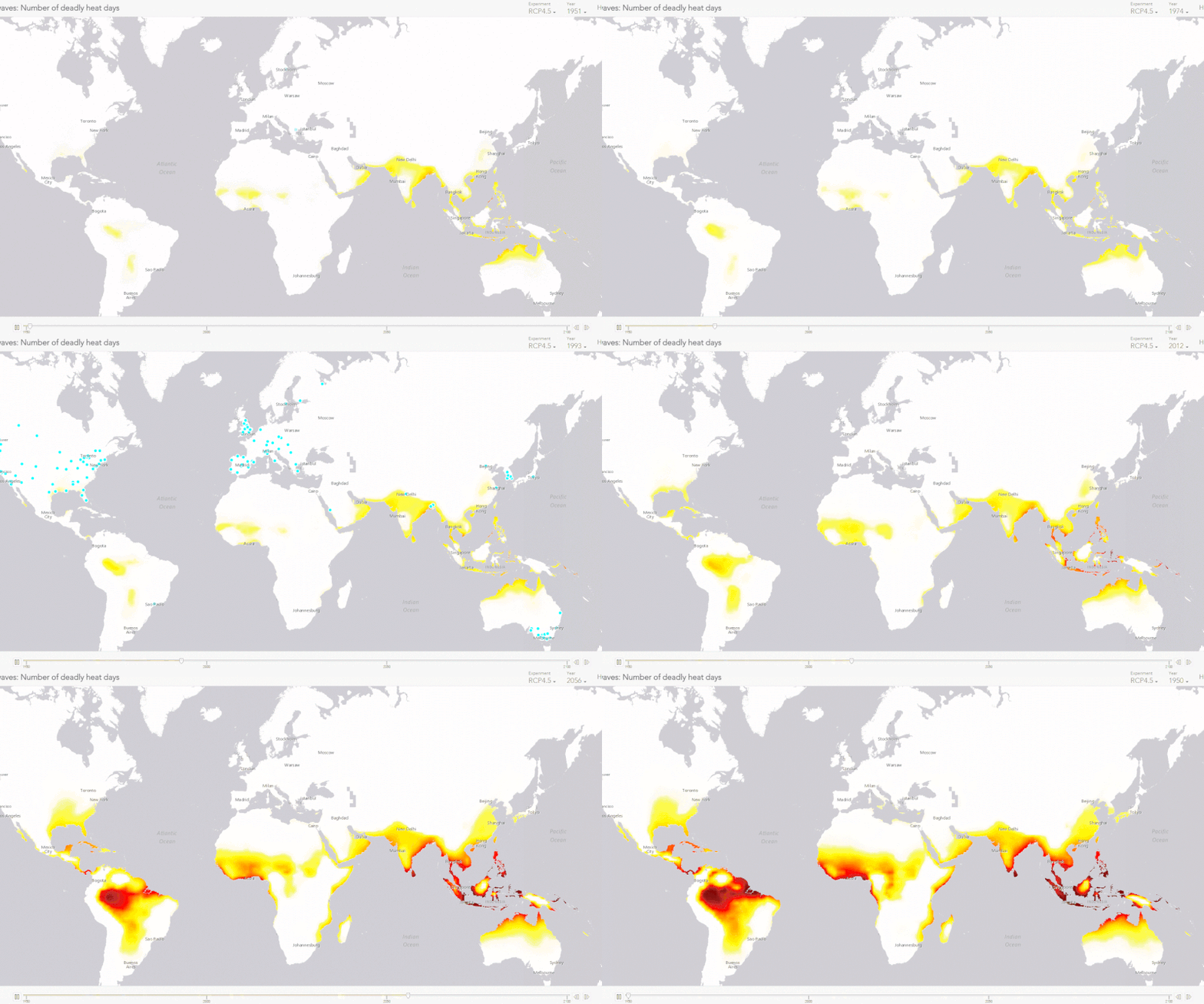
Heat waves pose a considerable concern to human life when their conditions exceed the capacity of the body to expel
Read more: Heatwaves: Number of deadly heat days (1950 – 2100)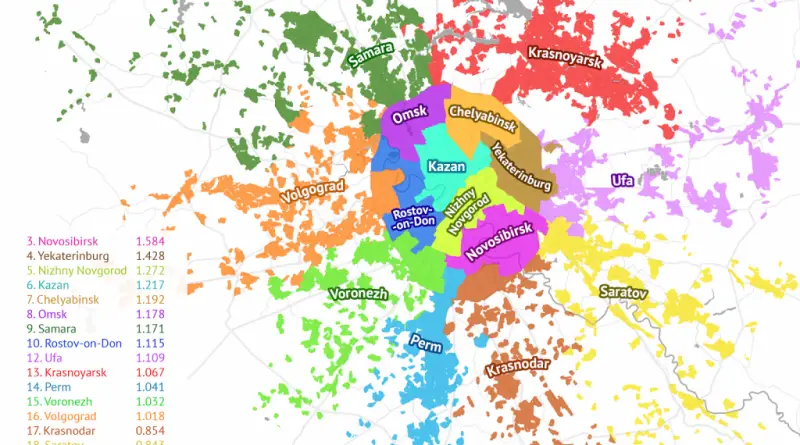
Russian cities whose populations fit inside the Moscow metro area. Source: sashat.me
Read more: Rubber Moscow